I went for a walk.

Sunday morning and its a warm and slightly overcast I downed the last of my coffee. Grabbed the camera and decided to go for a walk. Over the last few weeks I have been using my Nikon D750 with the 50mm 1:8 G lens. A lens I don’t use very often. I was reading a piece on photography on the net, this photographer shoots mostly with a 35 and 50mm lens. So I thought I’ll give that a go but only with a 50mm lens (I don’t own a 35mm lens) and I decided I would shoot in Black and white. So I set the screen to show my images in B&W even though I shoot in raw. The captured image would still be in colour on the image files.

I live just outside the small village of Kinallen in County Down, Northern Ireland. I turn right right at the end of the road and begin the climb up hill into the village.
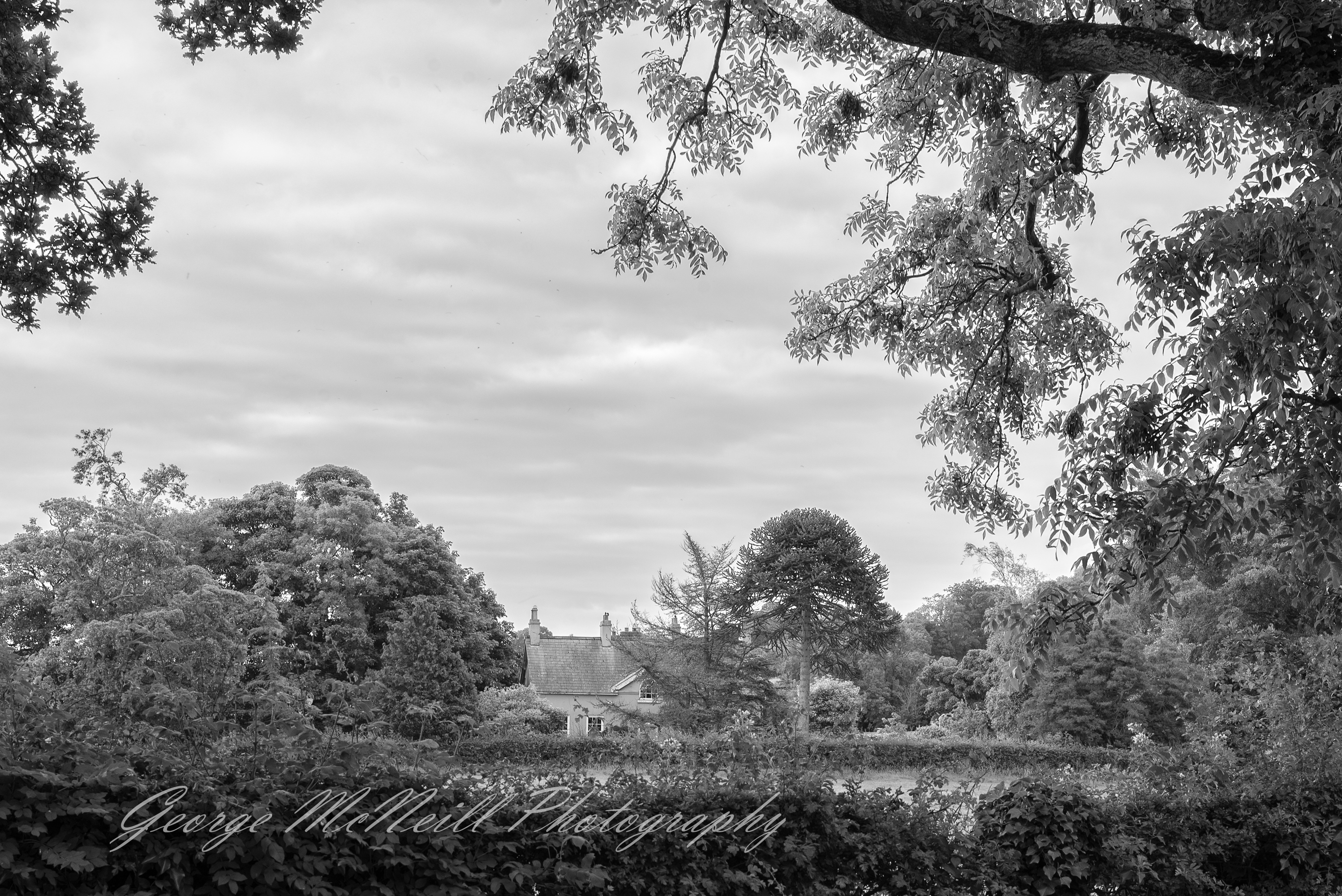
The walk up into Kinallen passes a few housing estates and this large farm house sitting among the trees across the road. The hill steepens as I approach the cross-roads.
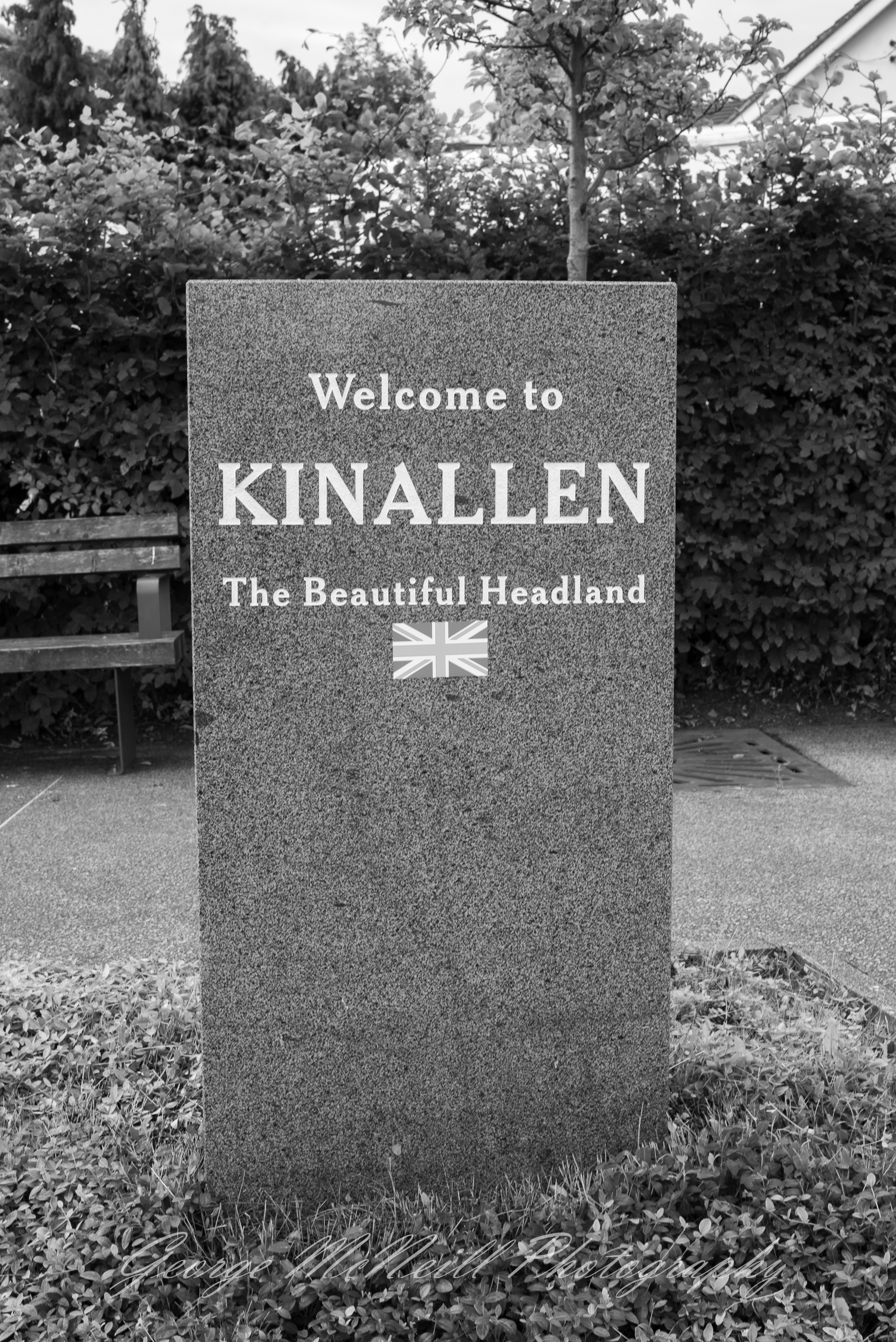
There is also the local petrol/gas station which is also a small store. This is where I buy my lottery ticket from but I’ve discovered they only sell faulty one’s. Plus they won’t give refunds for them, but it’s a great little store for everyday goods with friendly workers.

Being Sunday morning the store is still closed, in fact I’m the only person about. I turn right onto the Banbridge Road. The only sound bar my heavy breathing after that hill is the birds singing, more pleasant on the ear.

I have seen this seat only when I have been driving, I crossed the road to photograph it and find out who it was dedicated to. I have no idea who she was or what caused her death since I only moved here a few years back. I’ll ask some of the ladies who work in the store whenever I’m back in there. A few hundred metres on and I turn right onto the Skeagh Road. It’s downhill here past the last houses in the village and back out into the countryside. During the week this can be a busy road plus its narrow and has no footpath/sidewalk. Its popular with walkers in the evening and weekends.
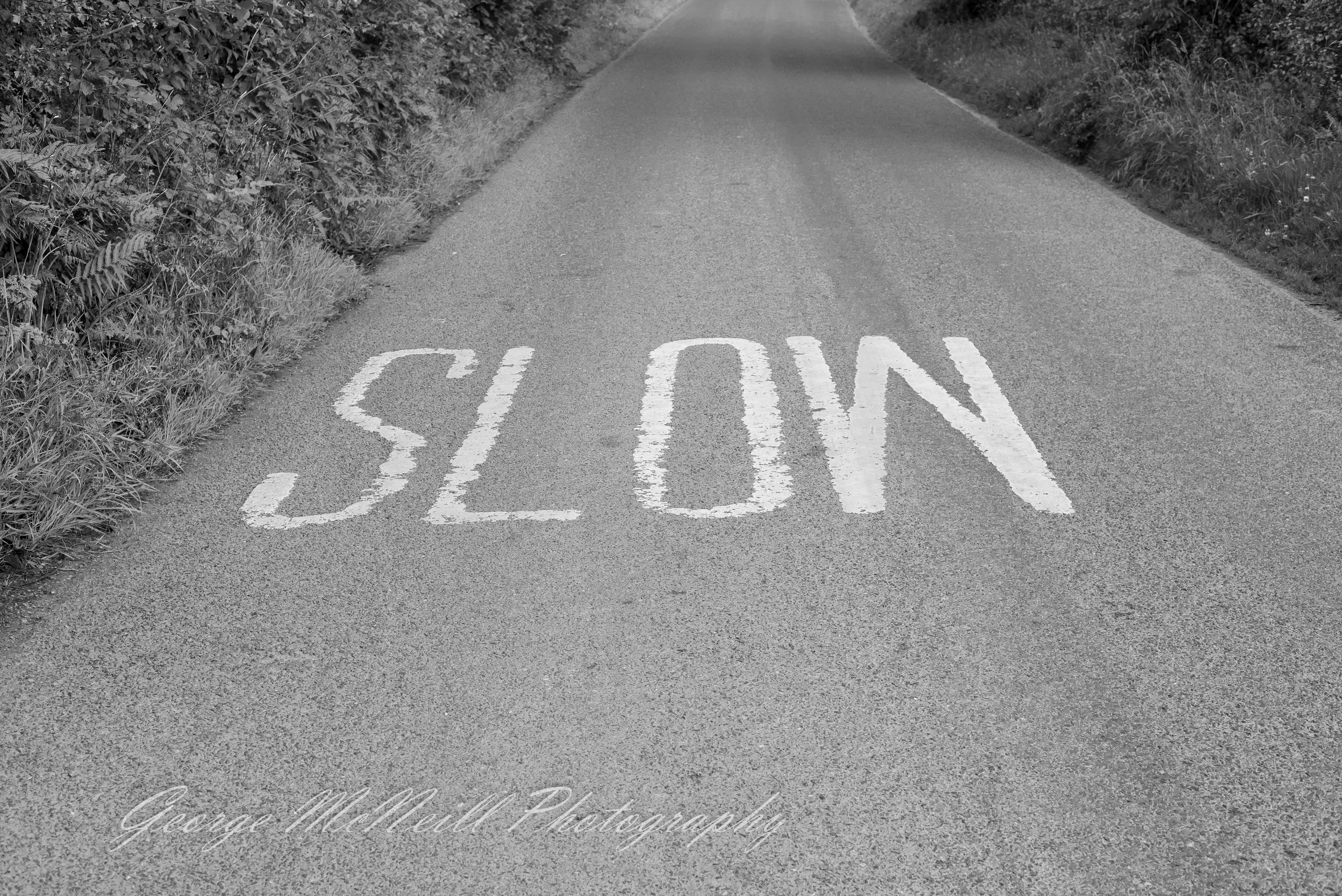
Its not telling me to slow down but drivers because there is a junction on the right just a short distance ahead.

Did you lose a cyclists water bottle ? There was a cycle race a couple of weeks back which finished at the top of the hill I just came down. I guess someone lighten the load before the sprint uphill to the finish line.

I turned onto Mayfield Avenue, here the road narrows close to being a single track road. Not much traffic on this road.

I did notice the road sign sat at the same angle as road, level with the road. great job lads…. no its not the way I held the camera. (note: must check this next time I’m over that way:) now where was I. Oh yes.

Just after turning into Mayfield Ave I spotted two poles supporting a garden fence. Let me show you.

We had a storm here a few months back, winds up to 120 MPH, It looks like they are waiting for the next one. Better hope it come from the same direction.
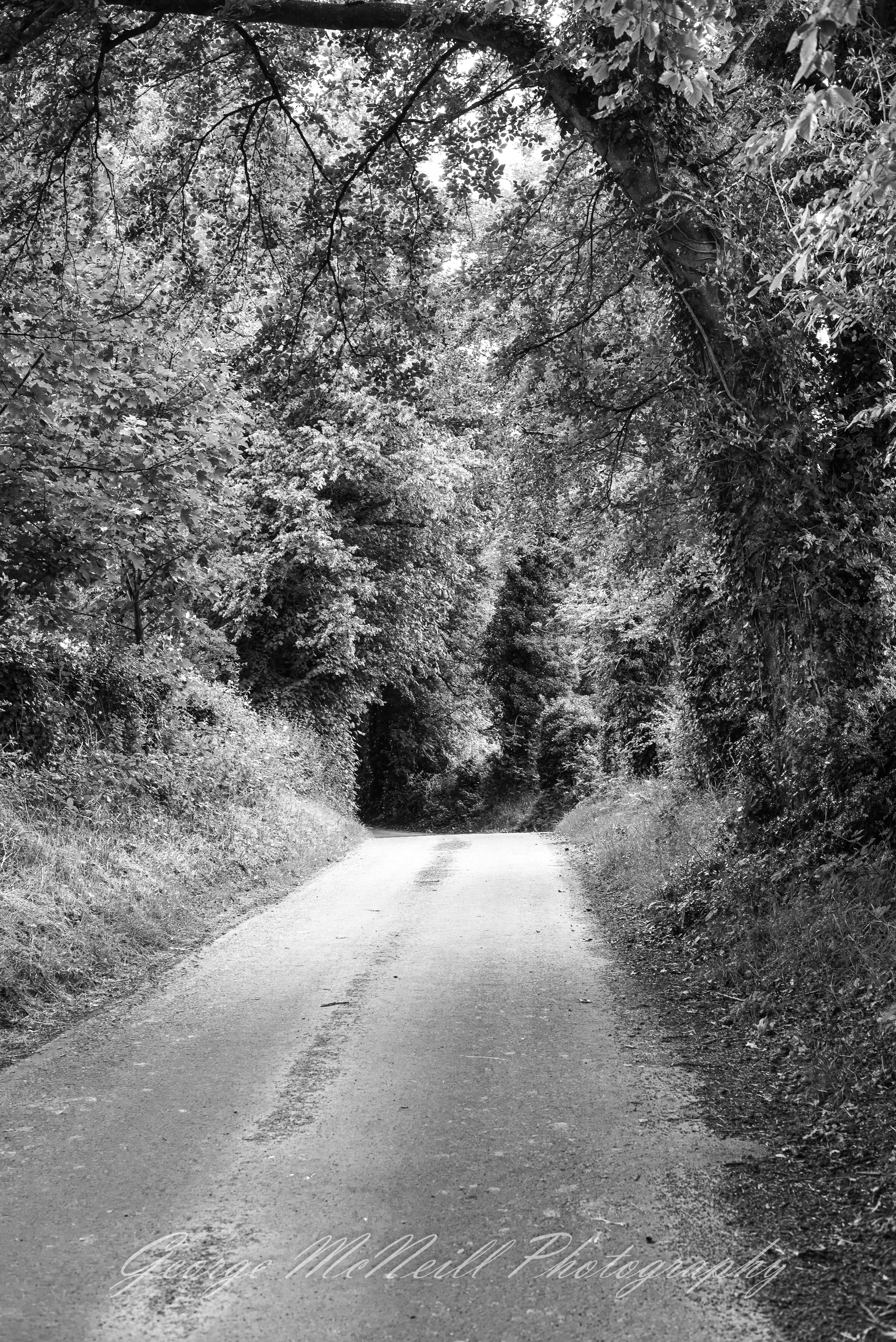
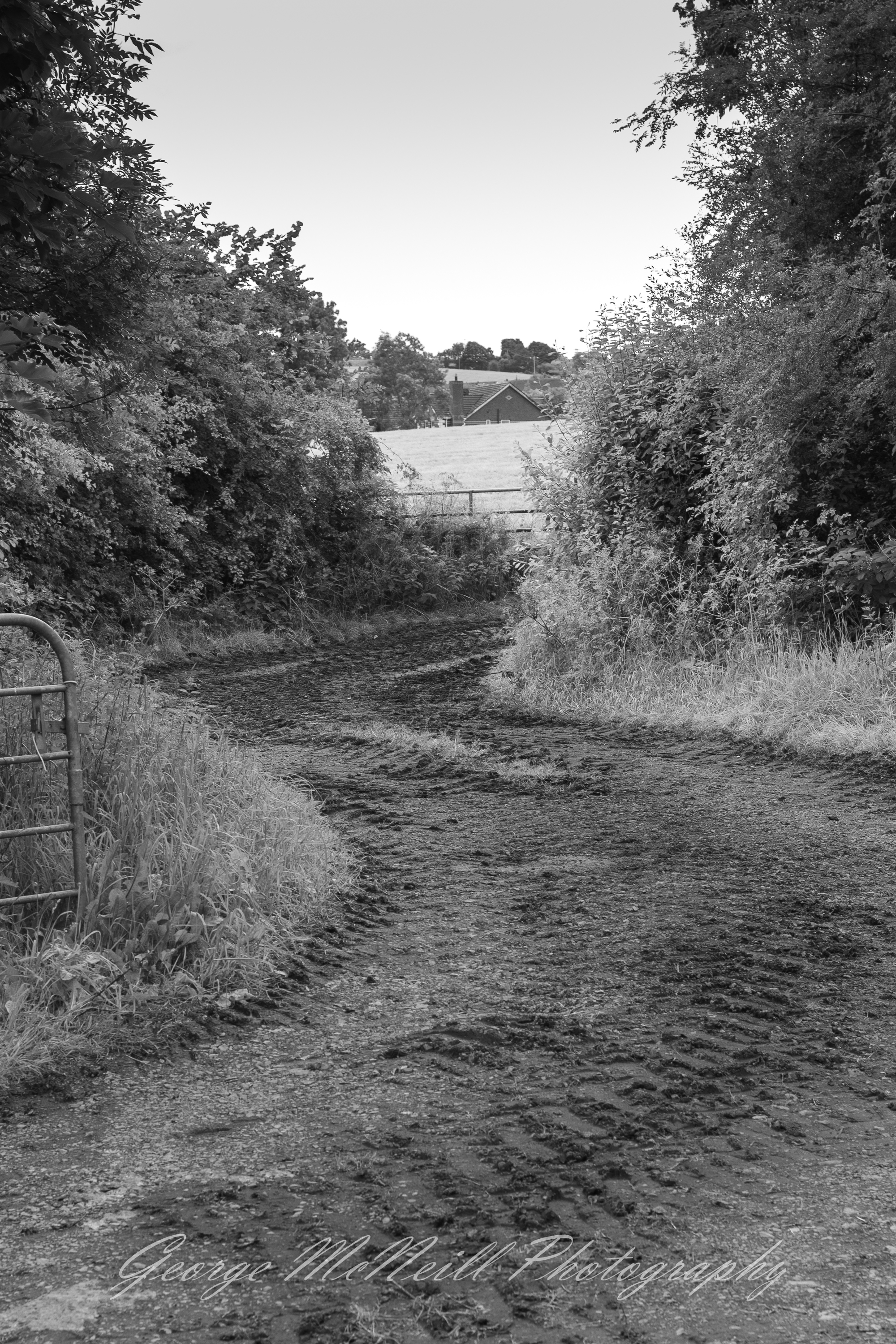
With the morning sun spotlighting parts of the road I met a lady walking a couple of dogs . We chatted for a few minutes, she declined to having her photo taken. So that’s why you get to see just the road.

In Ireland a tree that stands alone in a field is known as a fairy tree, it’s the entrance to middle earth and brings bad luck to any person that destroys it.

The cattle don’t seem to worry to much about it. It’s rare to see them still have horns, most get dehorned but I still would not like to be hit by one.

Its about now I get the smell of one of the country sides worst smells. Slurry spraying.

A true assault on the senses.

That’s the source, never a day off in the farming world. A dry day to get the fields sprayed. These guy’s fill this narrow road, glad I’m walking.
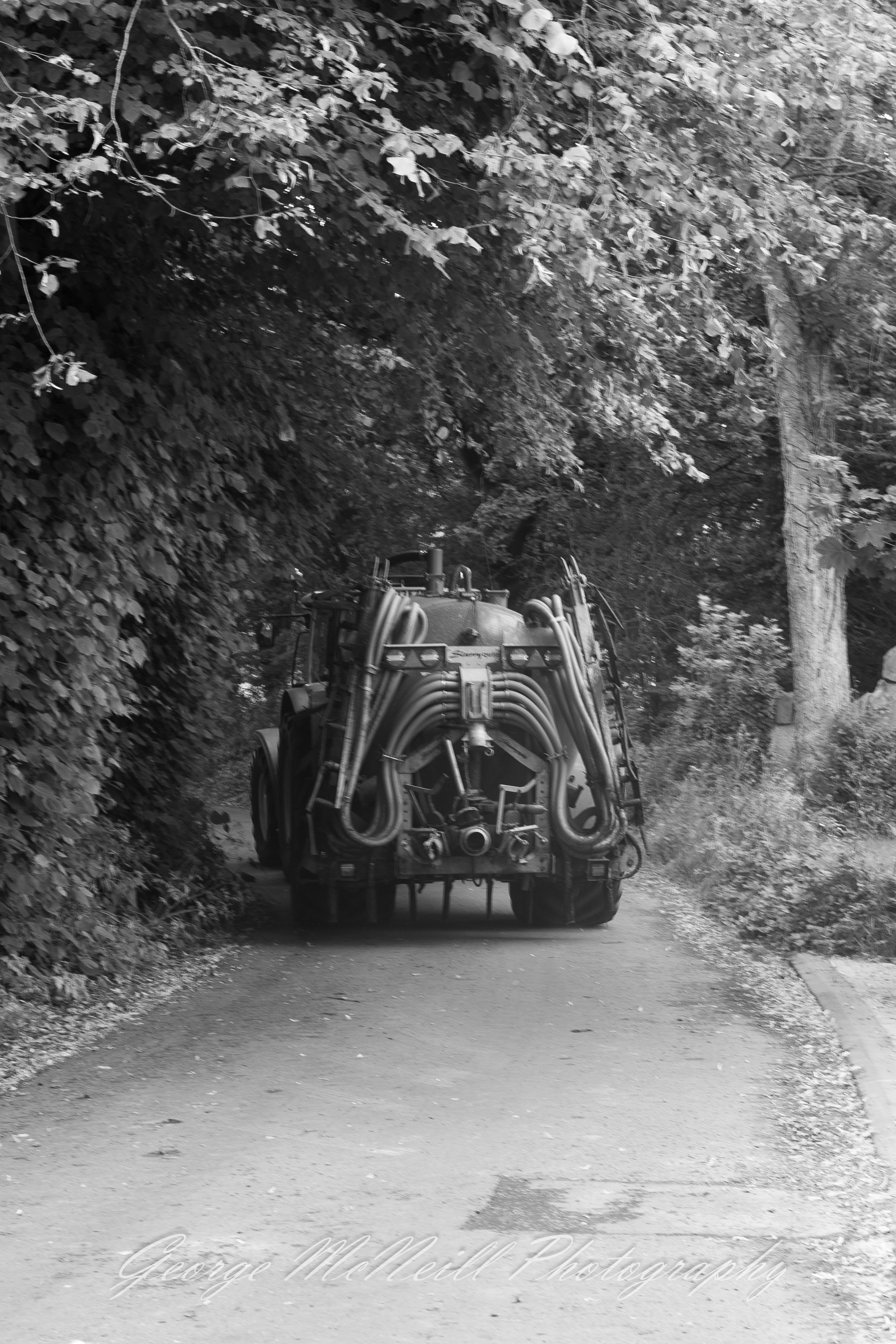
For any one from outside the UK or Ireland these roads are for two way traffic with a speed limit of 60 mph, yes that’s correct unless it is signed otherwise. Thought I would share that with you.

Ok not long to go now, hang in there and I’ll brighten the ending up for you. And we have Trespass laws here as most land is private.
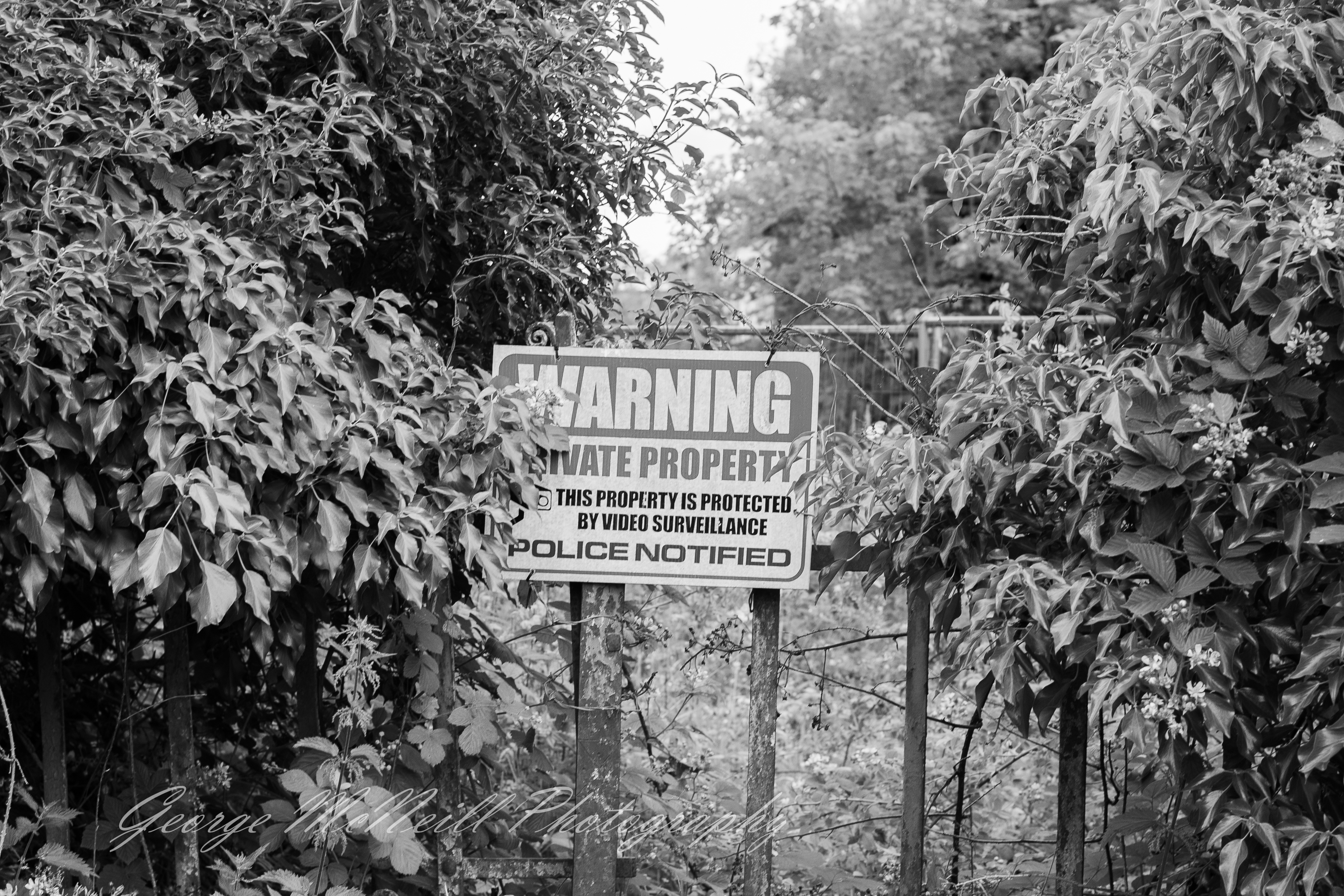
No uninvited person please.

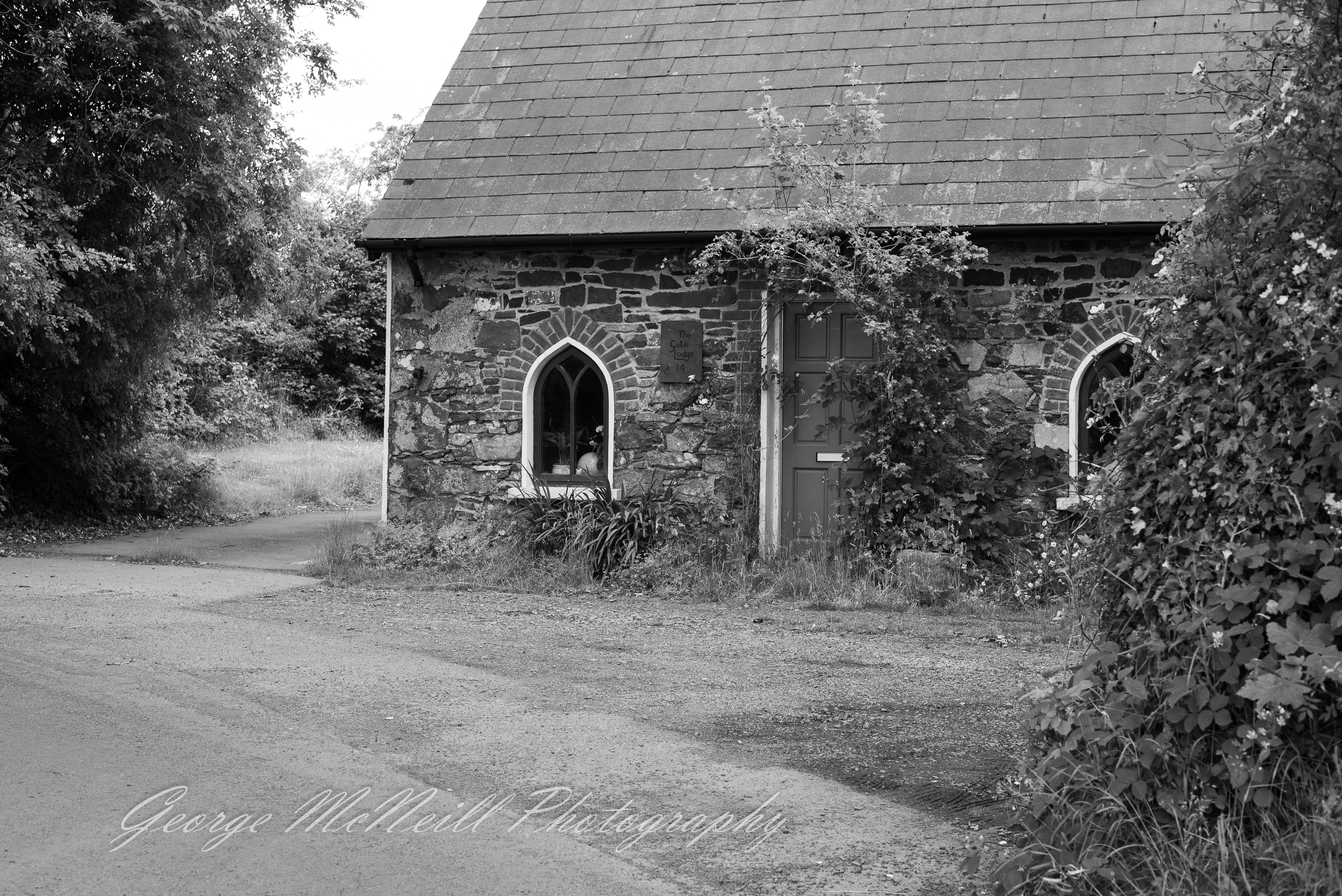
The Gate Lodge, A pretty stone build cottage which at some time would have been part of a large estate.

A short distance on and a runner with two dogs passes me, by the time I got the camera raised I saw his back disappear around the bend ahead.
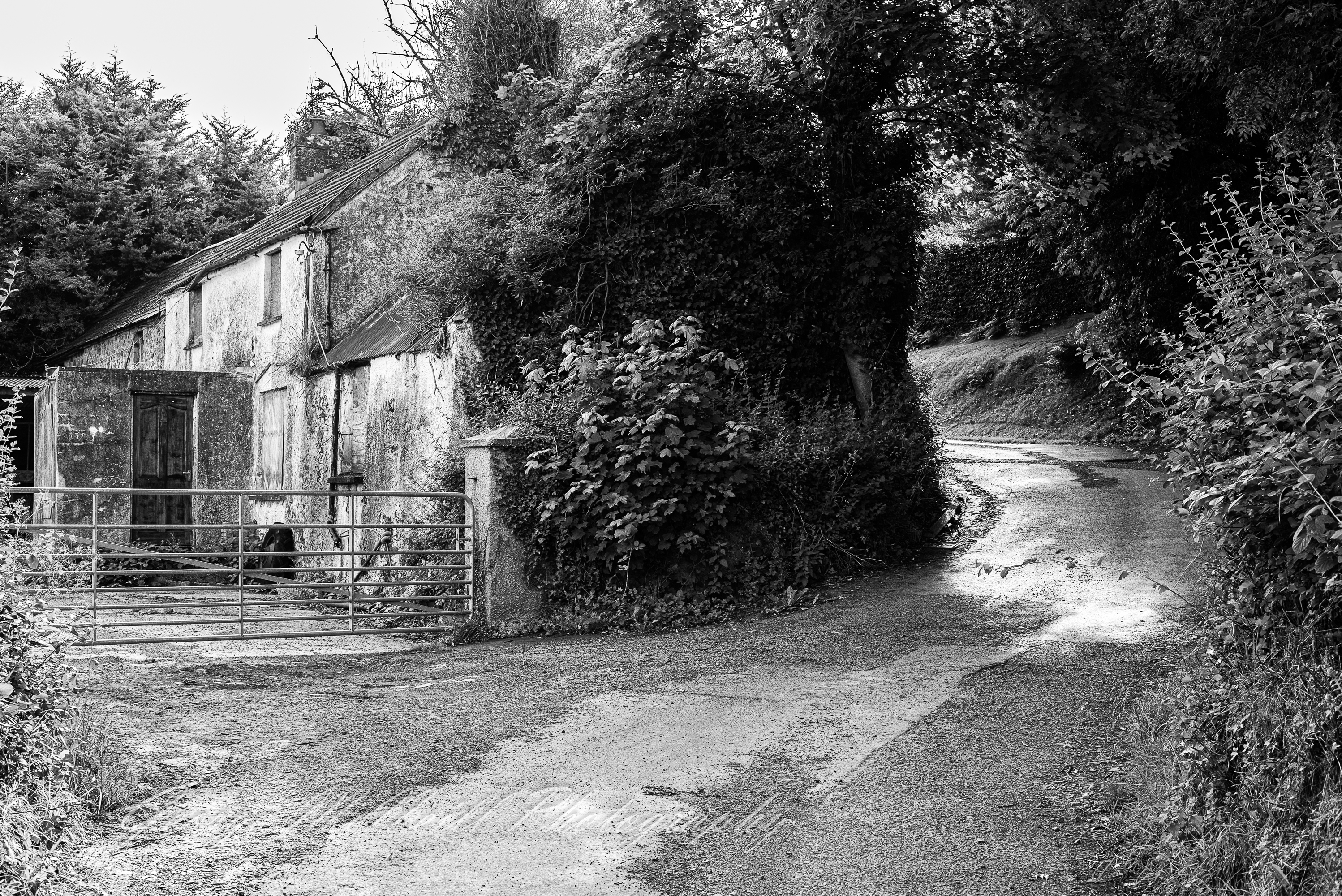
Once pass this old farm building and climb the steep hill which starts here and goes on till the road ends. I have a short walk from there home. I hope you have enjoyed your walk in little part of Ireland. Thank you all for visiting and hopefully we will met again.

Some colour to finish, take care.

12 responses to “I went for a walk.”

  1. Janet Avatar

    Hi George! I had no idea that you had resumed work on your blog. I’m so sorry for not keeping up! I love the images and your narration. Enjoy your day and I’ll be catching up! -Janet

    Like

    1. George McNeill Avatar

      Hi Janet, yes trying to get back into blogging, still trying to get back to once a week but still slipping back. I get there.

      Thanks for the comment

      Liked by 1 person

  2. Penn,… Avatar

    Such a lovely walk, … and a very entertaining narration, … I enjoyed both, … it’s a shame about faulty lottery tickets, … I’ve decided not to buy any, anymore… and thank you for the photos of the lovely flowers at the end, … beautifully coloured, growing naturally as nature intended. 💫

    Liked by 1 person

  3. George McNeill Avatar

    Thank you, my story telling is on par with my luck on buying lottery tickets.

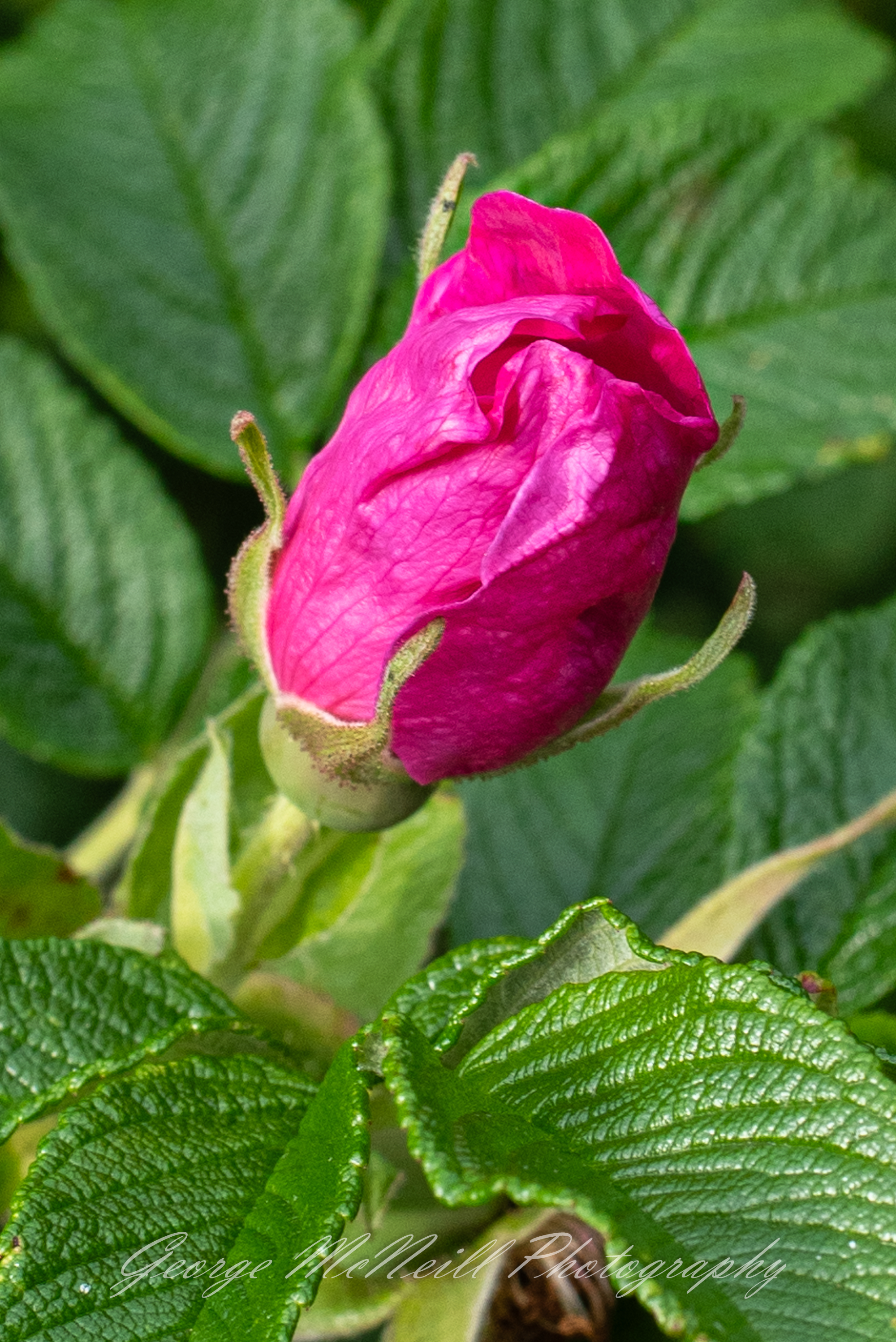
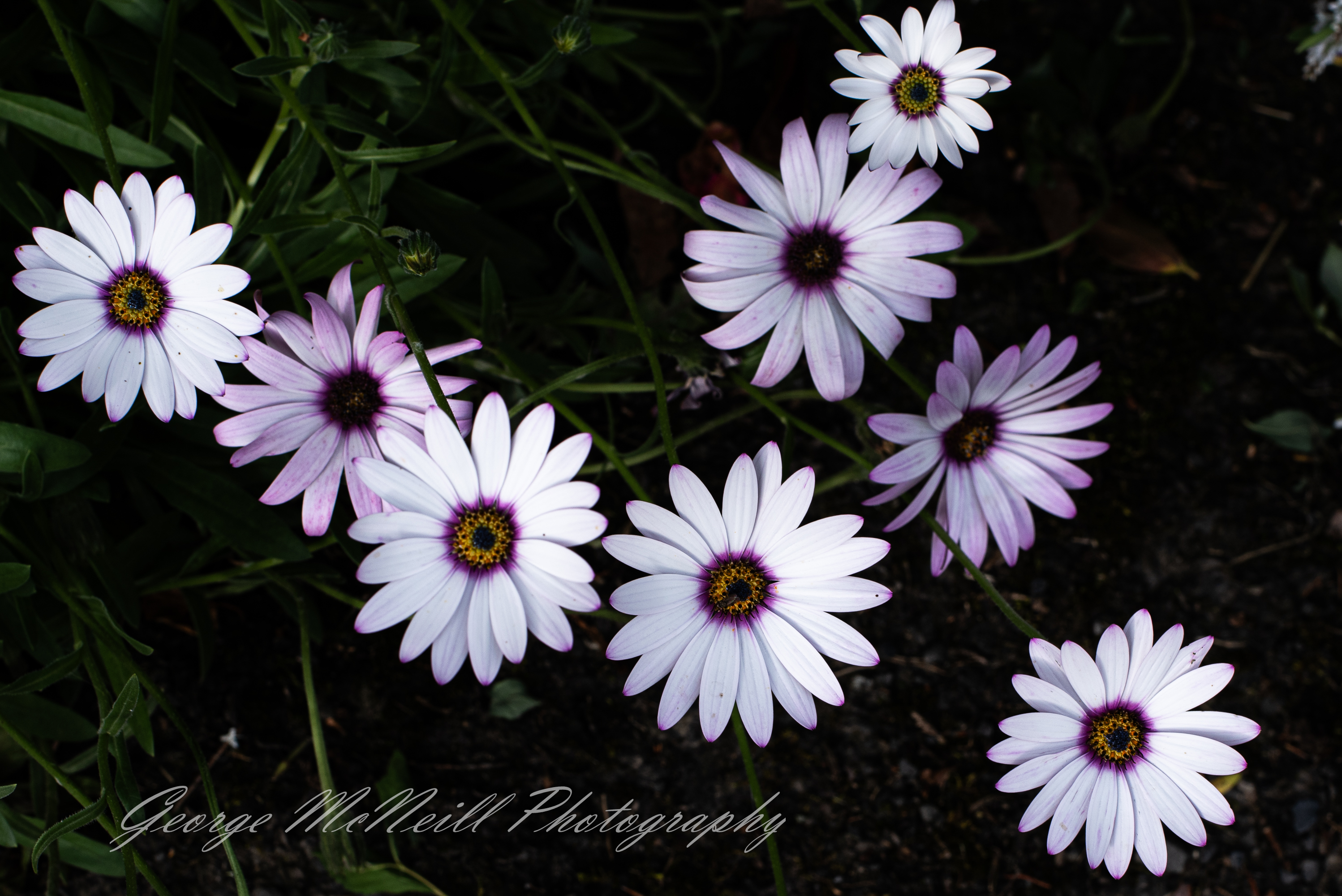
    The pink Wild Rose was called the dog rose where I grew up. The large daisy we call the Cow daisy, they grow on poor soil areas. The last white and pink flower is the Honeysuckle. After flowering the finger like blub that grew we would suck on these for their sweet taste.

    click on photos they should open full size.

    Liked by 1 person

    1. Penn,… Avatar

      The top photos opened full size, George, …but the lower ones, …were stubbornly uncooperative, …even though I kept tapping with my stylus, …tsk! …mind you, gave me a chance to see them again, …💫

      Liked by 1 person

  4. George McNeill Avatar

    Hi Penn, I tried opening them on a tablet not belonging to me. They opened with a double tap.

    Try tapping the blog title first and seeing if it opens onto the blop post.

    Its a bit like reading the front page but the full story is inside the covers.

    Not a 100% sure that it will work but a friend who was travelling across Canada a few years back had a similar problem. That cured it for him.

    Thank you for trying and informing me.

    Like

  5. moragnoffke Avatar

    I love your description and your photography is gorgeous! It’s nice to get to know Ireland a bit. Thank you.

    Like

    1. George McNeill Avatar

      Welcome and thank you for the follow. I look forward to reading your content. I always have felt Scotland is my second home,a places I’ve visited many times.
      Thank you.

      Liked by 1 person

      1. moragnoffke Avatar

        You are welcome.

        Like

  6. AM Roselli Avatar

    Hi George, always wonderful knowing you and your camera are out there in the world capturing the beautiful moments

    Like

    1. George McNeill Avatar

      Hello AM, it’s good to see you back posting, I loved your sculpture’s. Thank you for your comment.

      Hope all is well with you. Take care AM.☘️

      Liked by 1 person

      1. AM Roselli Avatar

        Okay over here George 🙂 (excluding the current insane US gov)

        Like

Leave a comment

https://www.instagram.com/g.mcn.photos/

Drumballyroney Church

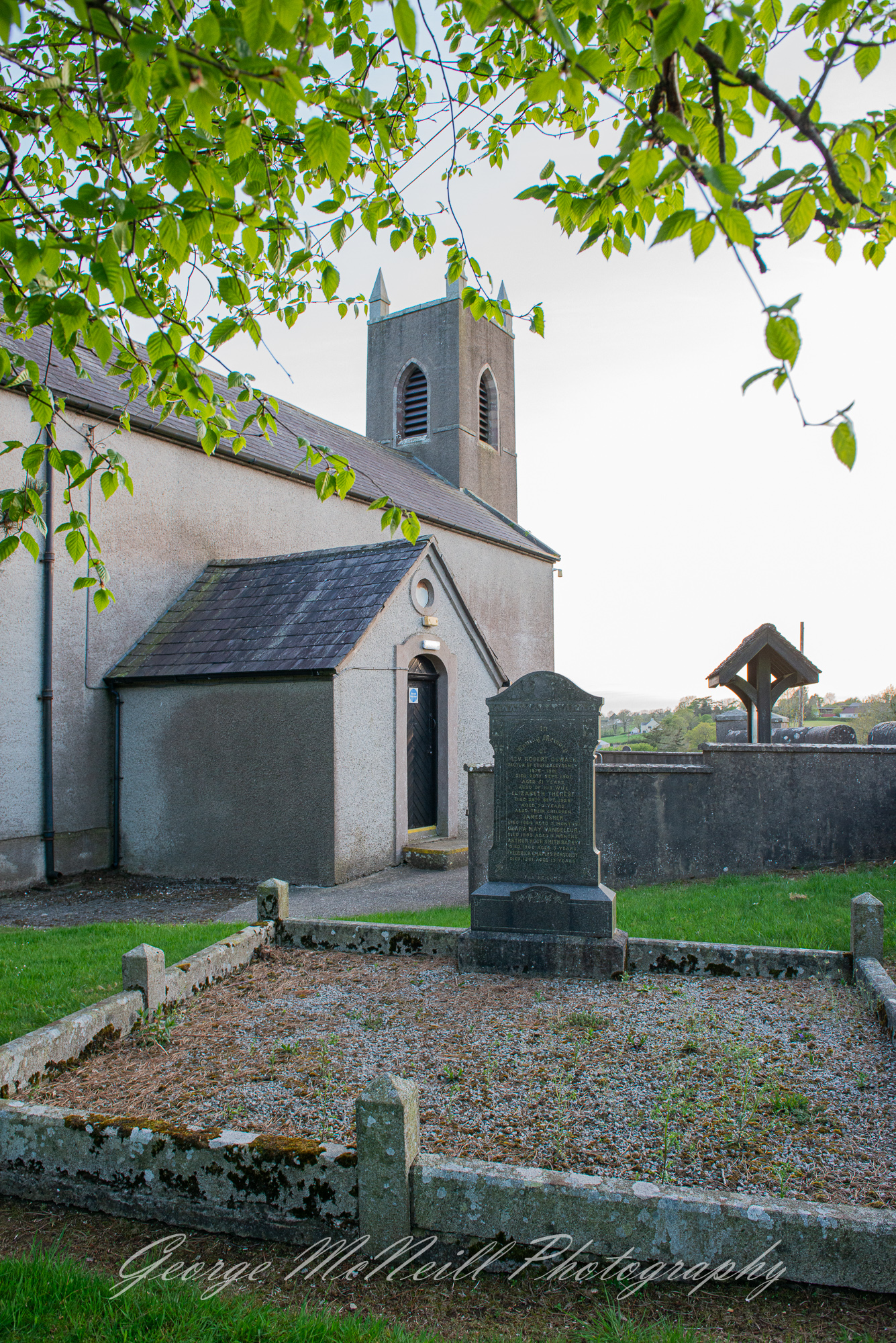
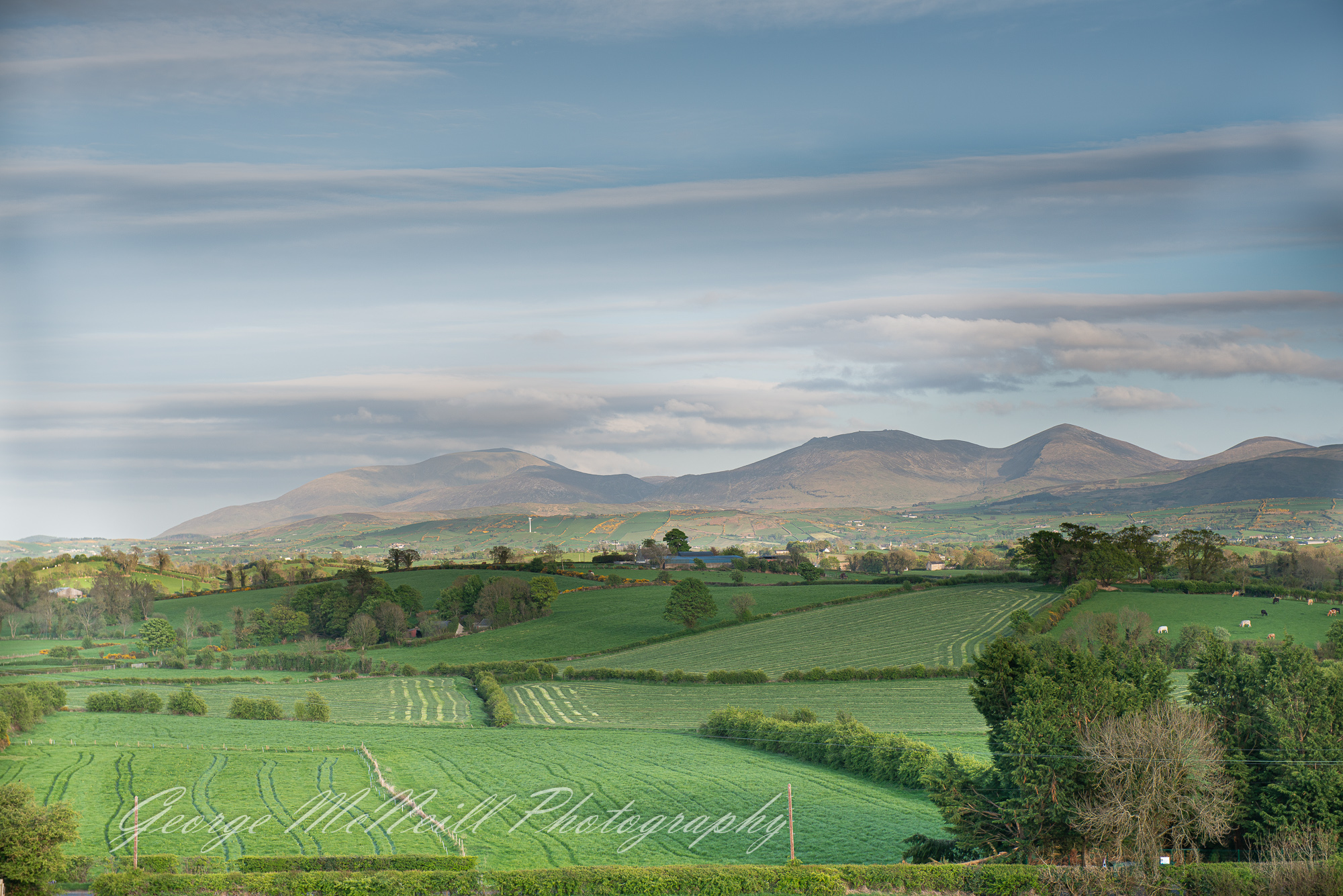
Drumballyroney church sits on top of a hill with views across county Down into the Mourne mountains.

One view from the church carpark.

The church is also known as The Bronte church. Patrick was born in the parish of Drumballyroney and this was the family church. He was born in 1777 and died 1861. He was the father of the writers Charlotte, Emily and Anne Bronte.

He was a teacher until 1802 when he won a scholarship to study theology at St John’s collage, Cambridge. It was here he changed his name from Brunty to Bronte, the Greek word for thunder.

He taught at the school beside the church for a short while before going to Cambridge after which he ordained as a Deacon of the Church of England in 1806 and entered the priesthood in 1807.

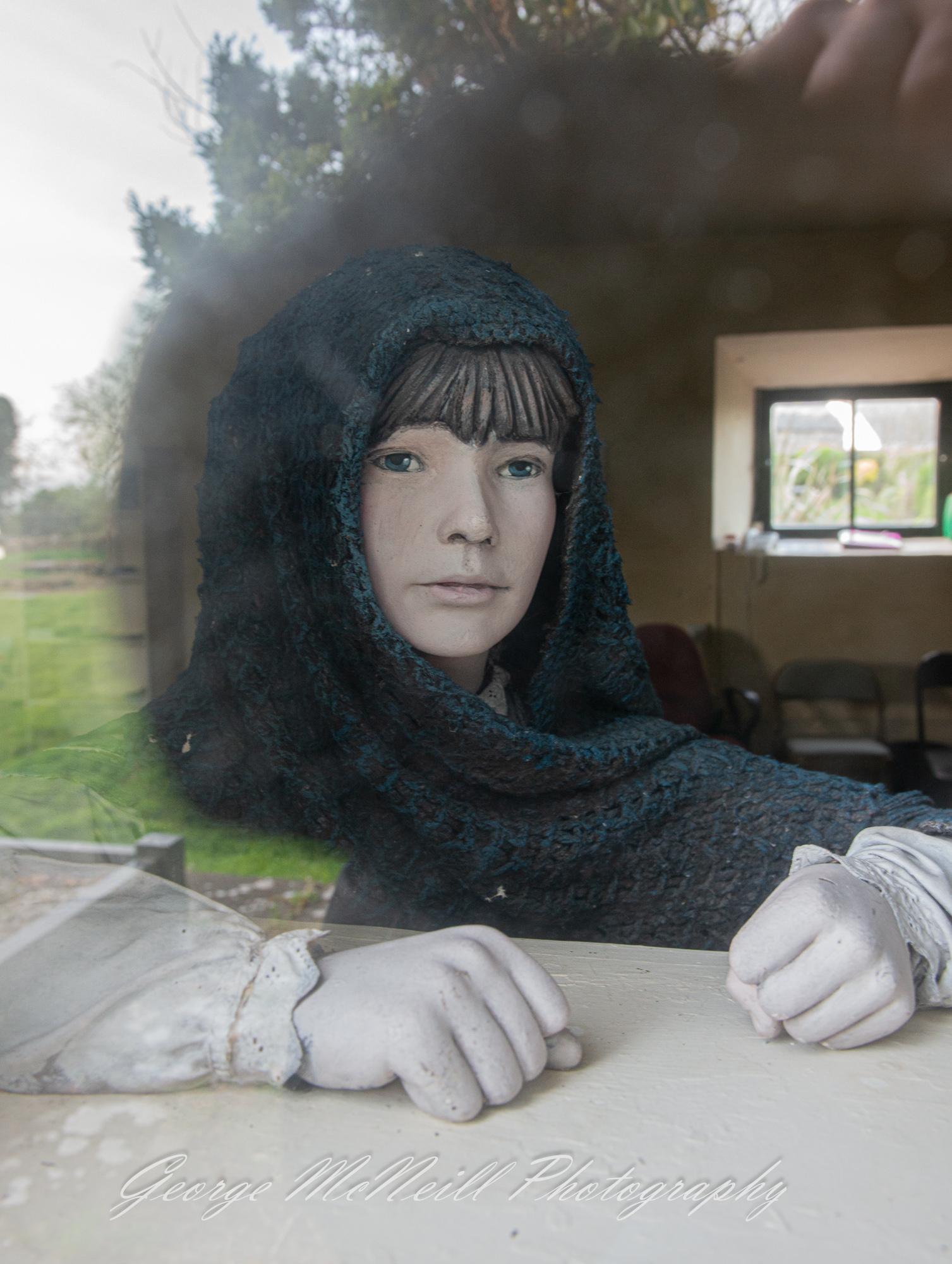
The school and a photo taken through the window. https://sevenov.com/patrick-bronte/?amp=1

Theres more history in the above link on the life of Patrick Bronte.

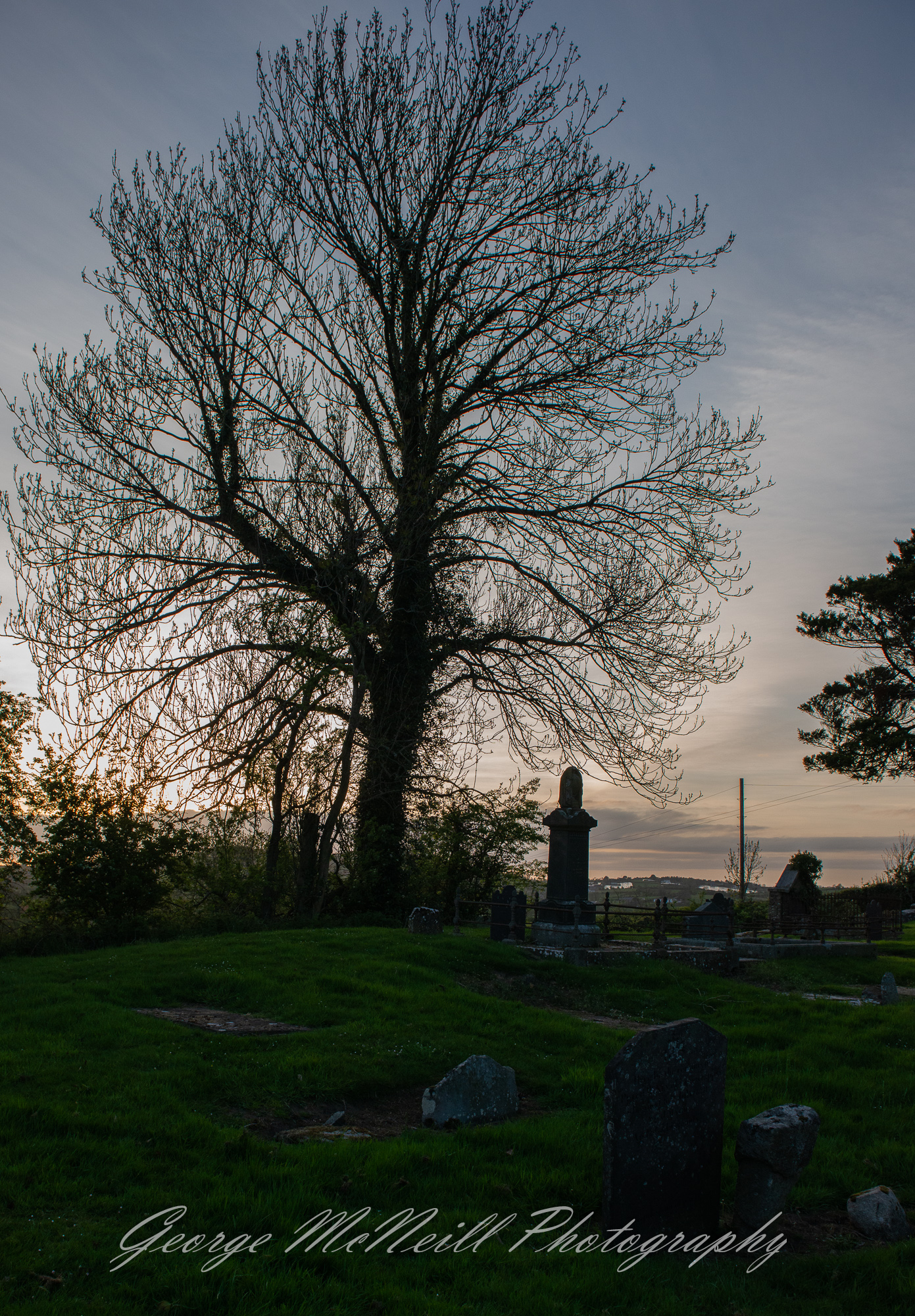
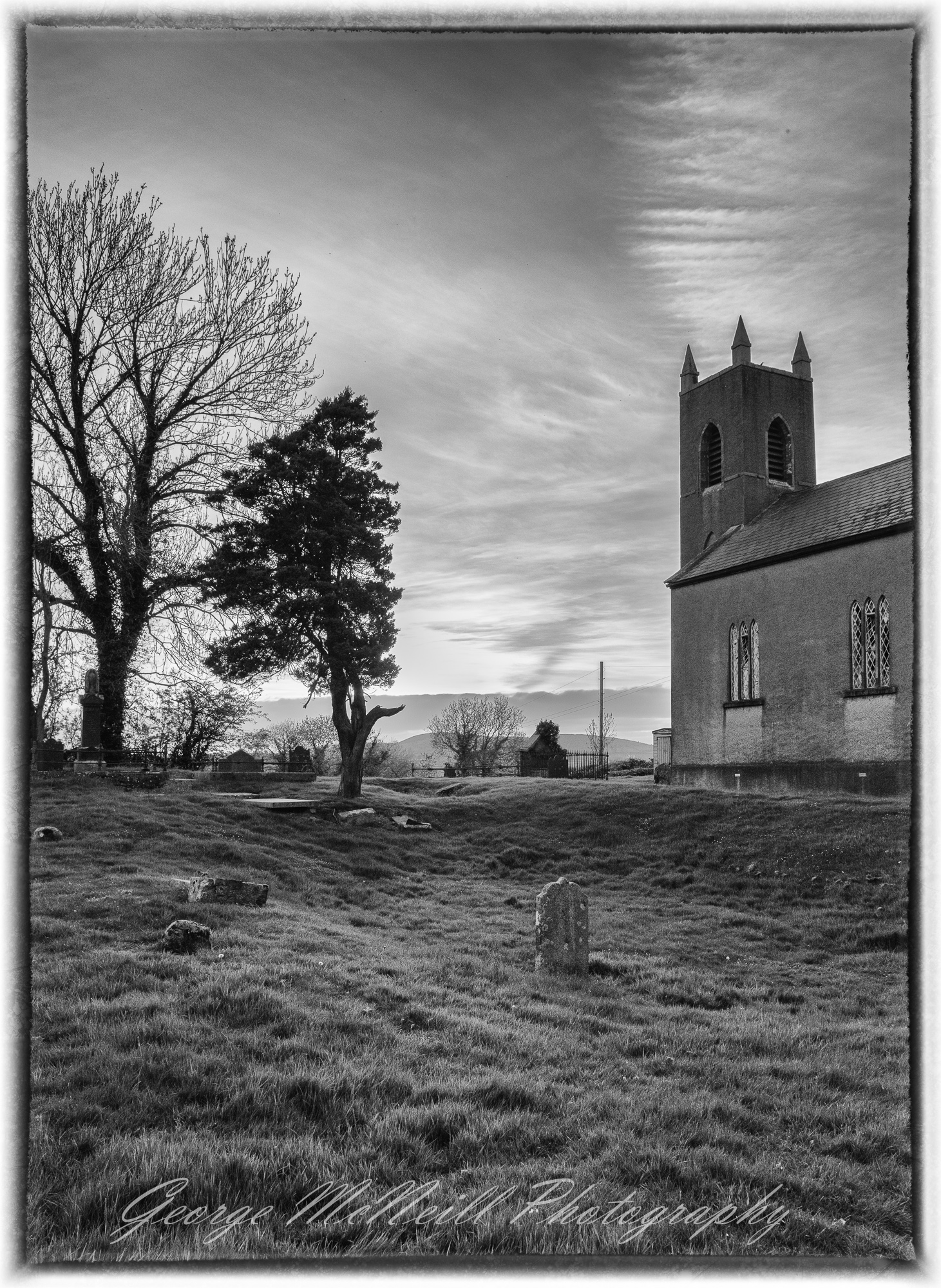
Next are some photos taken for around the graveyard in the evening till the sun started to set.

This church is the first stop on The Bronte Homeland trail.

Thank you for joining me on this visit to the Irish part on the Bronte story.

Leave a comment

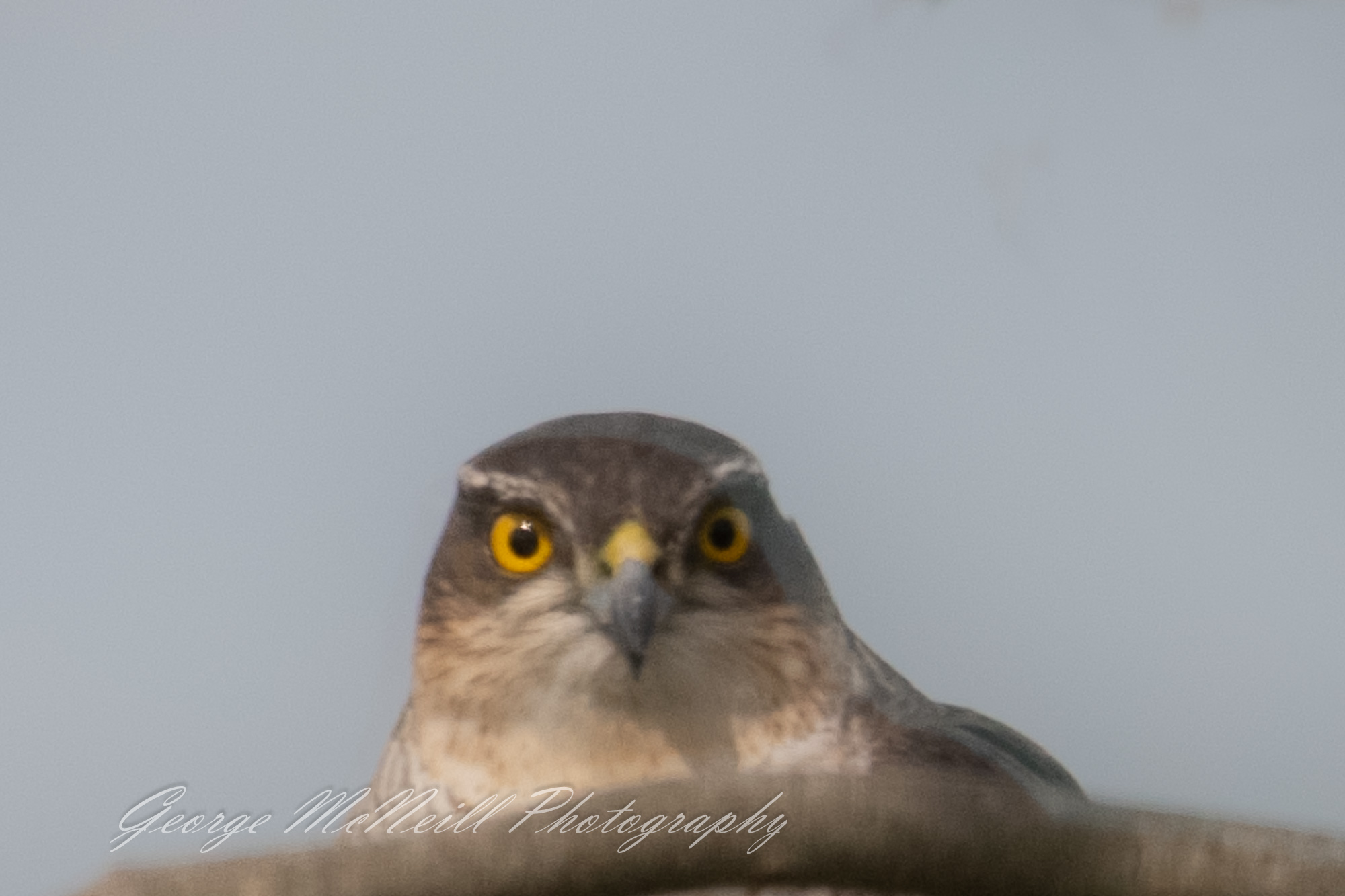
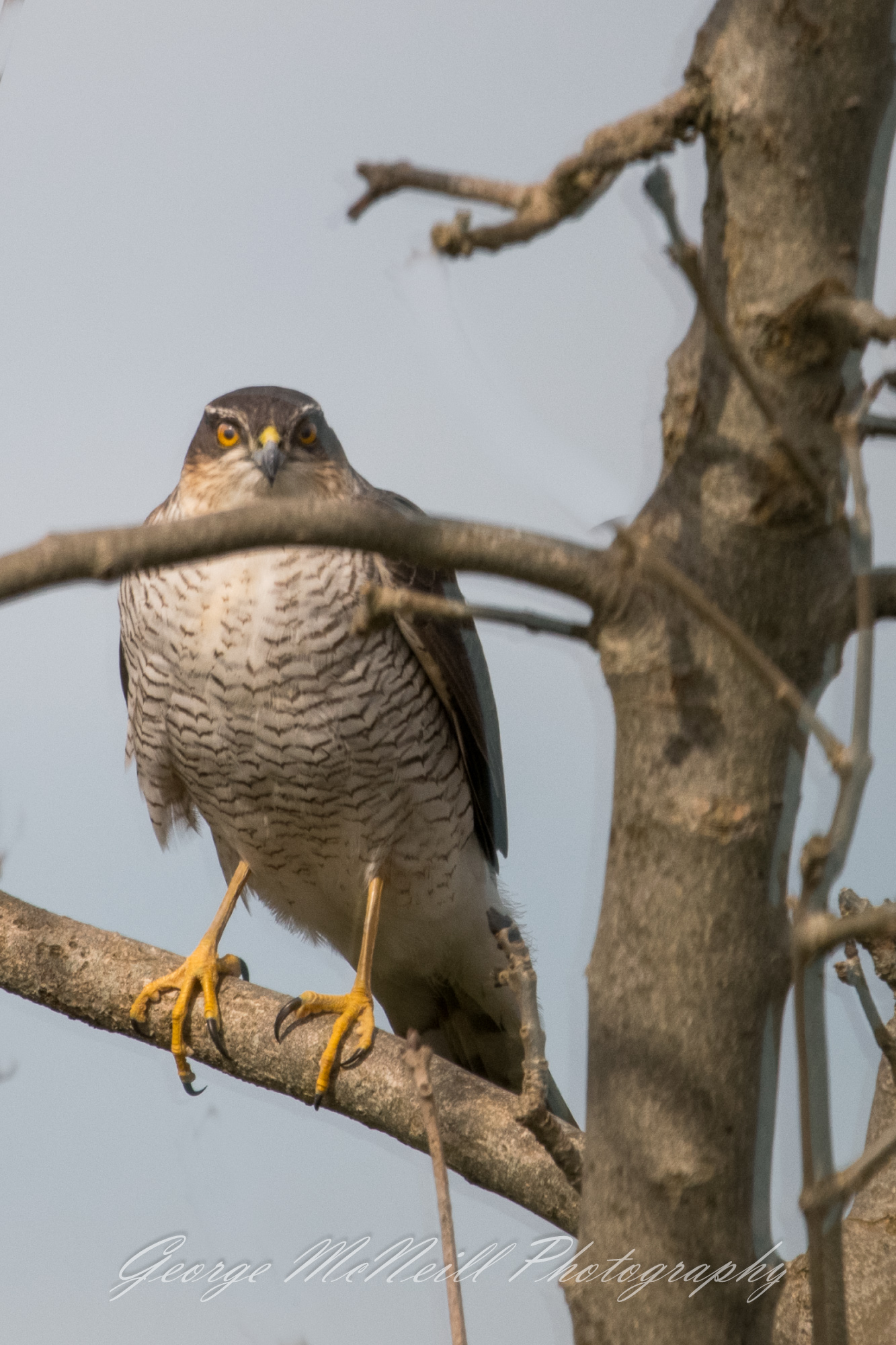
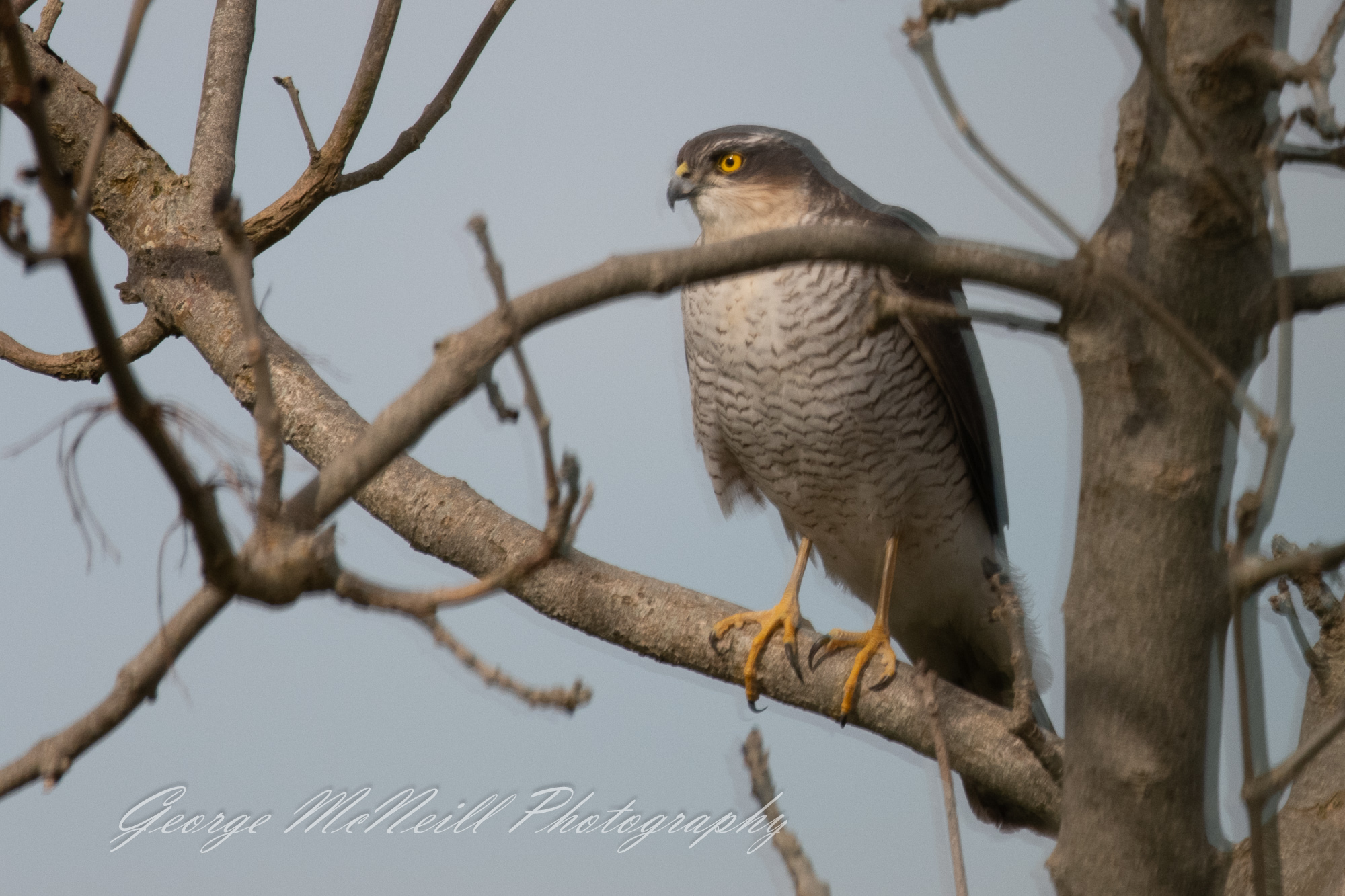
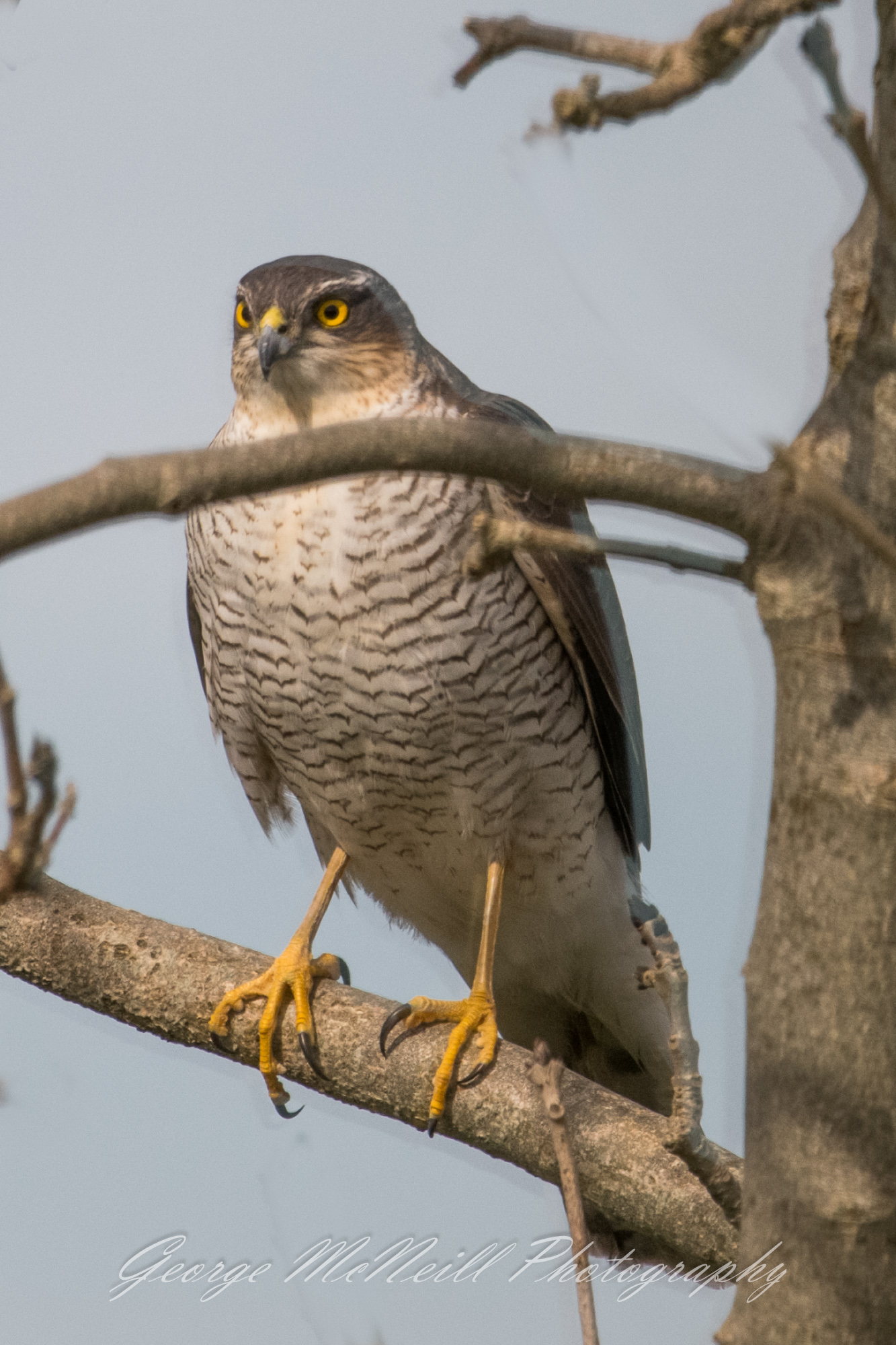
It’s in the eyes.

Meet the Sparrowhawk (Accipiter nisus) a bird of prey that is a specialist small bird eater. It uses hedges and buildings for cover to get closer to it’s prey. It is an exceptionally agile hunter commonly seen hunting in woodland, wooded farmland and urban green spaces. Also they turn up around bird feeders in gardens.

I was sitting in the van monitoring a possible bird of prey nest site, when movement caught my eye in a tree on the other side of the road. It was those eyes looking at me as I froze, not want to scare it off I remained still. It settled and started looking around, so it didn’t see me as a threat. I lifted the camera and leaned over so I could photograph it from the open passenger side window. I got around twenty photos before a passing vehicle scared it off.

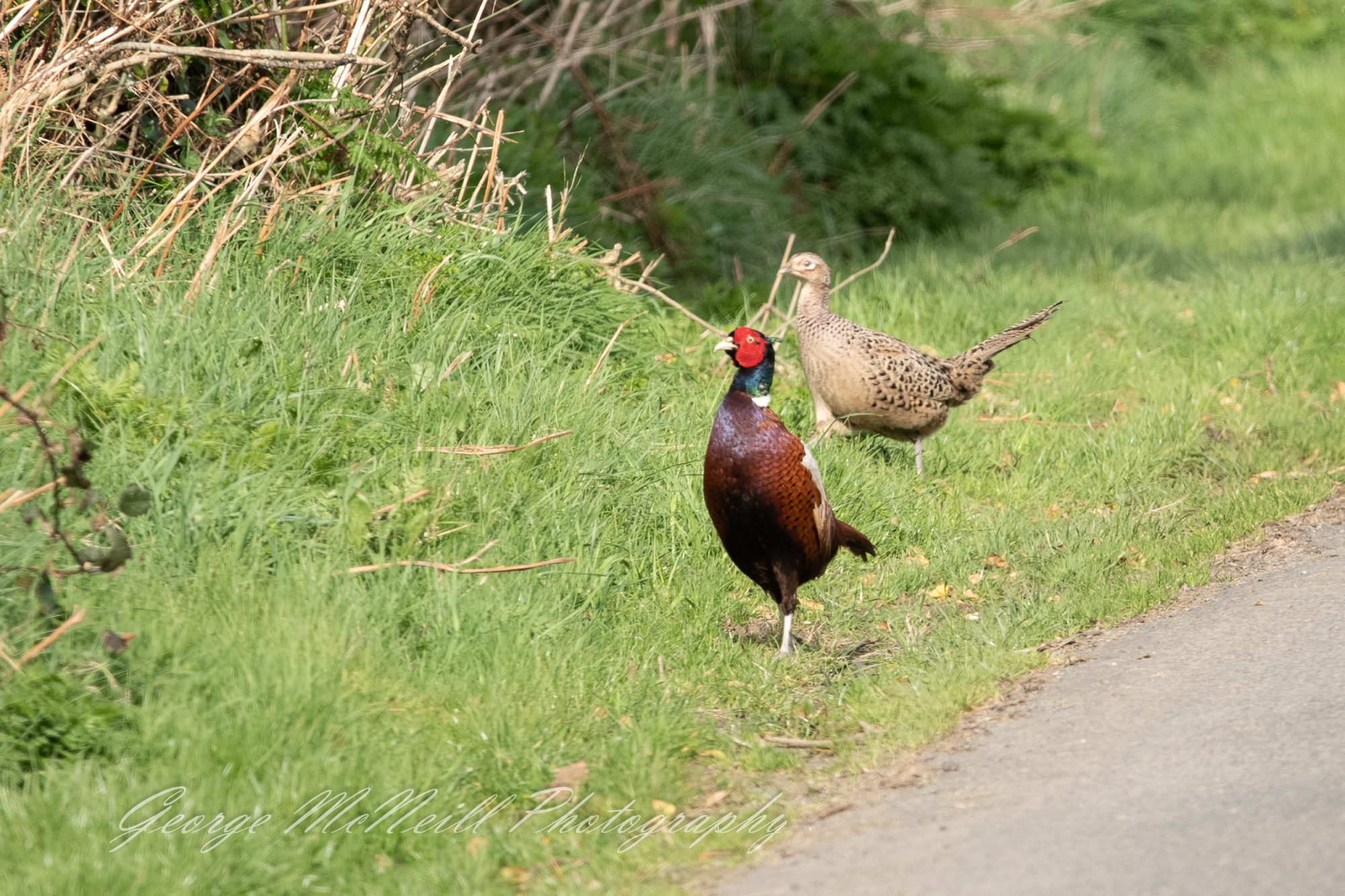
The next photograph is off a pair of Pheasants (Phasianus colchicus), a male and female. They appeared from a gateway down the road from me, so my camera is never far away. This handsome bird is thought to have been brought into the UK around 2000 years ago by the Romans. They are now found across the whole of the UK and Ireland. The male mates with more that one female who is left to raise the chicks alone. A clutch of pheasant eggs typically comprises 8–15 eggs. Usually, one egg a day is laid by the hen bird. Once the final egg of a clutch has been laid, the clutch is then incubated for 23– 25 days before the chicks all hatch within a 12-hour window. They remain with the female till around 8 weeks old. Most are raised in the UK on large country estates for game shooting.

Thank you for visiting and joining me out and about in Northern Ireland.

Leave a comment

First Posting in a couple of years.

There as been a few changes in my life over this last couple of years, changes where I stepped back from posting. Taking time to look after myself from the stress of my employer moving me to a different location to work. I survived and retired in December 2024.

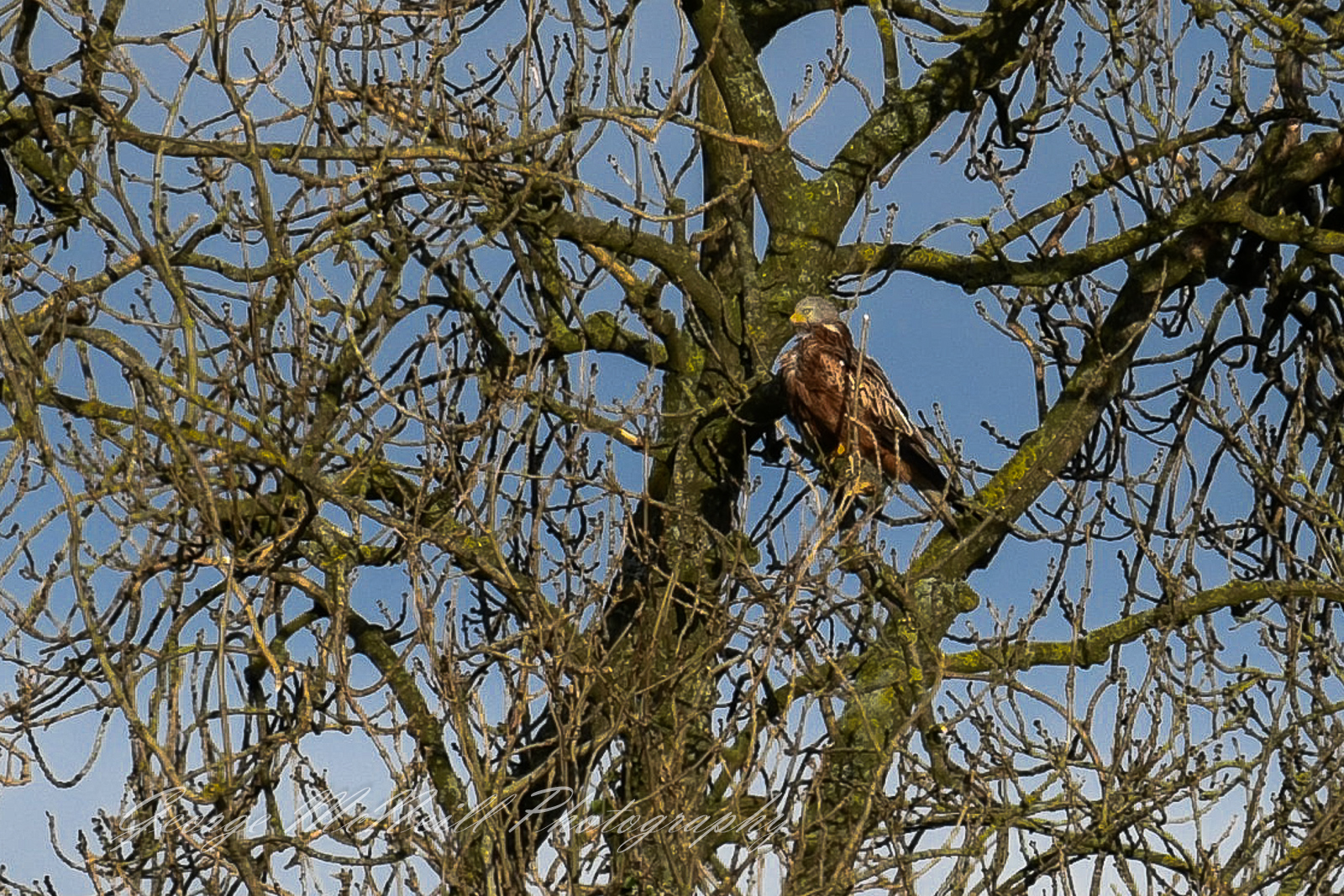
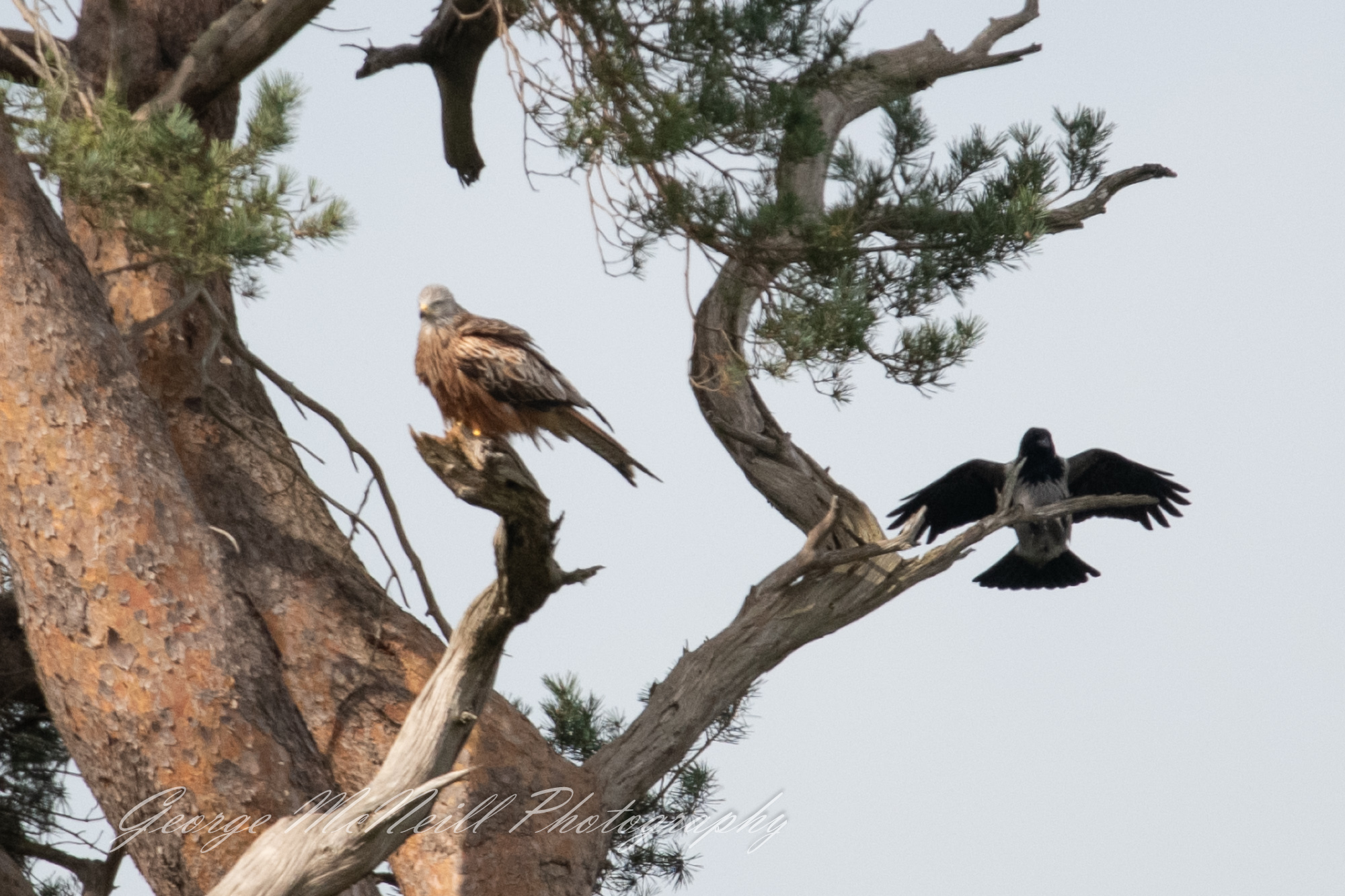
So my first post is about volunteering with the RSPB as a Conservation Officer on The Northern Ireland Red Kite Project.

These birds were reintroduced back into the north of Ireland in 2008 with young birds from Wales. 2010 saw the First Red Kites to hatch in Northern Ireland in 200 years.

They are monitored most of the year, Winter means being out in all weathers till dark doing Roost counts. These birds like some other birds of prey are social and roost in groups, first we need to find the roosting sites. Then count how many are there, This information is relayed back from all the volunteers from different roosts. it gives an indication of how many are in the area.

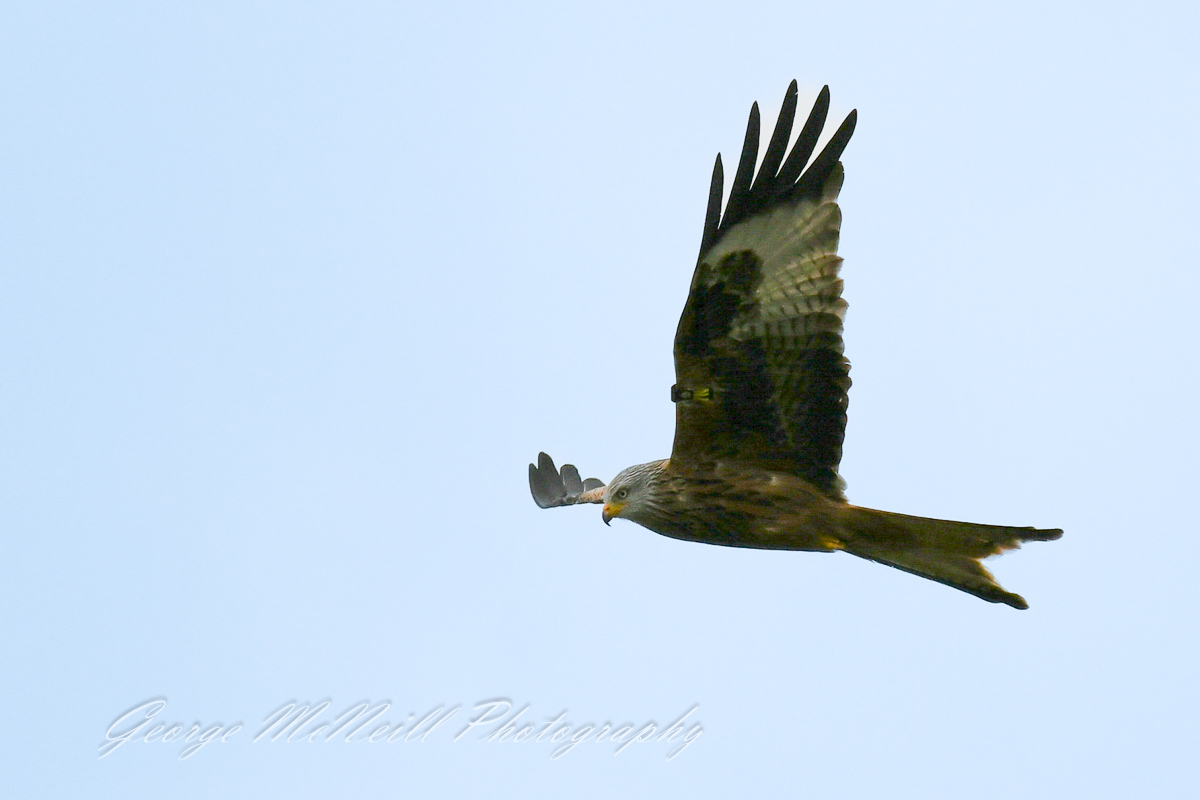
Red Kites hunting for food.

You can see in the above photos wing tags on some of the birds, brown tags on the left wing means it a Northern Ireland bird. The colour tag on the right wing gives the birth year, there are numbers and letters on the tags which help in with nest and year information. Also you can see the forked tail from which it gets it name.

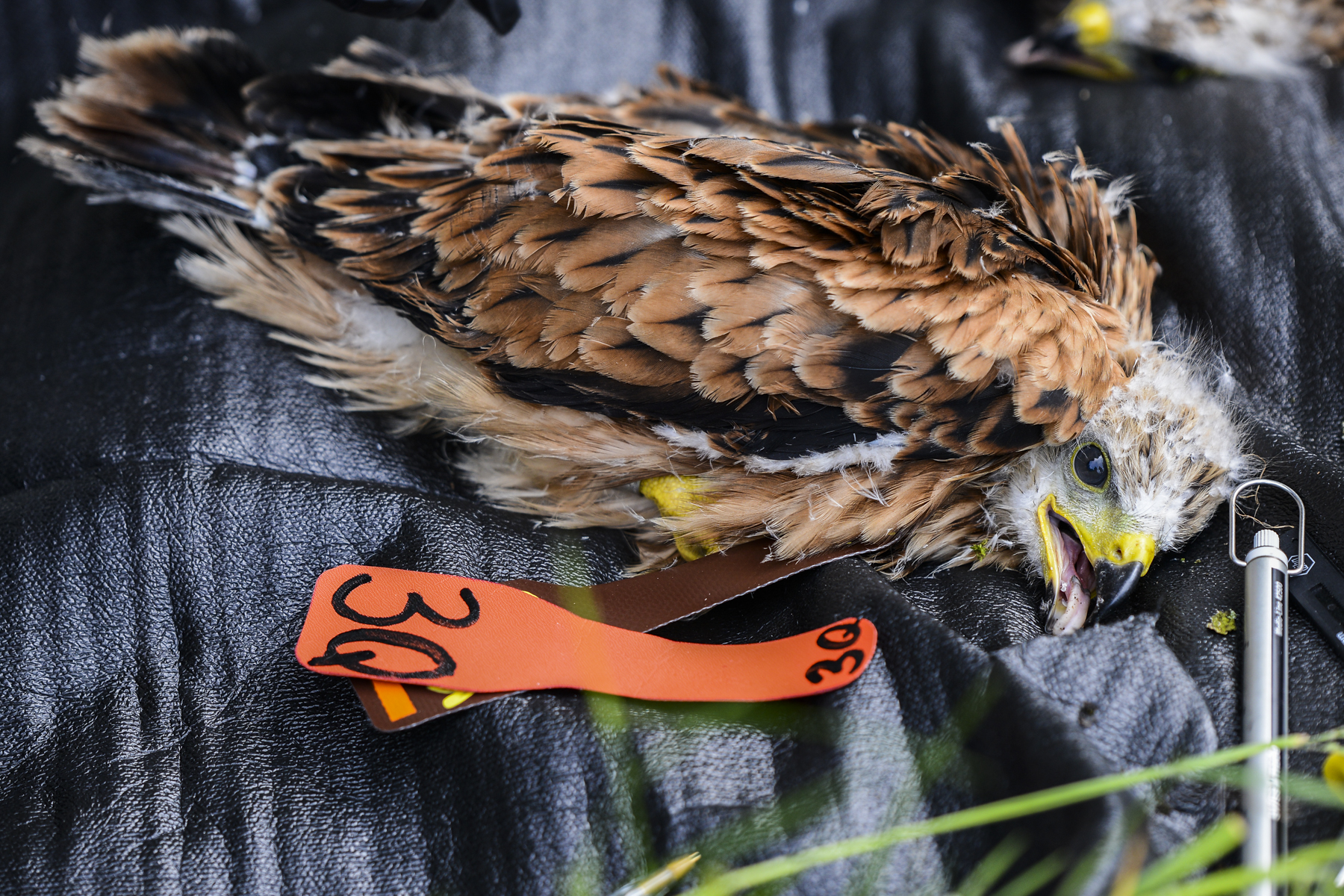
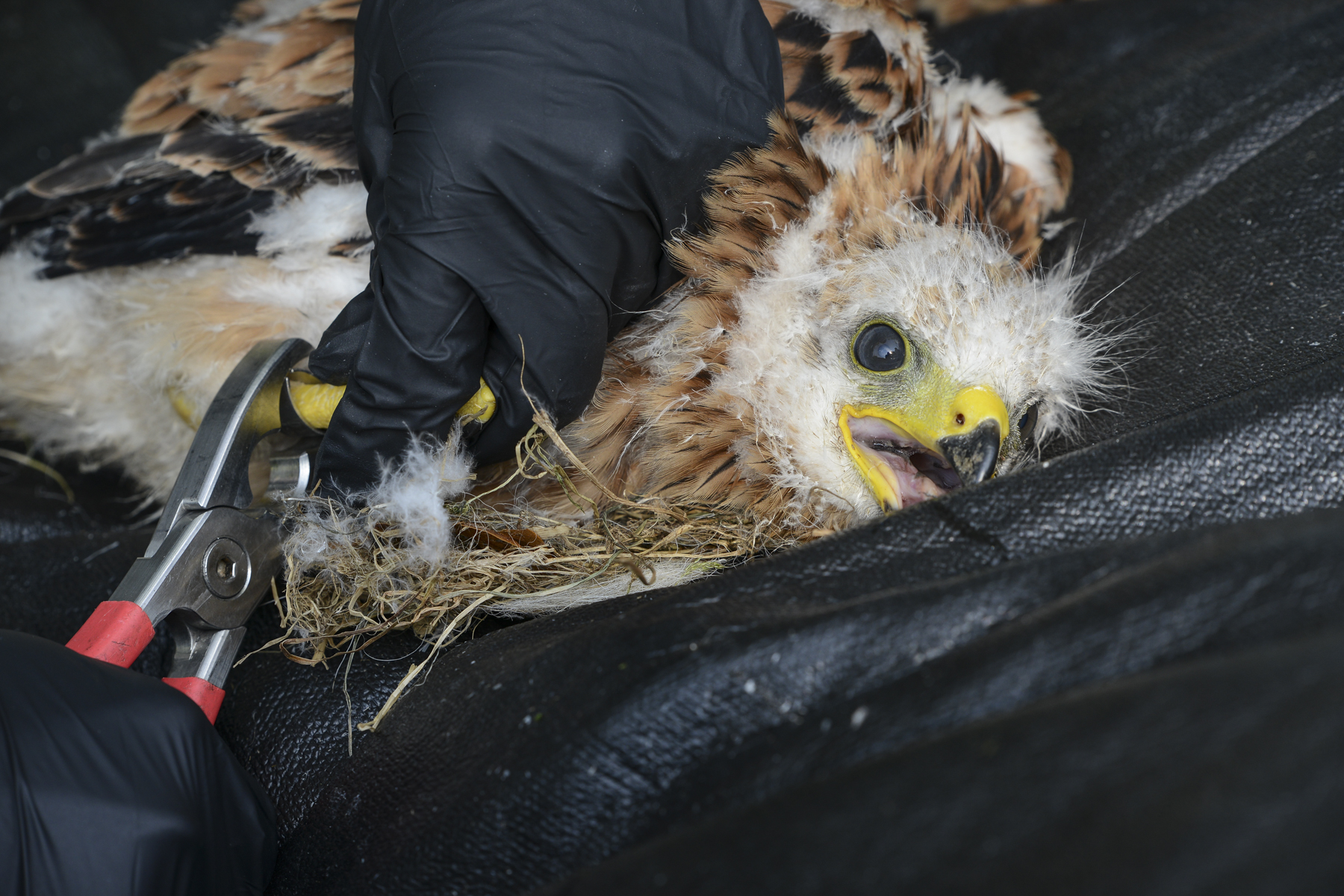
Next comes Spring and nest building time. Red kites mate for life and will reuse the same nest if they were successful in rearing a family in it the previous year. But if unsuccessful will move to a new nest site. This becomes race to find them before the trees get their leaf covering. Plus we get help from the public who report possible nest sites. We monitor the nest for the sight of chicks, when they are five to six weeks old the identification tags are fitted to the wings and leg. you have to be licensed to handle and tag these birds.

Young Red Kite waiting to be tagged While in the other photo it’s getting a leg ring fitted. Notice the young birds just stay still, they play dead.

I will give some measurements and weight for adult birds .

Length: 60-66cm or 23-26 inches

Wingspan: 154-170cm or 60-67 inches

Weight: 750-1600g or 1.6-3.5 pounds

We watch the young Kites getting stronger by the week as they lose their down for full feathers, flapping their wings to build strength for flight. Once flying juveniles move on after four weeks.

Its at this time we get a short break before autumn arrives and the dark evenings. Time to warp up warm and look forward to roost counting season.

I’ll leave you with a few photographs of this beautiful bird and thank you stopping by.

Stay safe,

George.

Your Messages are appreciated

Go back

Your message has been sent

Warning

https://www.instagram.com/g.mcn.photos/

4 responses to “First Posting in a couple of years.”

  1. doerfpub Avatar

    First off, congratulations on the retirement. I can definitely say I never looked back after making that call. Now the Red Kite…wow, that is a cool bird. We have the White tailed variety over here to enjoy, but I do really like your resident variety. Thanks for introducing me to this species!

    Like

    1. George McNeill Avatar

      Thank you for your comment, yes retirement is a great gift to ones self. More time to spend in nature.

      Liked by 1 person

  2. A Curious Introvert Avatar

    Welcome back and you’ve been missed!! Congratulations on your retirement and new volunteer opportunity! Looking forward to seeing some of your wonderful photos as you enjoy less stressful times.🙂

    Liked by 1 person

  3. Janet Avatar

    Happy retirement George, and what a great way to volunteer! Love the shots of it in flight.

    Like

Rathlin Walk 3: the wildlife

My last post was about the walk out to Rue lighthouse. This is the photographs of the wildlife I took while out on the trail. I hopefully will give them the right I.D, so I hope you enjoy the photos.

So the first photos show the Eider duck.

Eider Duck.

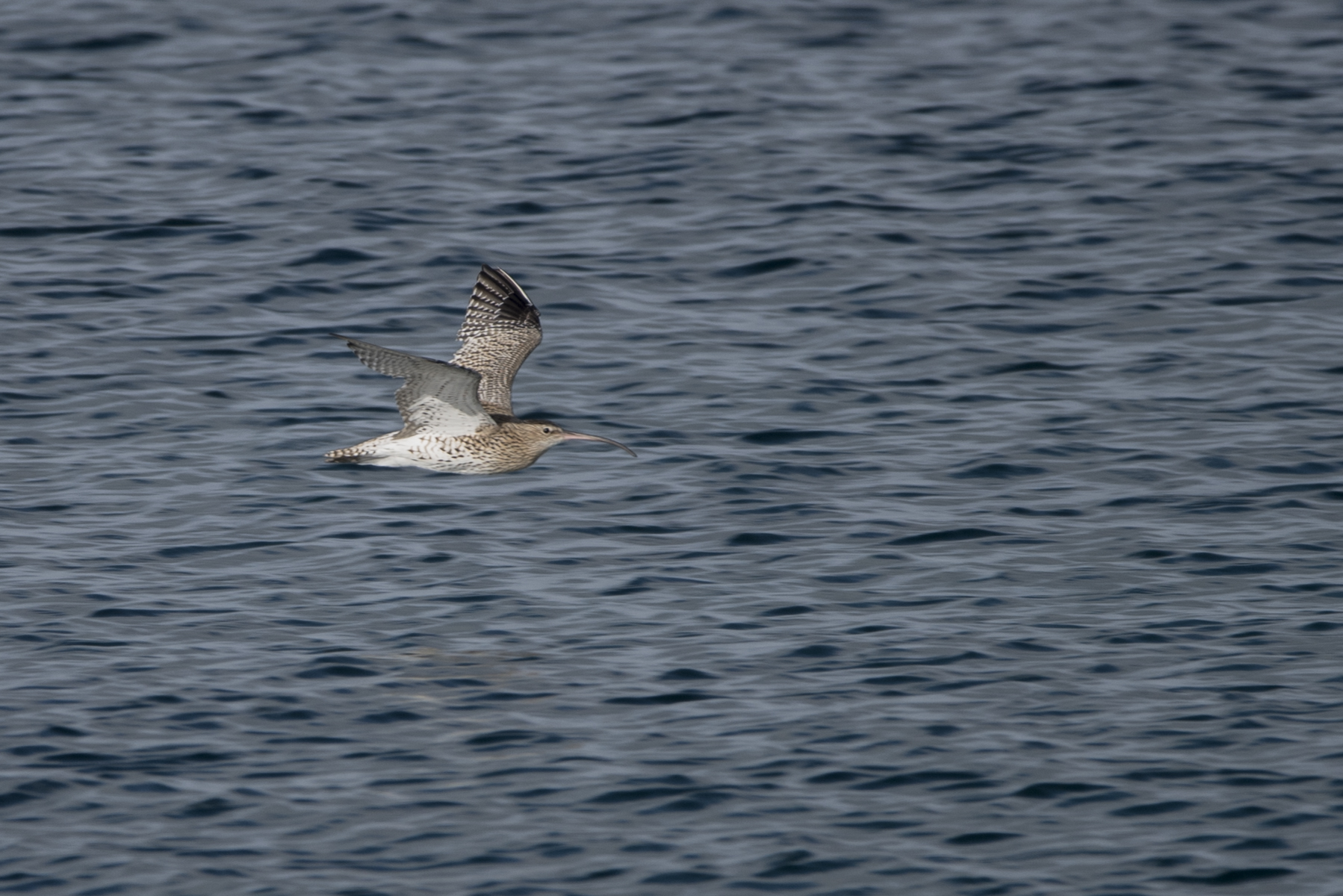
Next up is three photos of a Curlew ( NUMENIUS ARQUATA)

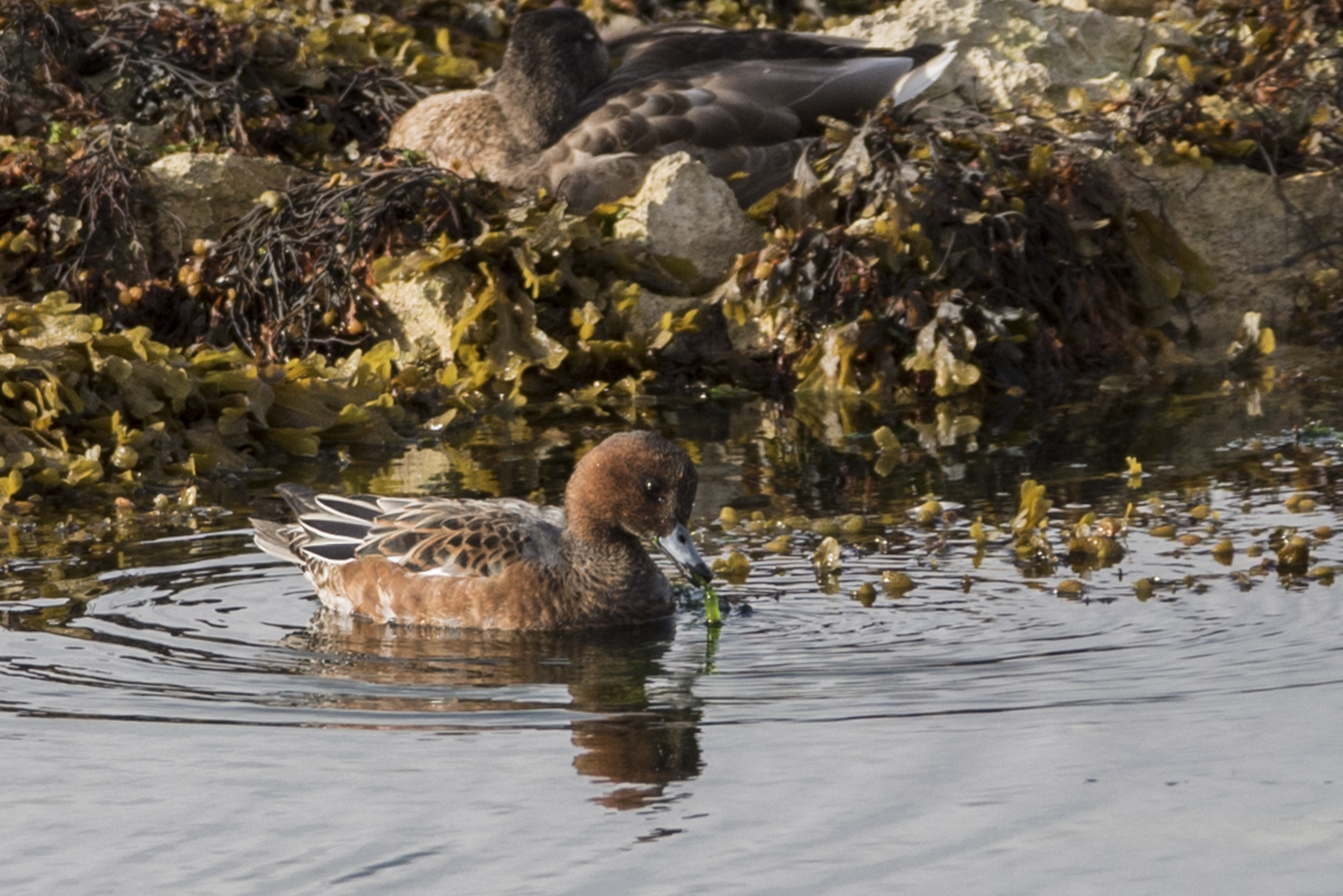
A few more minutes along the coast a few more ducks showed up, I think these might be Male Mallard (eclipse) and a Wigeon (rufous female) at the back. The next photo is of a Wigeon (rufous female)?

Wigeon

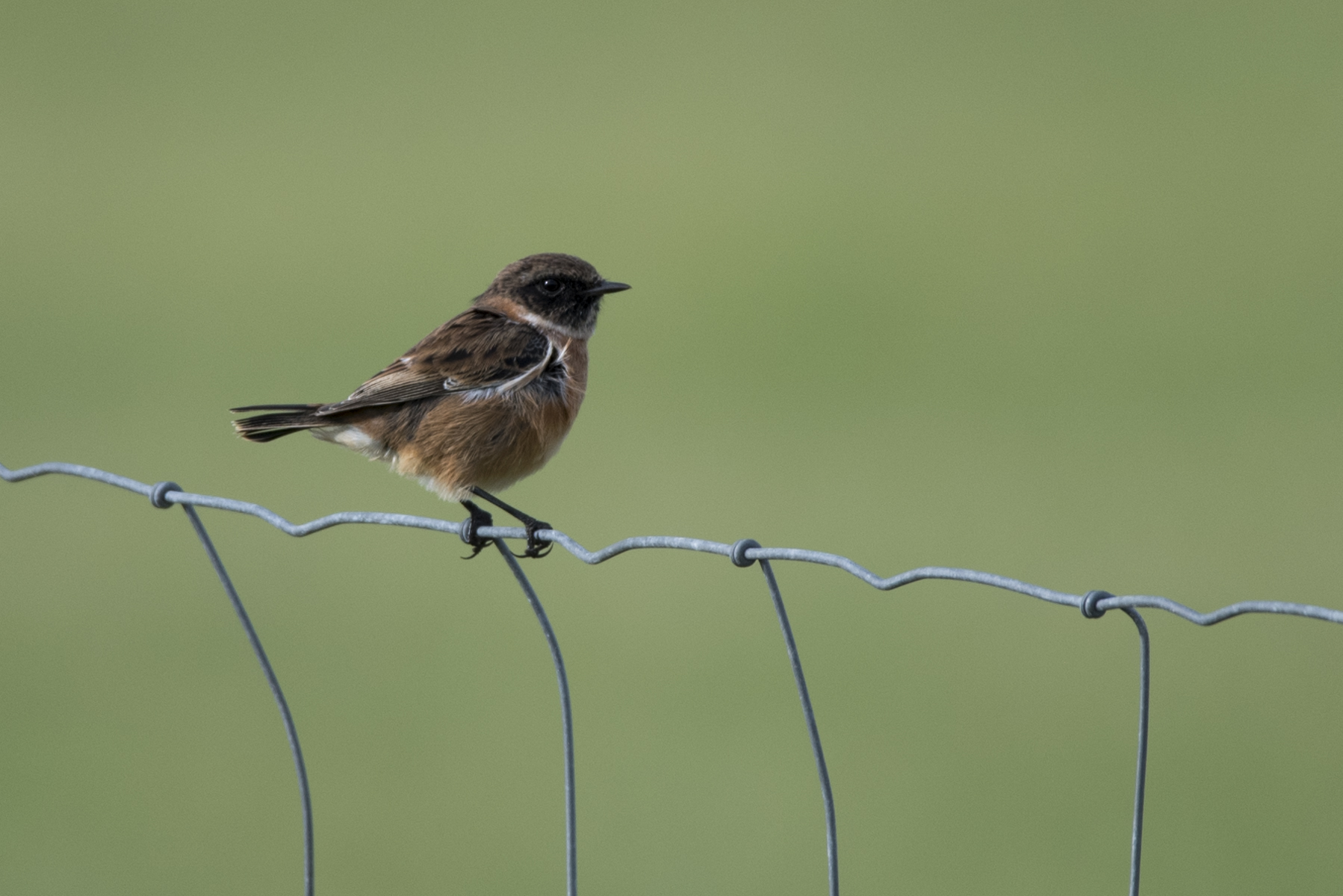
The first bird to be photographed has I move away from the coast is a Stonechat (male) sitting on a wire fencing.

Male Stonechat

The Coot is up next, this is a very common bird here in Ireland found on all types of water ways.

Coot.

The next bird I post on my last blog post has a Golden eye, after looking closer I think it’s a female Tufted Duck

Tufted Duck

I’m now off road and walking up towards the clipp top trail when I hear the call of a Buzzard (BUTEO BUTEO)

Buzzard

Buzzard

Just before the cliff top trail a flock of Curlew’s flew pass.

Curlews in flight

The next batch of photographs were taken from the ruin cottages down by the coast near Rue lighthouse

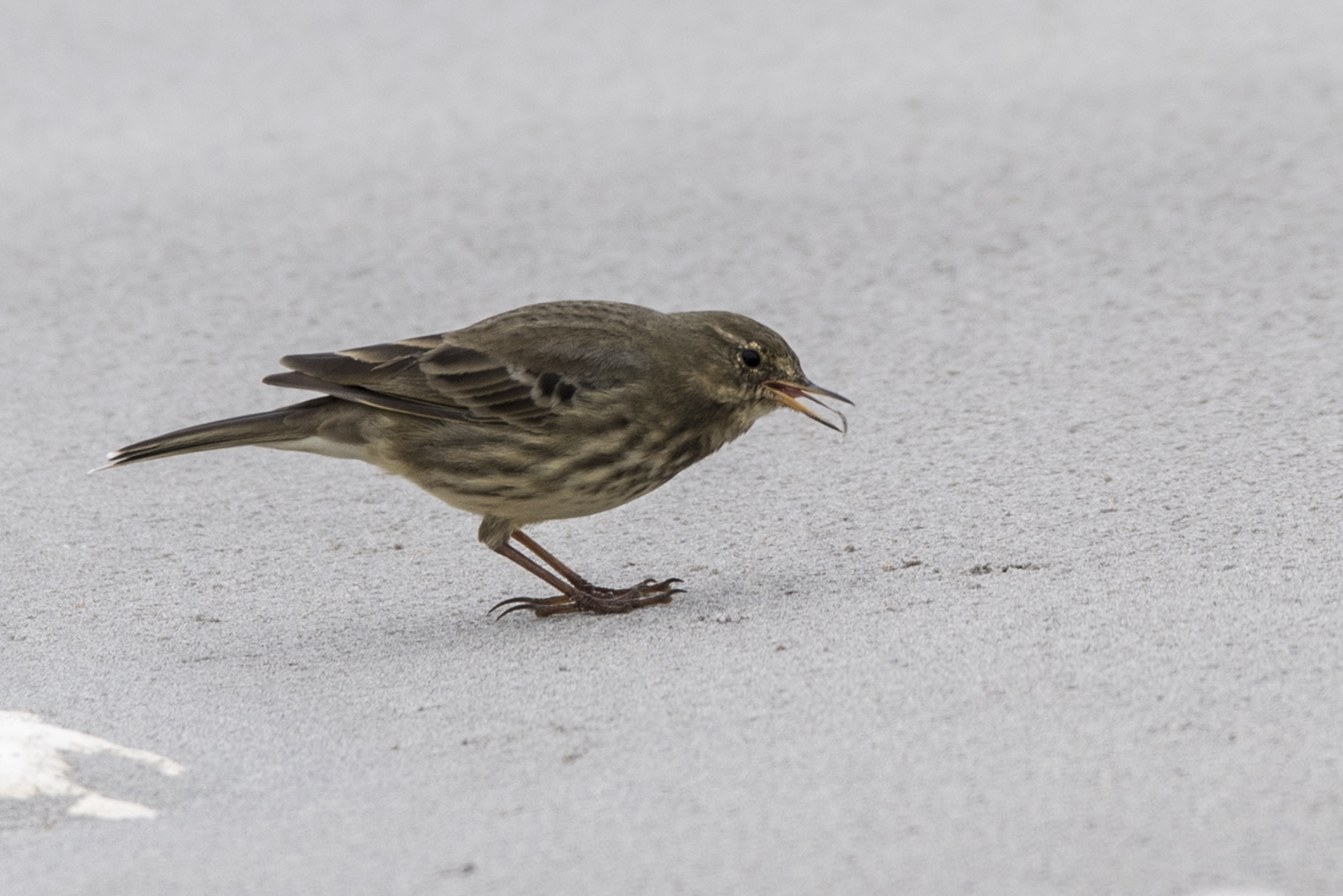
Rock Pipit.

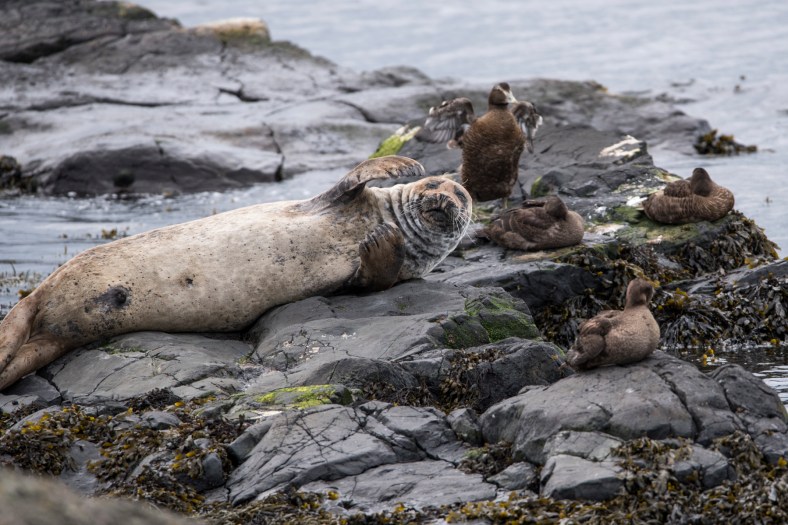
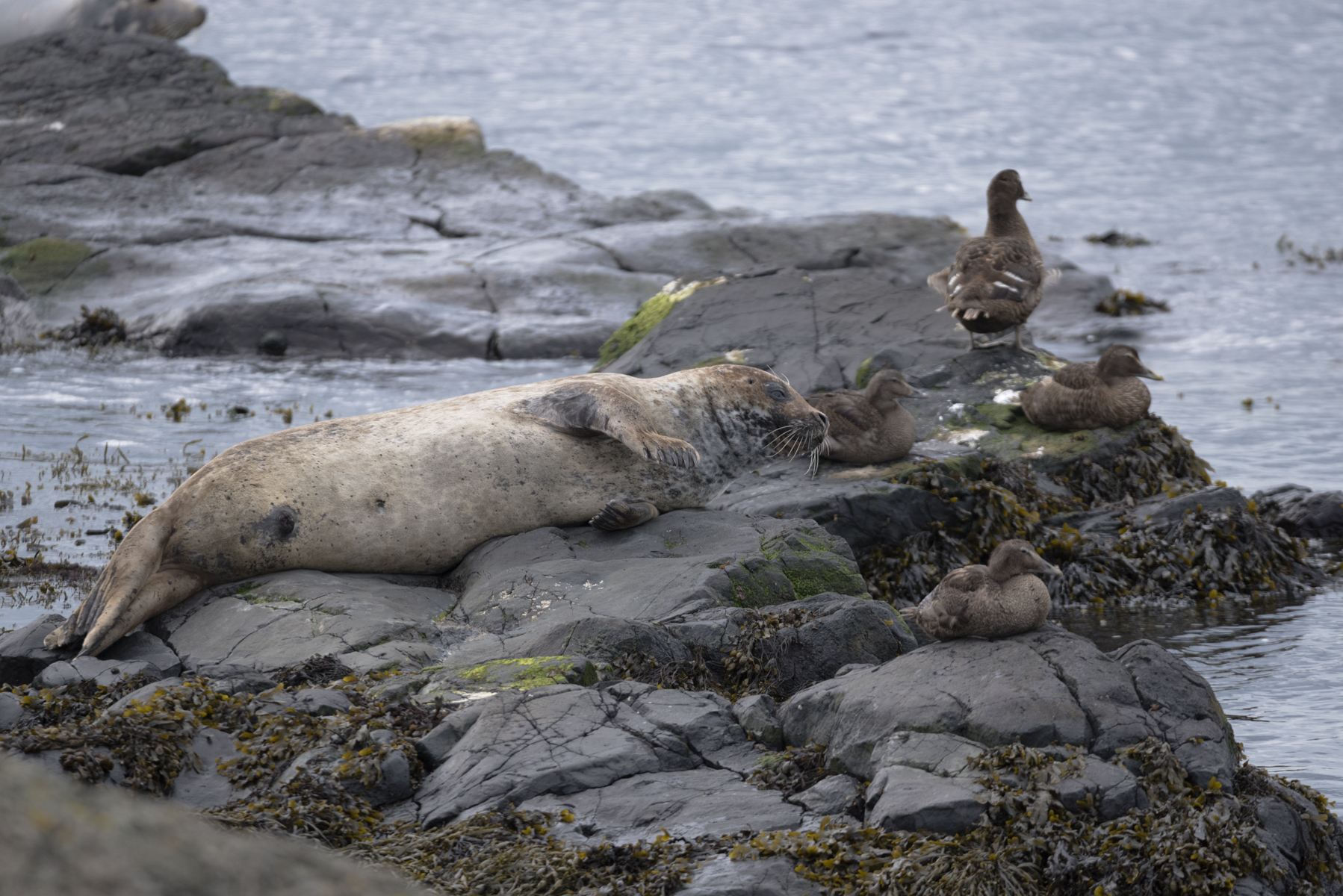
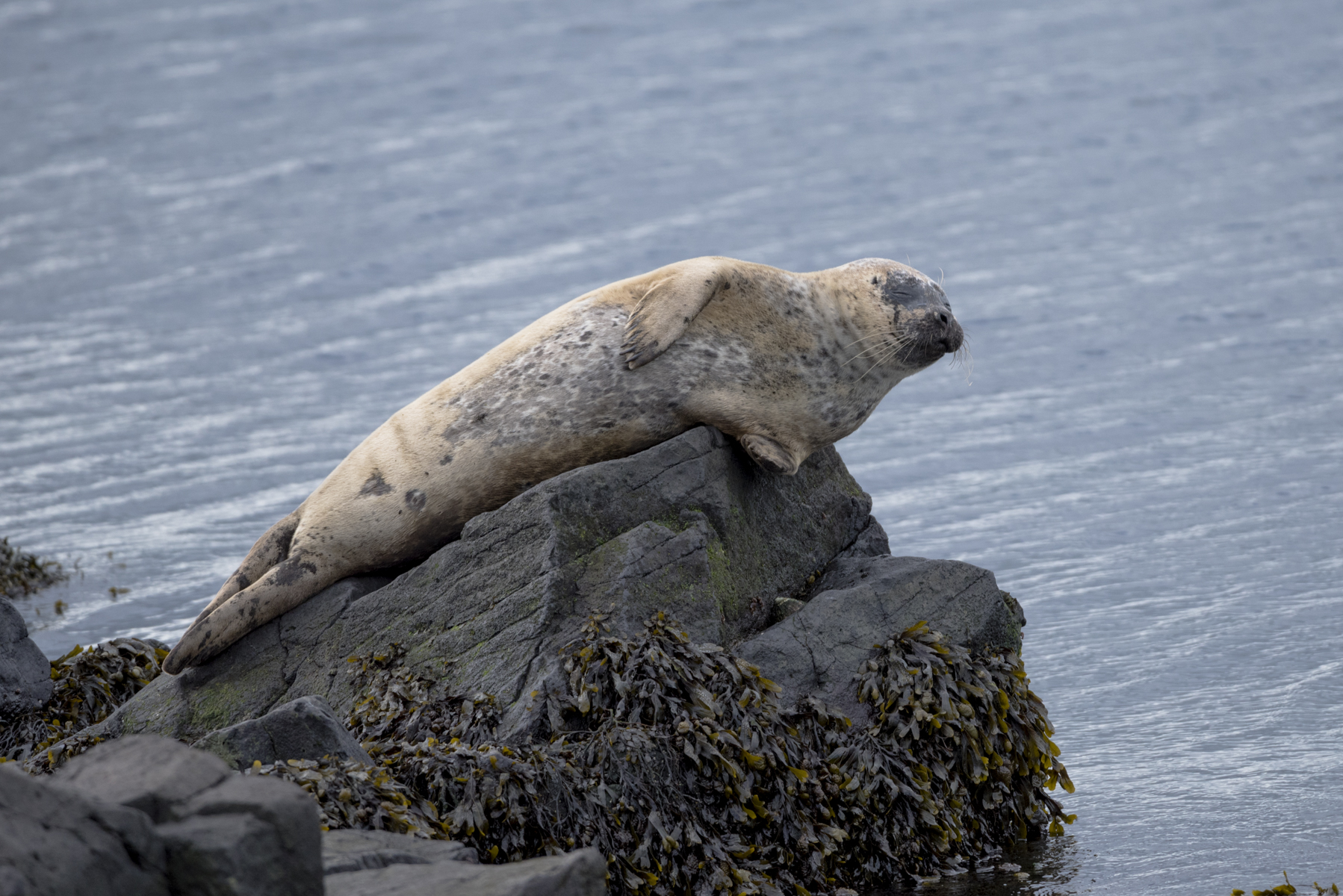
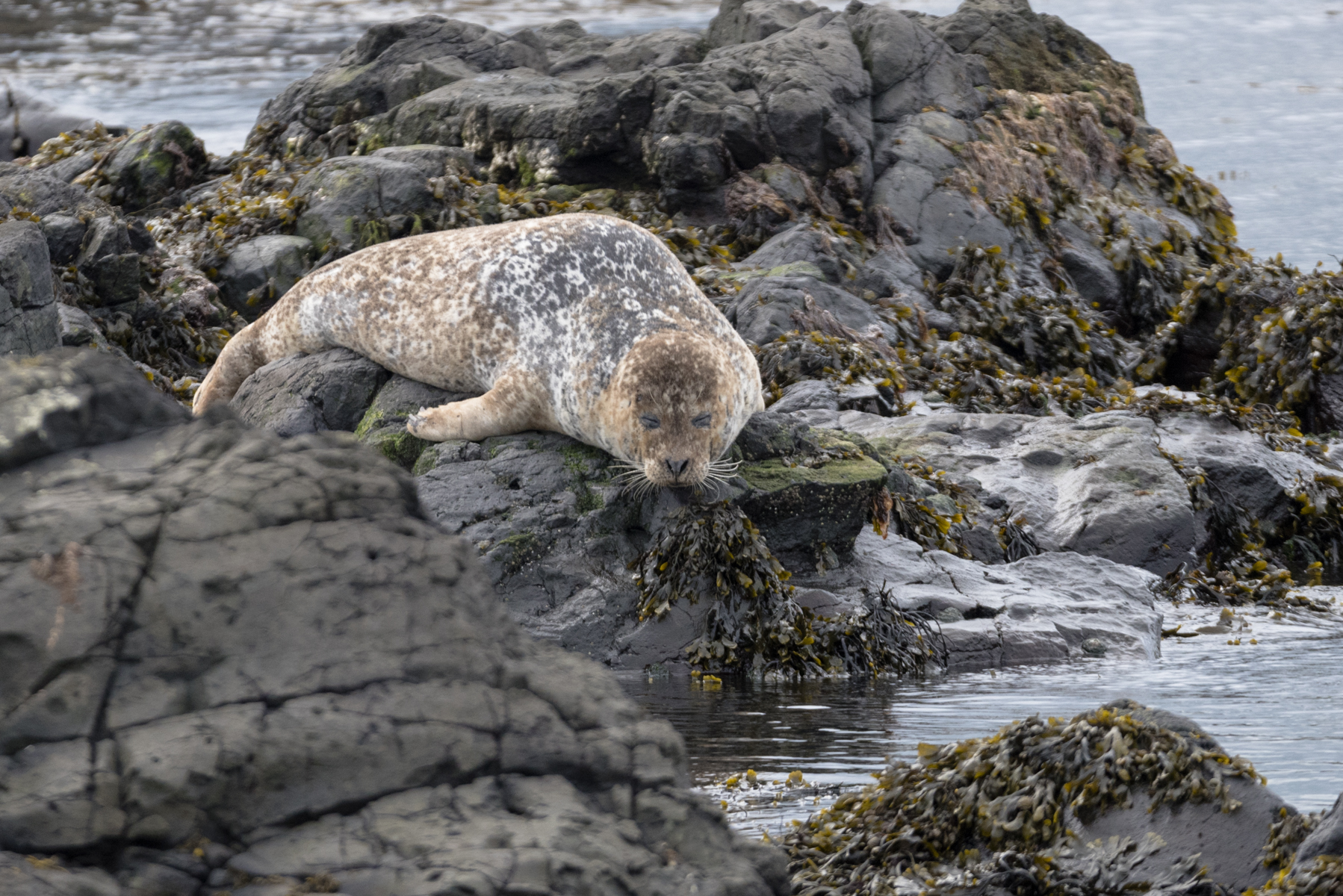
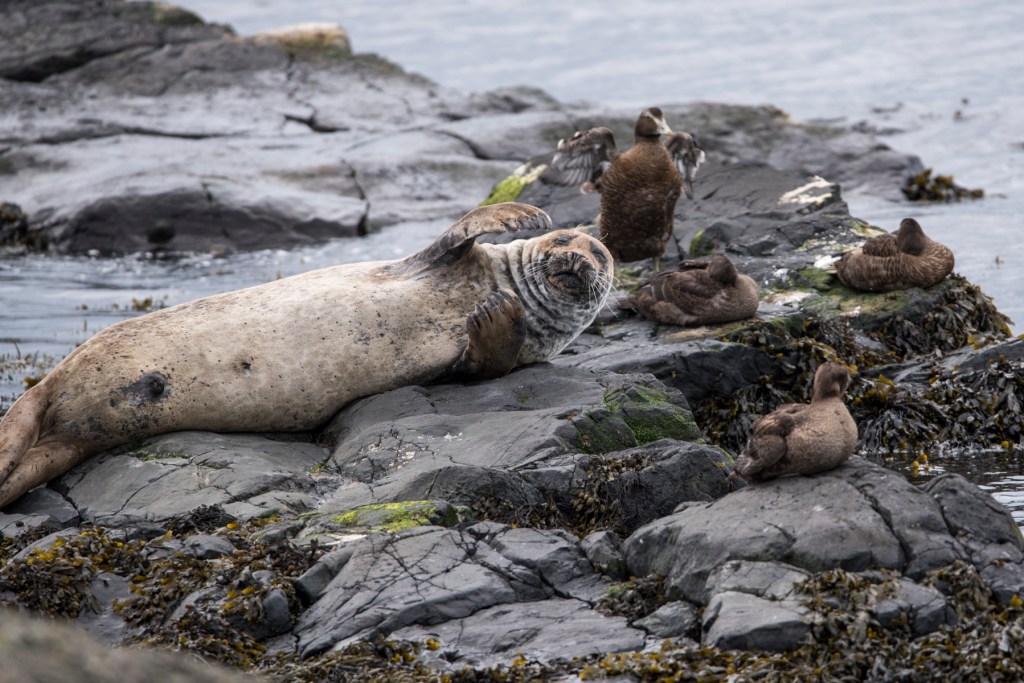
Seals and Eider Ducks

The walk back to Church Bay was by road, and it along the first mile this photo’s were taken.

Again I heard the call of Buzzards, this time there was two riding a thermal over the hills I had just walked. They were at the limit of my lens but I got this shot above.

This I’m not sure off but might be the Devil’s – bit Scabious.

Black Bird male. these birds will start to change their diet at this time of year. Feeding on more fruits in this case black-berries .
Common Carder bee

I have just got back to walking along the coast, a small sandy beach nests in the rocky coast line. I blimb down a take a seat on a sandy bank at it’s edge. It’s from here I get some of the small waders feeding here.

Dunlins feeding along the waters edge.

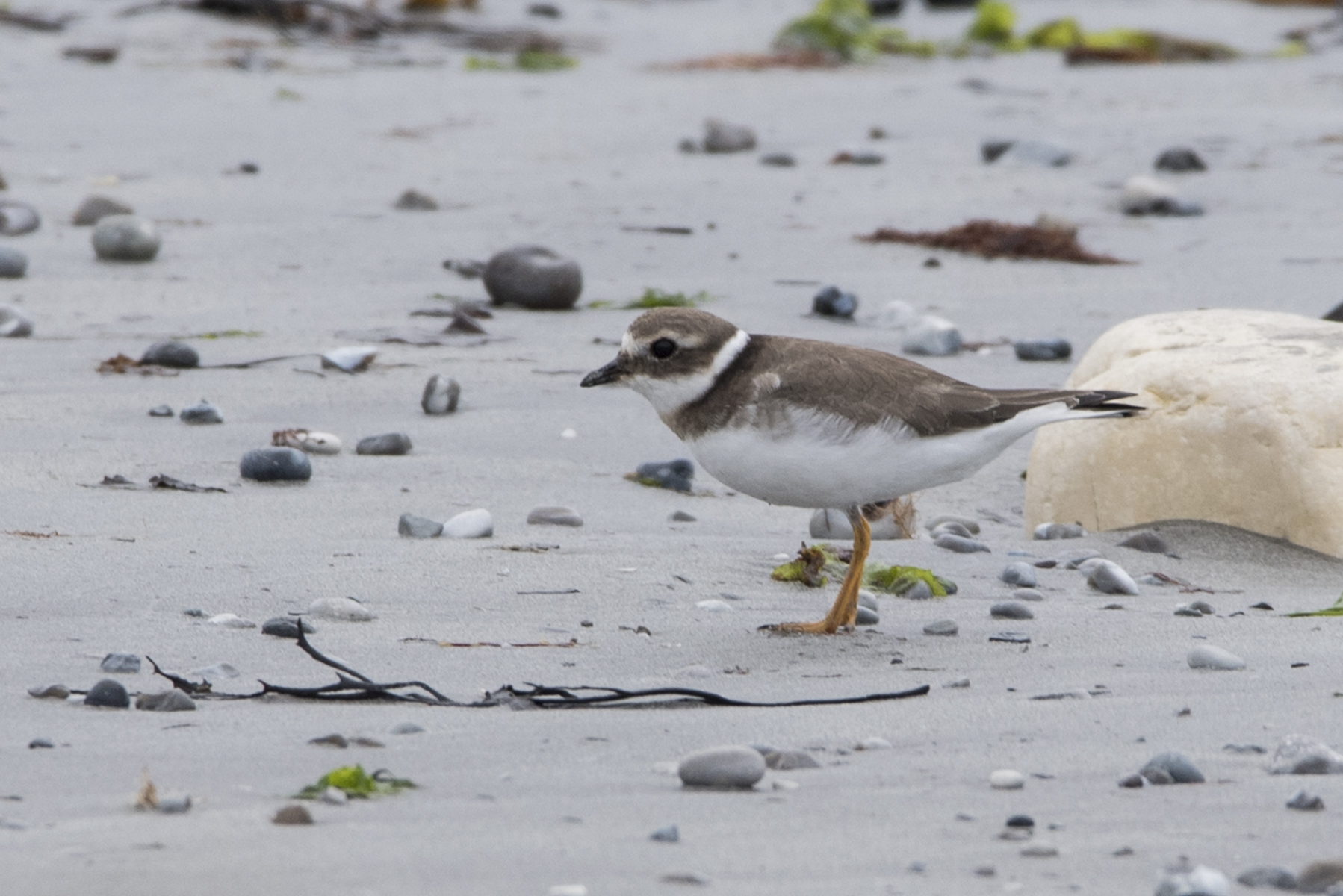
The last two images are Little Ringed Plovers .
I believe the two images above are of a Rock Pipit.

These are the last birds I photographed before entering the village. Again I’ll leave you with this photo of the Kelp house .

thank you for viewing

George mc Neill.

Black & White Wednesday

Hello to my visitors, hope you are all keeping well where-ever you are in our crazy world. This week I would like to meet a home invader. Been caught in my living room, sitting on my sofa, in my kitchen. But is always welcome to come in and get petted. So the other morning I was going out to the coast to do some photography, it was sitting on the doorstep and the sun was reflecting off the white van. So I grabbed the camera and took three or four photos. I turned one into this weeks B & W image. It was only when I looked at the finished photo I thought this is a grumpy looking cat. But it a very friendly and adores getting attention. Did you notice it sits with a front paw up like you would see some dogs do. It always sits like this, at first I thought it might have a sore paw ( hence the grumpy look) but seems to walk and run ok.

Grumpy cat..

So this my house invader, always welcome to come in.

I used a Nikon D7200 fitted with a Tamron 70 – 200 mm SP lens.

Photo data: f/4, 1/60 sec shutter speed. ISO 100 and lens focal length 78 mm.

Thank you for visiting and be kind to all living things.

George.

Black & White Wednesday

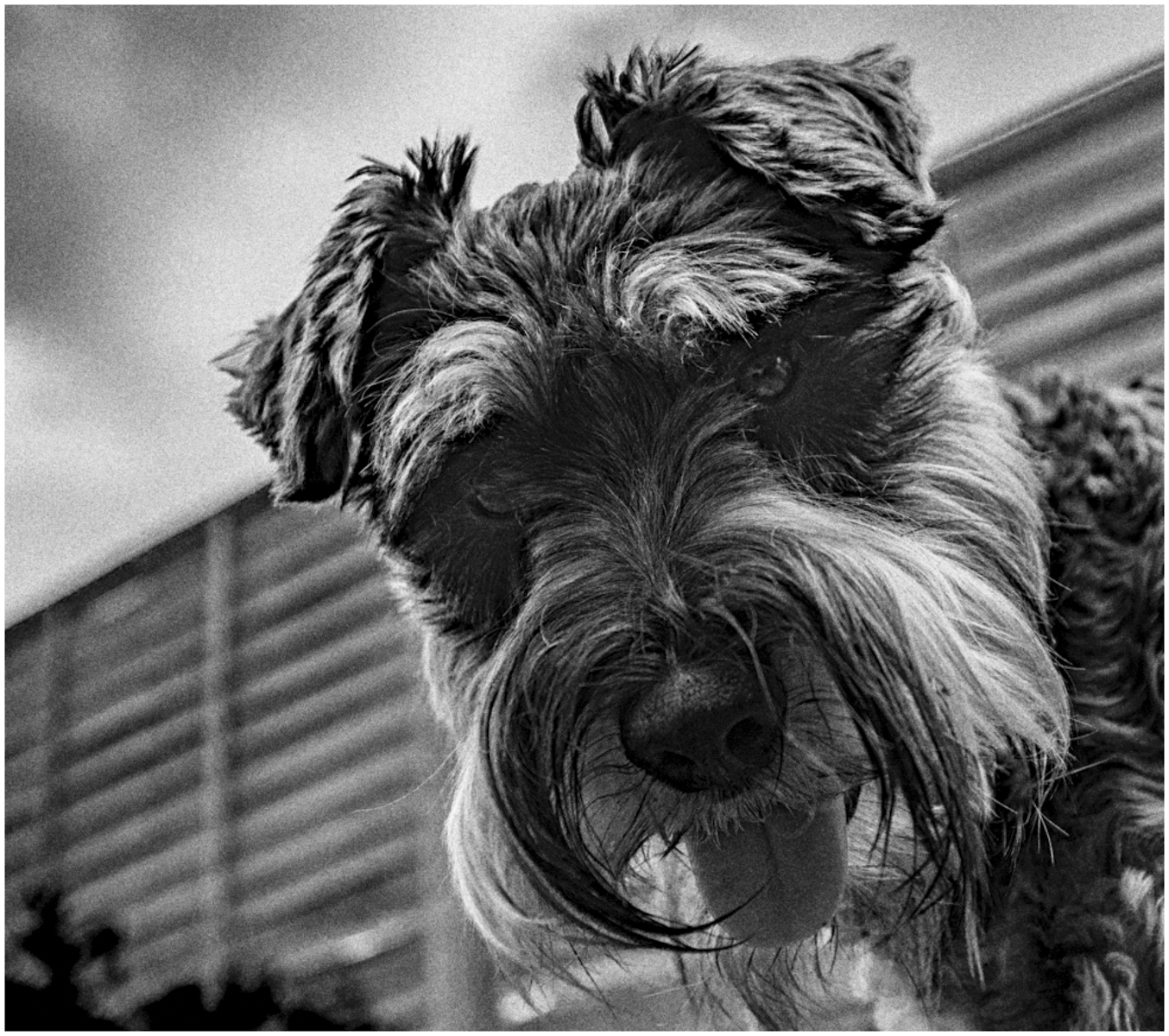
I have been looking back through some image files stored on a back up hard drive. So this weeks image was taken in London a few years back. His name is Ralph a Miniature Schnauzer and belongs to my daughter. A little dog with great character who loves attention and to play but would never make a guard dog. He would be putting you out in front to defend him.

Ralph.

Thank you all for visiting,

stay safe and well,

George.

Lockdown wildlife.

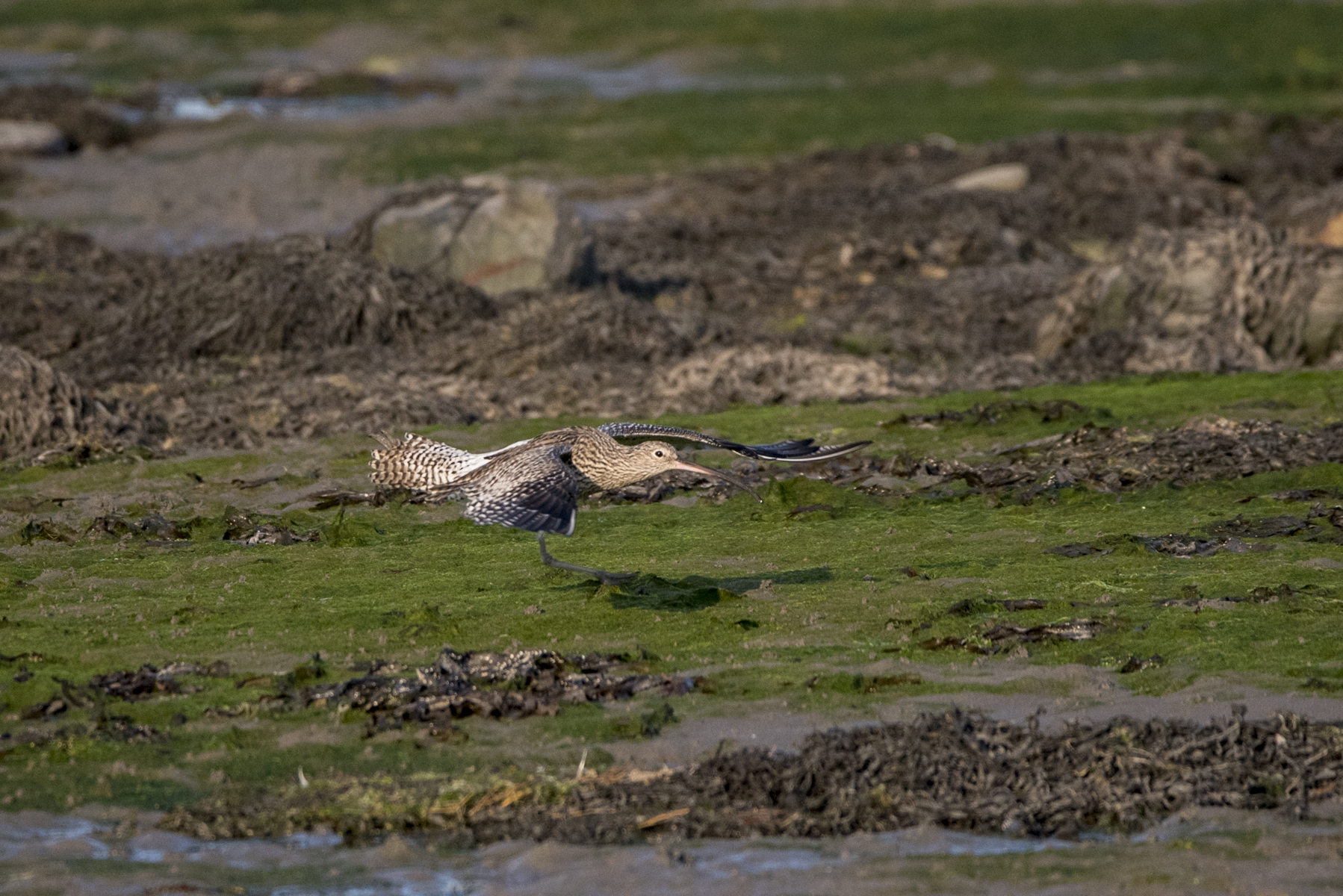
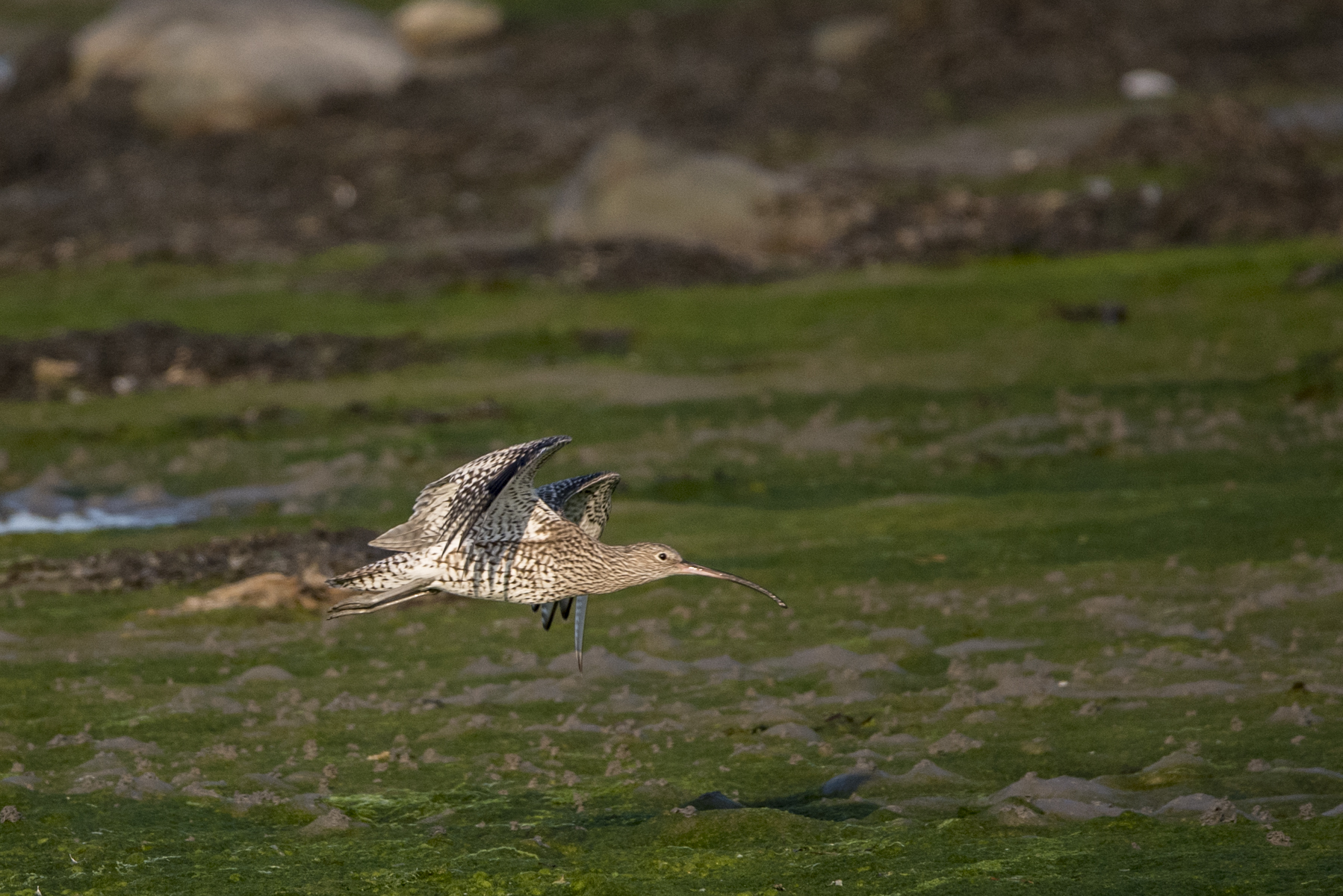
First I hope you are all keeping well and safe where ever you are in the world. Here in the north of Ireland we are back in a four week lockdown but we can still go out to exercise. So when the weather allows I pack the camera and head for the coast. I’m lucky that I have some great mud flats where the sea birds and wading birds feed within a 30 – 40 minutes drive. So the following photographs have been taken over the last few weeks along the County Down coast. Most of them have been shot with a Nikon D750 camera fitted with the Sigma 150 – 600 mm telephoto lens, some handheld and others using a tripod fitted with a gimble head. The following link is a great site for bird information here in Ireland and the UK. https://www.rspb.org.uk/birds-and-wildlife/wildlife-guides/bird-a-z/curlew/

The above is the Curlew ( Numenius arquata) taking off , great fun to watch has they sprint up to take off speed.

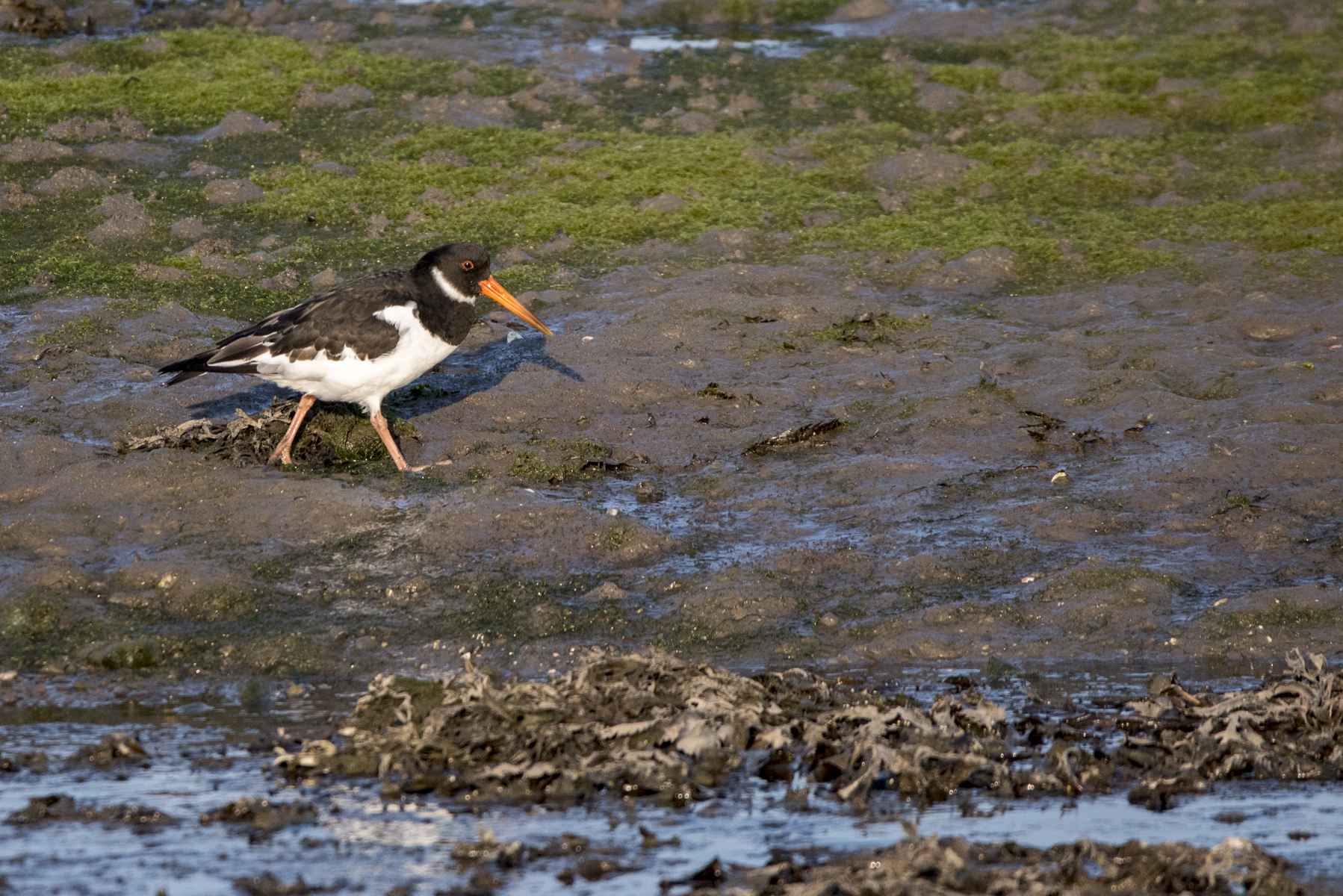
Here we see the Oystercatcher (Haematopus ostralegus) it’s a very distinctive bird with it’s bold black and white plumage, orange beak and legs but most of all that blood red eye.

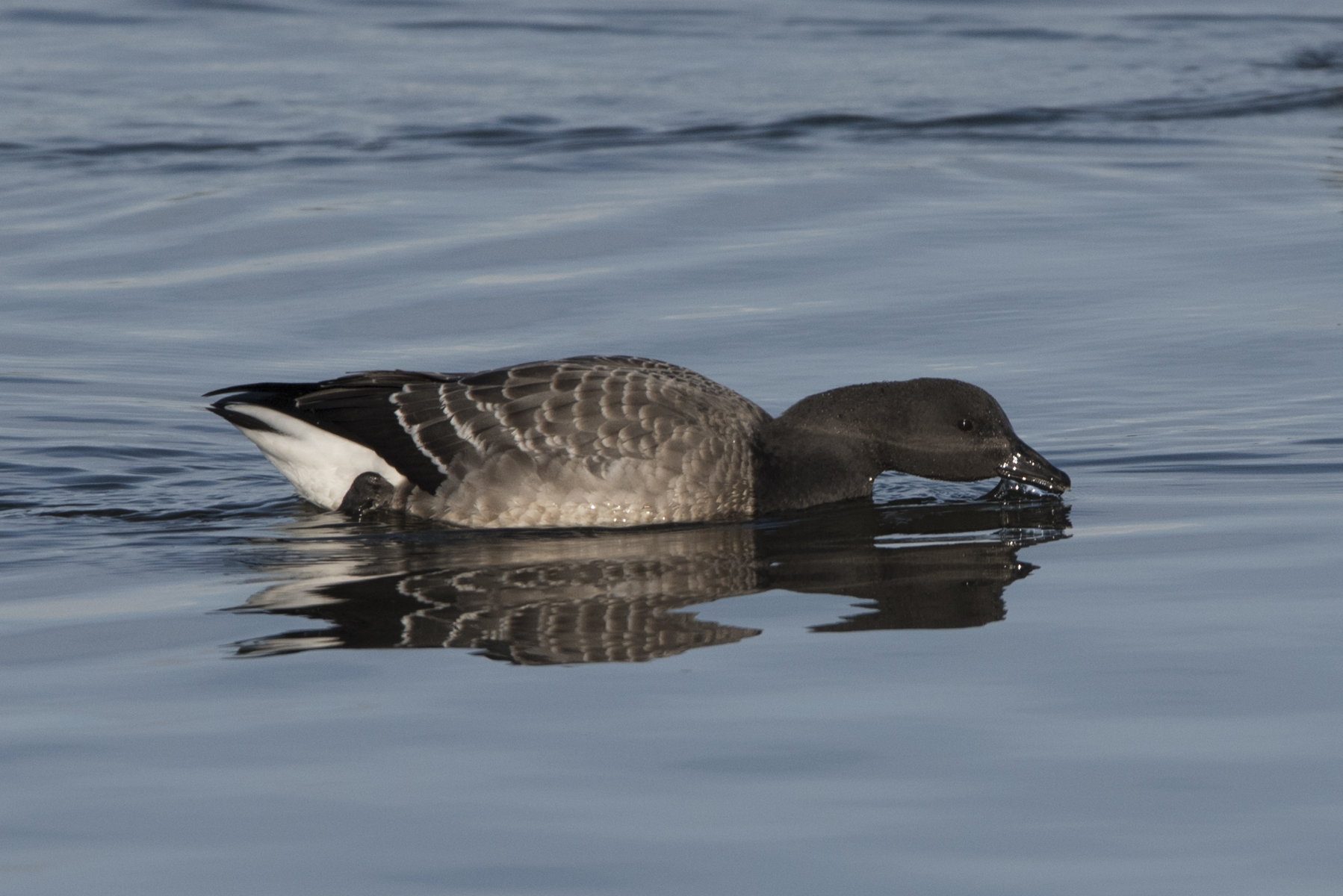
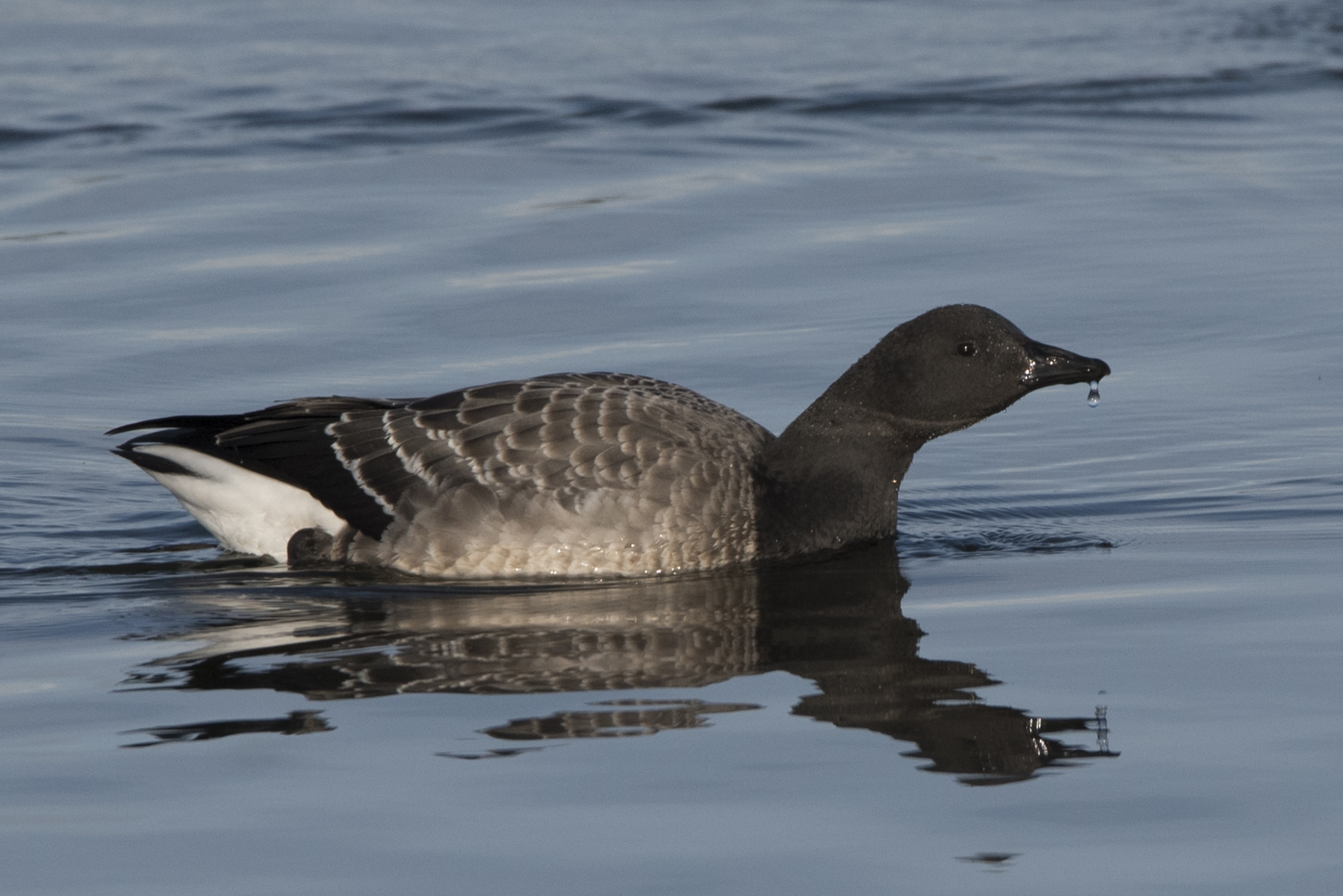
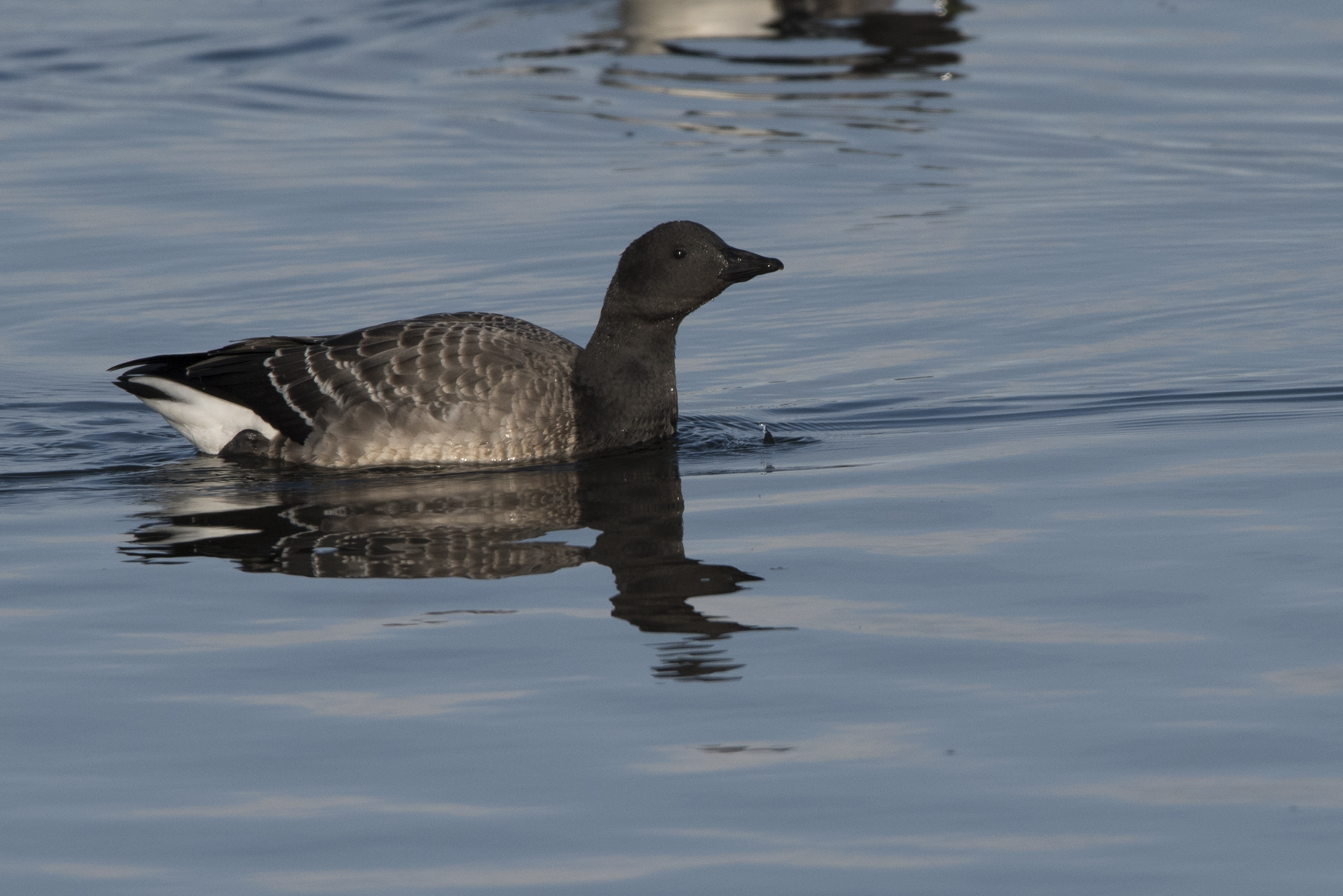
Next the Brent goose ( Branta bernicla) This small goose  is similar in size to a mallard duck. Can be hard to get good photographs with the eye showing because of the dark coloured neck and head. With the setting sun behind me it was just right this evening. They are always in a flock and the on singled out here is seen drinking.

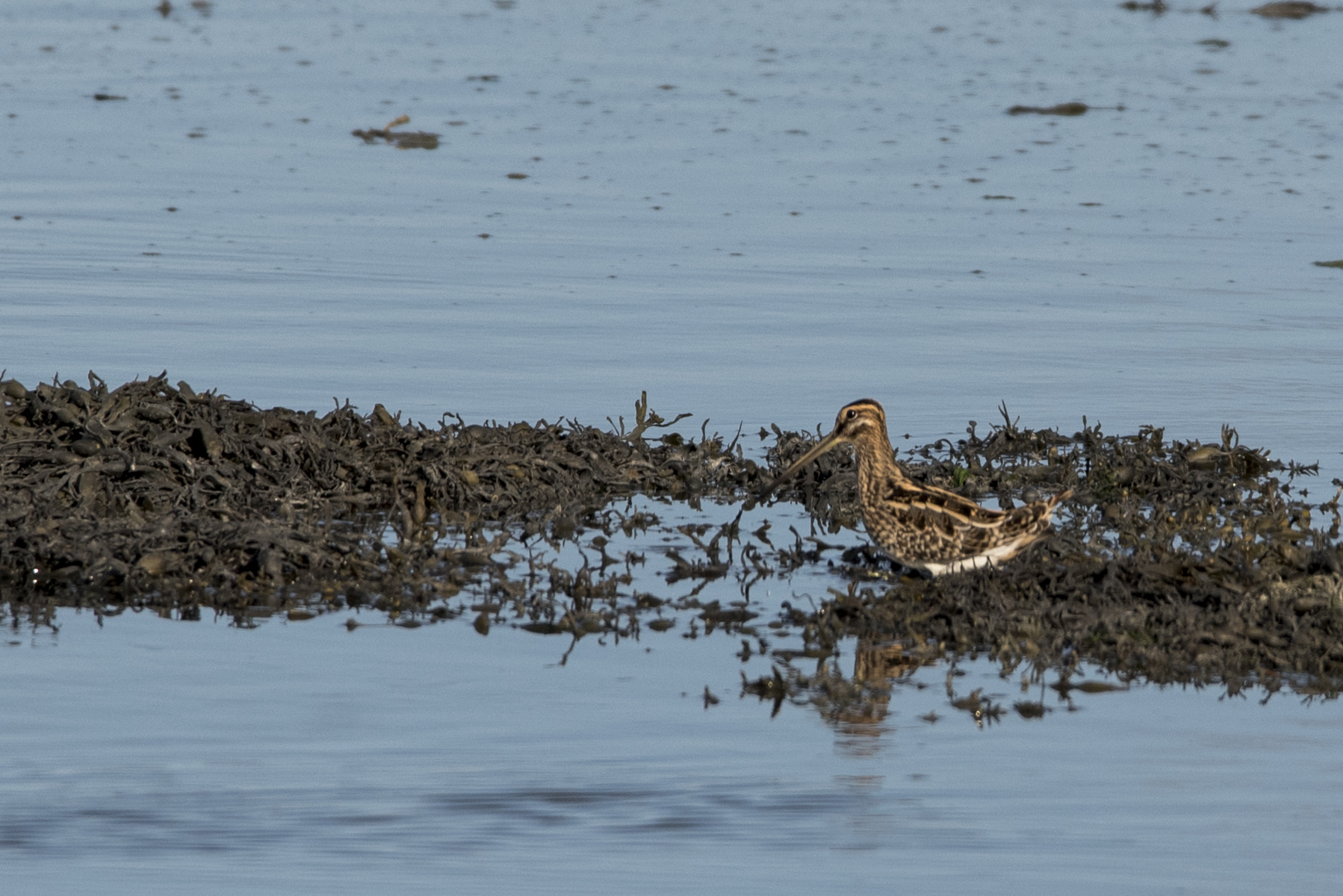
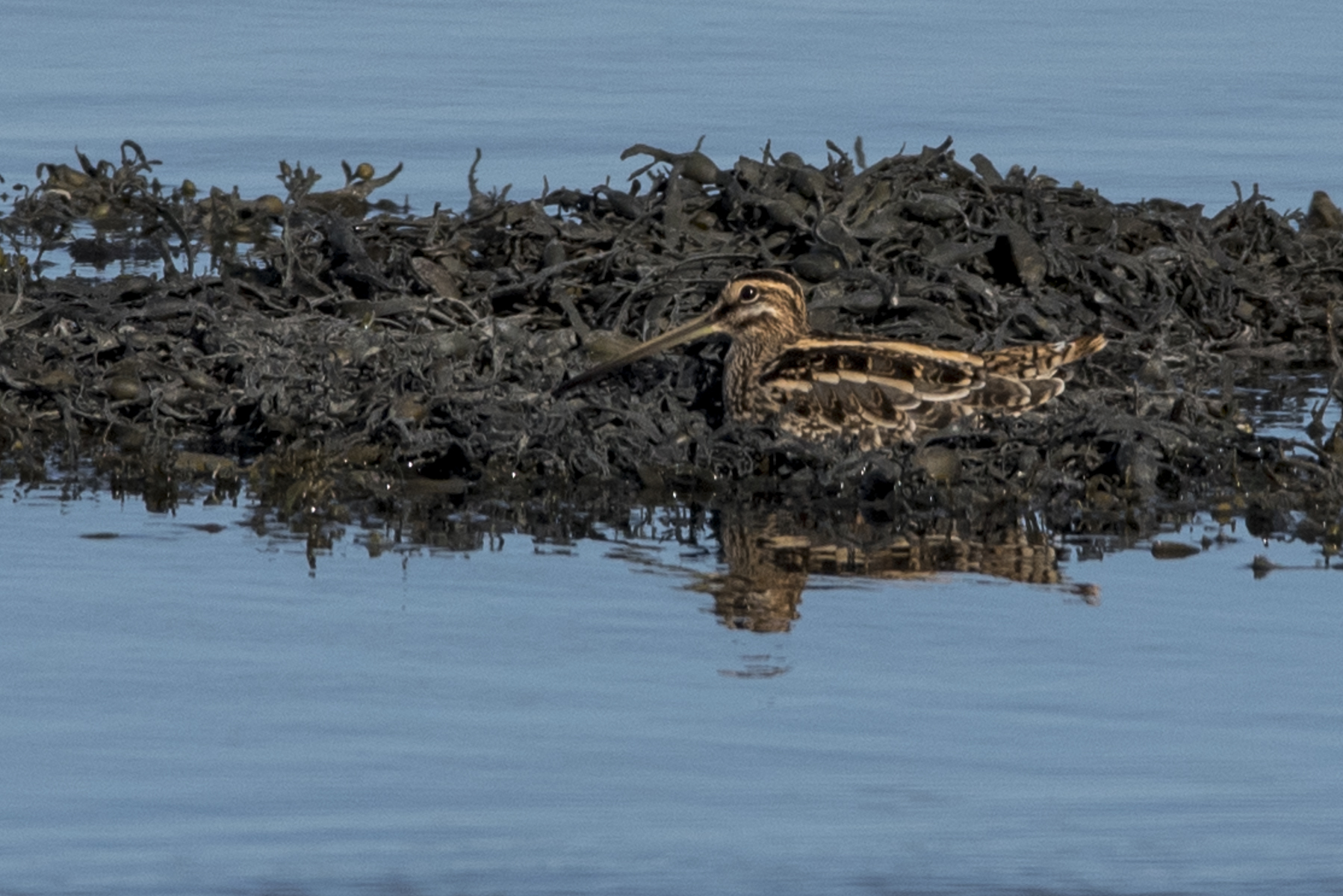
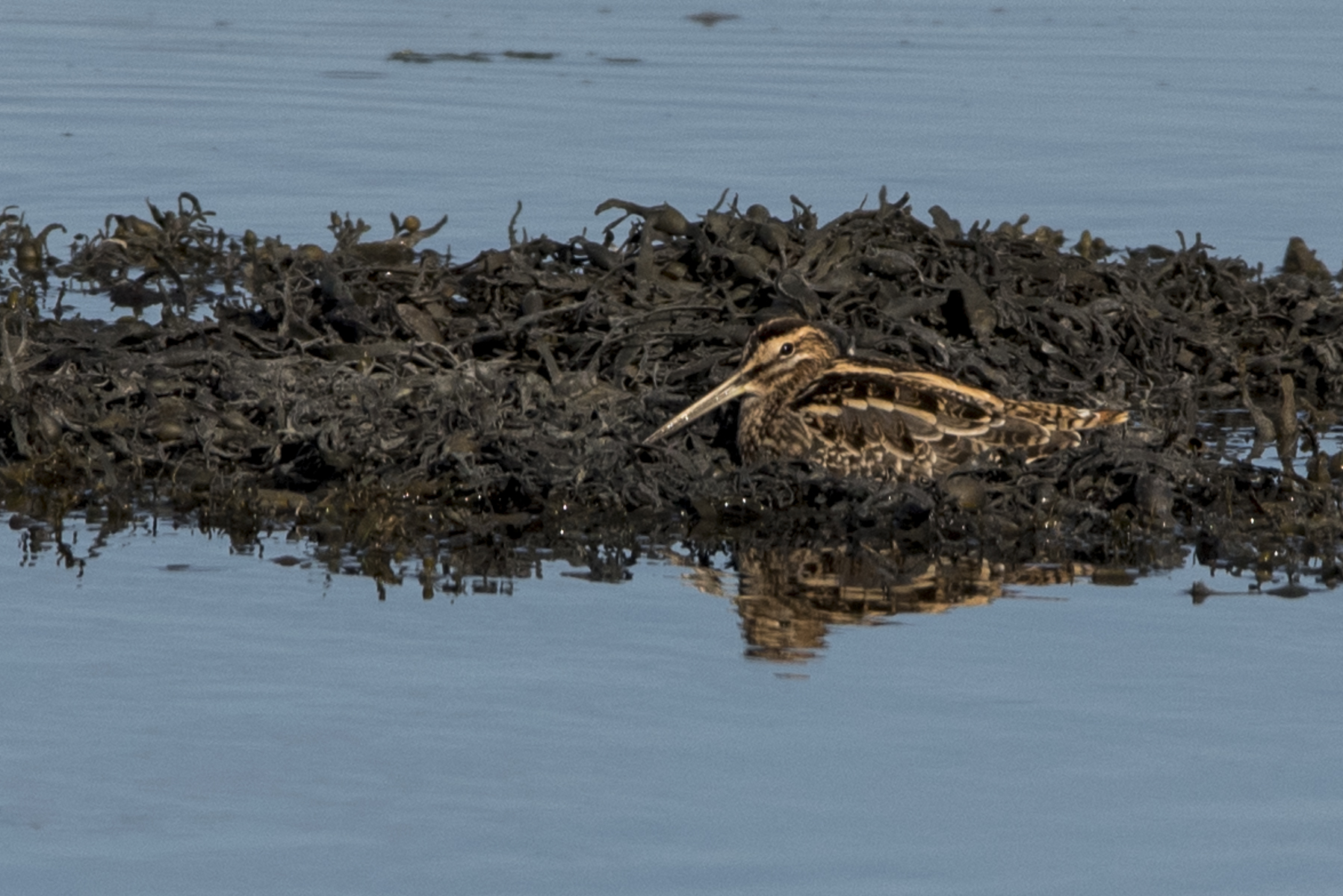
The Snipe(Gallinago gallinago) this is a bird that is getting rare to see here, it’s numbers have declined over the years. When I was a kid at school ( a long time ago) these where common and seen over most marshes daily. I was surprised to see two of them together. The Brent geese disturbed them and these one flew closer to me and nested down into the seaweed.

The Redshank (Tringa totanus) gets it’s name from it’s most distinctive features, their bright orange-red legs. I find these are one of our most common birds along this part of the coast. They can be found in large flocks or today just a few feeding on the incoming tide.

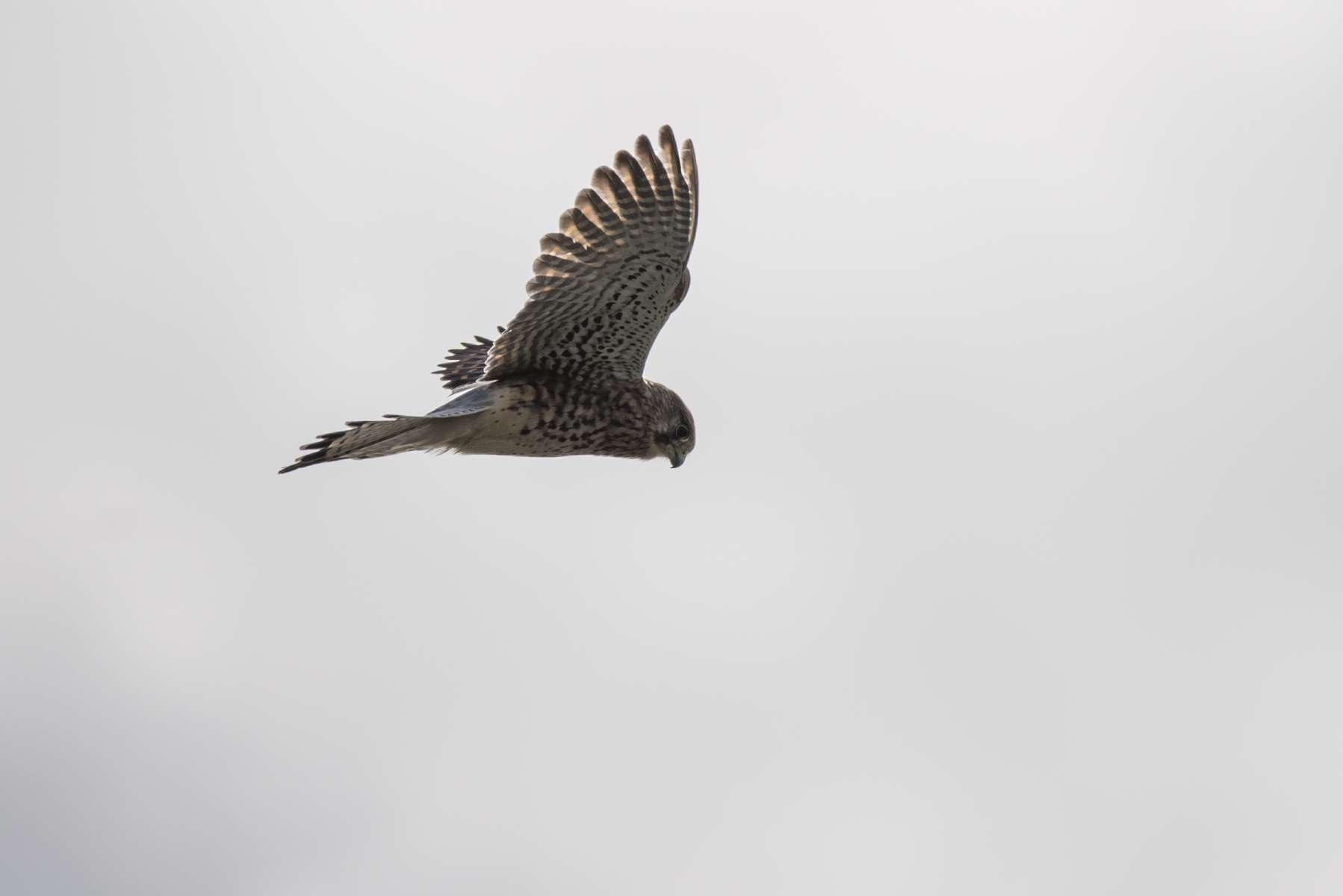
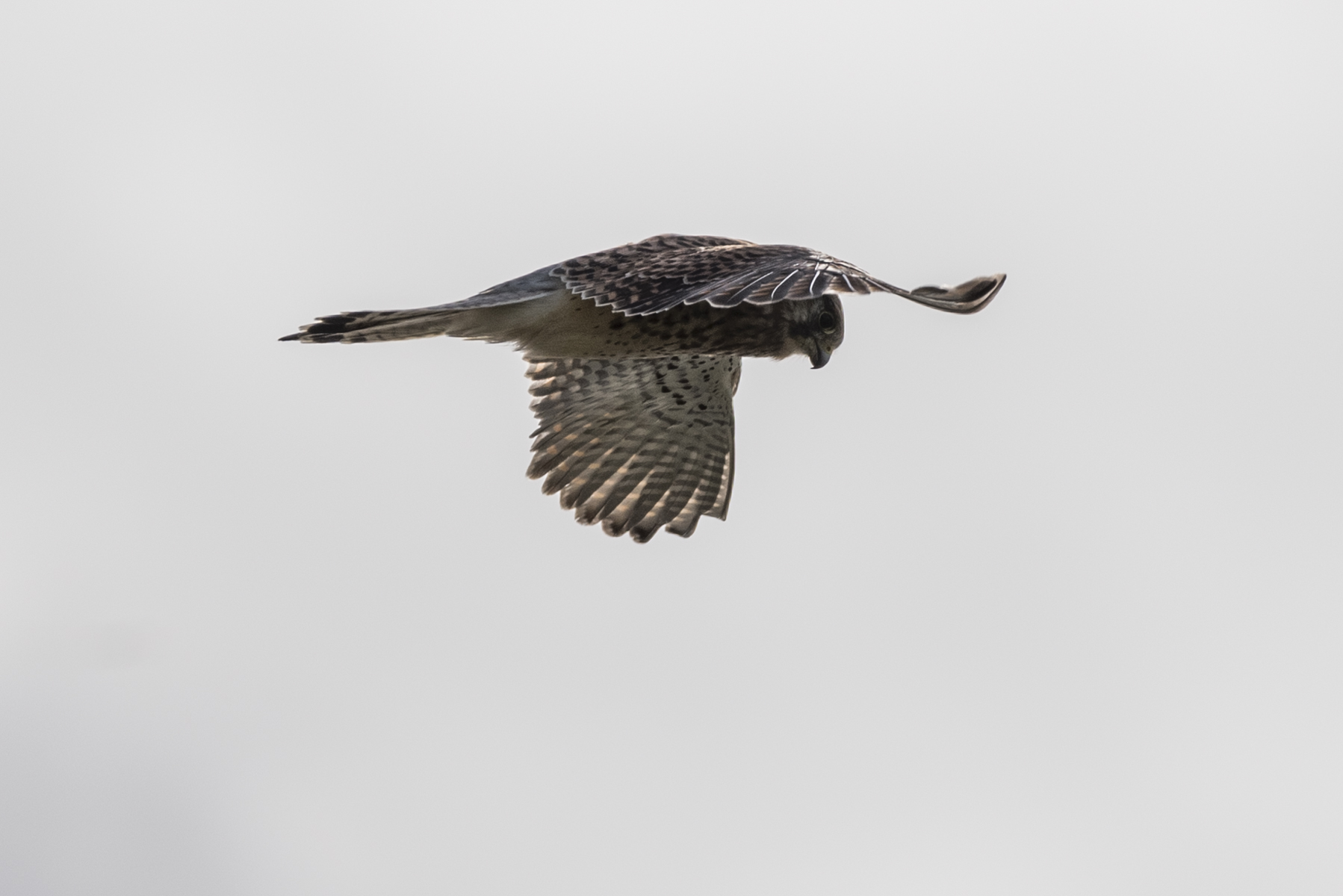
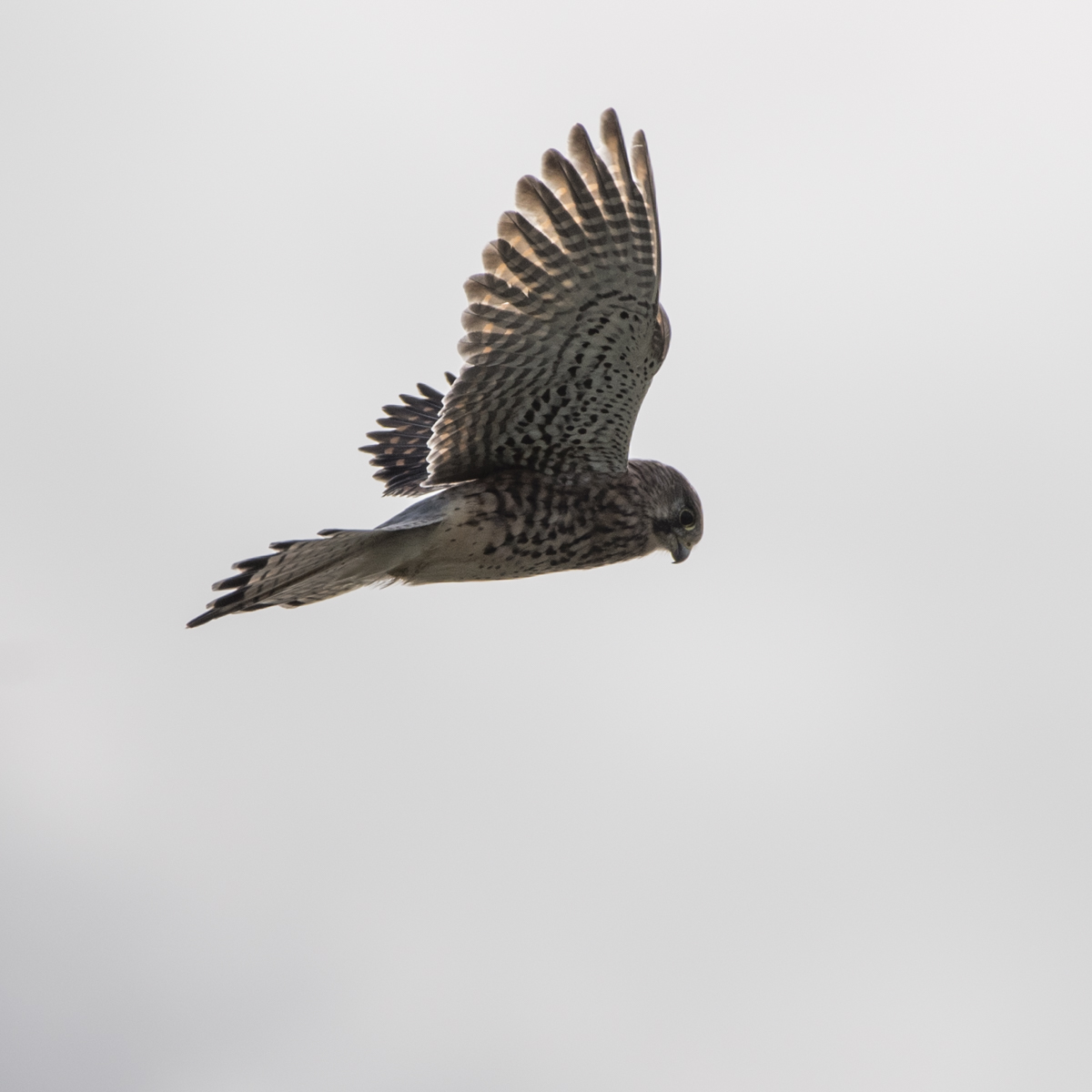
The next photographs where taken from my van when I saw this Kestrel just for the road side. I pulled over and shot a few frames before it moved off.

Kestrel (Falco tinnunculus) these are a small falcon and are often seen as here along the road sides hovering looking for small prey.

The colour is a little weak in these photographs of the Kestrel with the bright sky behind them but since they were part of the coast outings I included them.

Thank you for visiting and I’ll leave you with a image of Portaferry across Strangford lough.

Brent geese with Portaferry in the back ground and Windmill hill on the right.

George.

Black & White wednesday

This week we’re off to the coast and a small black and white bird called a Pied wagtail (Motacilla alba) is the subject. They are a common bird here in Ireland and the UK and can be seen all year round. They can be found almost any where, from coast to city centres. When standing they frantically wag their tail up and down or dashing across the ground in search of food.

Pied Wagtail (Motacilla alba).

Camera: Nikon D750 with a Sigma 150-600 mm lens

Data: 1/800 sec @ f/6.3: ISO 320

Lens focal length: 600 mm

Stay safe,

George.

Black & White Wednesday

This weeks photograph is Lambeg parish church. It sits on the banks of the River Lagan a few miles from Lisburn. The first church dates back to 1598 with the possibly of one going as far back as 1306.

The oldest tome stone found in the graveyard dates back to 1626.

History link: http://www.s118536411.websitehome.co.uk/churches/Lisburn-churches/lambeg-parish-church.html#:~:text=HISTORY%20%2D%20Lambeg%20Parish%20Church,the%20tower%2C%20was%20completely%20rebuilt.

Camera: Nikon D7200 with a Sigma 17 – 70 mm lens

Data: ISO 100, f/16 @ 1/2 second

Focal length 17 mm.

Thank you and stay safe,

George