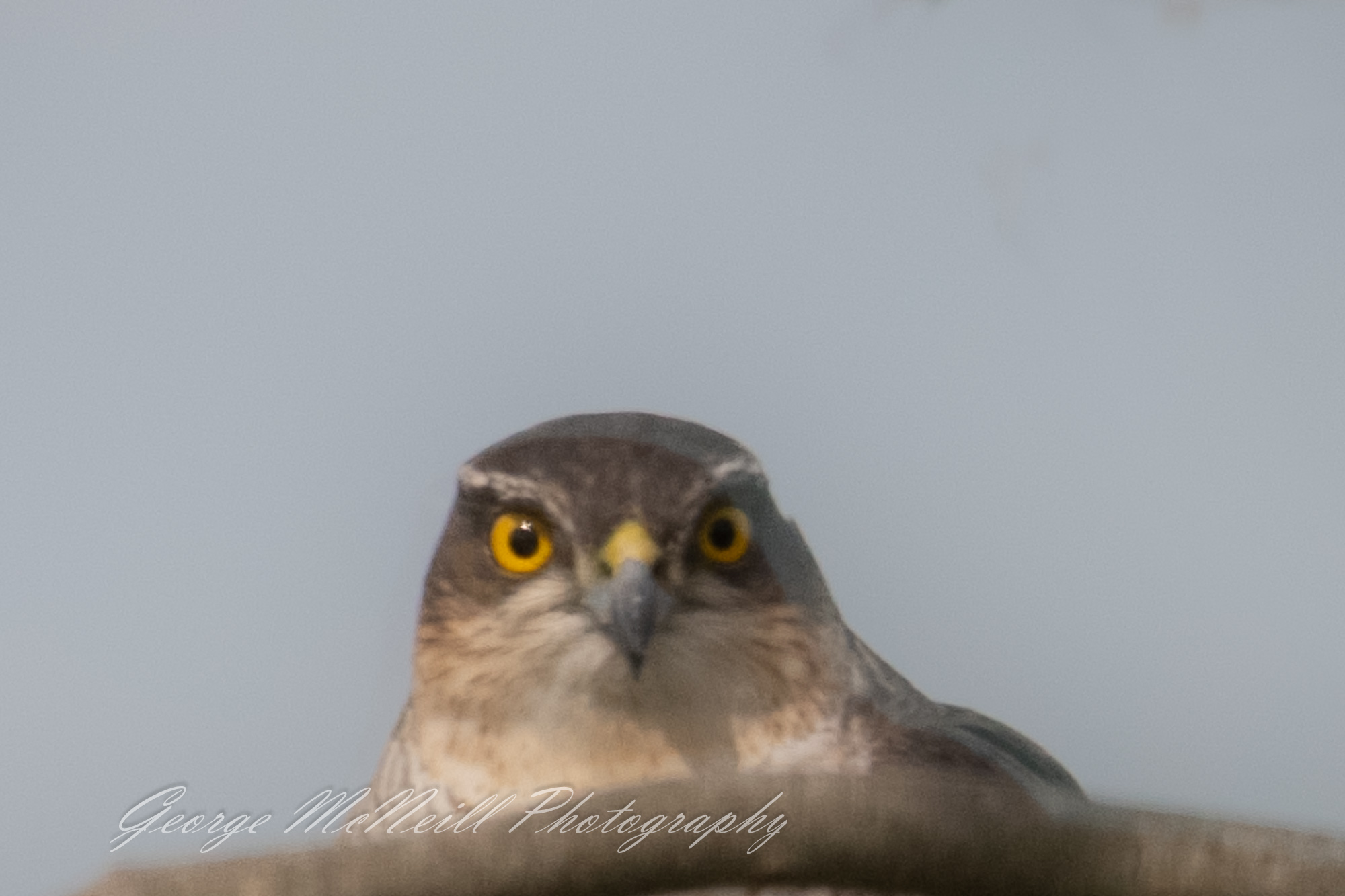
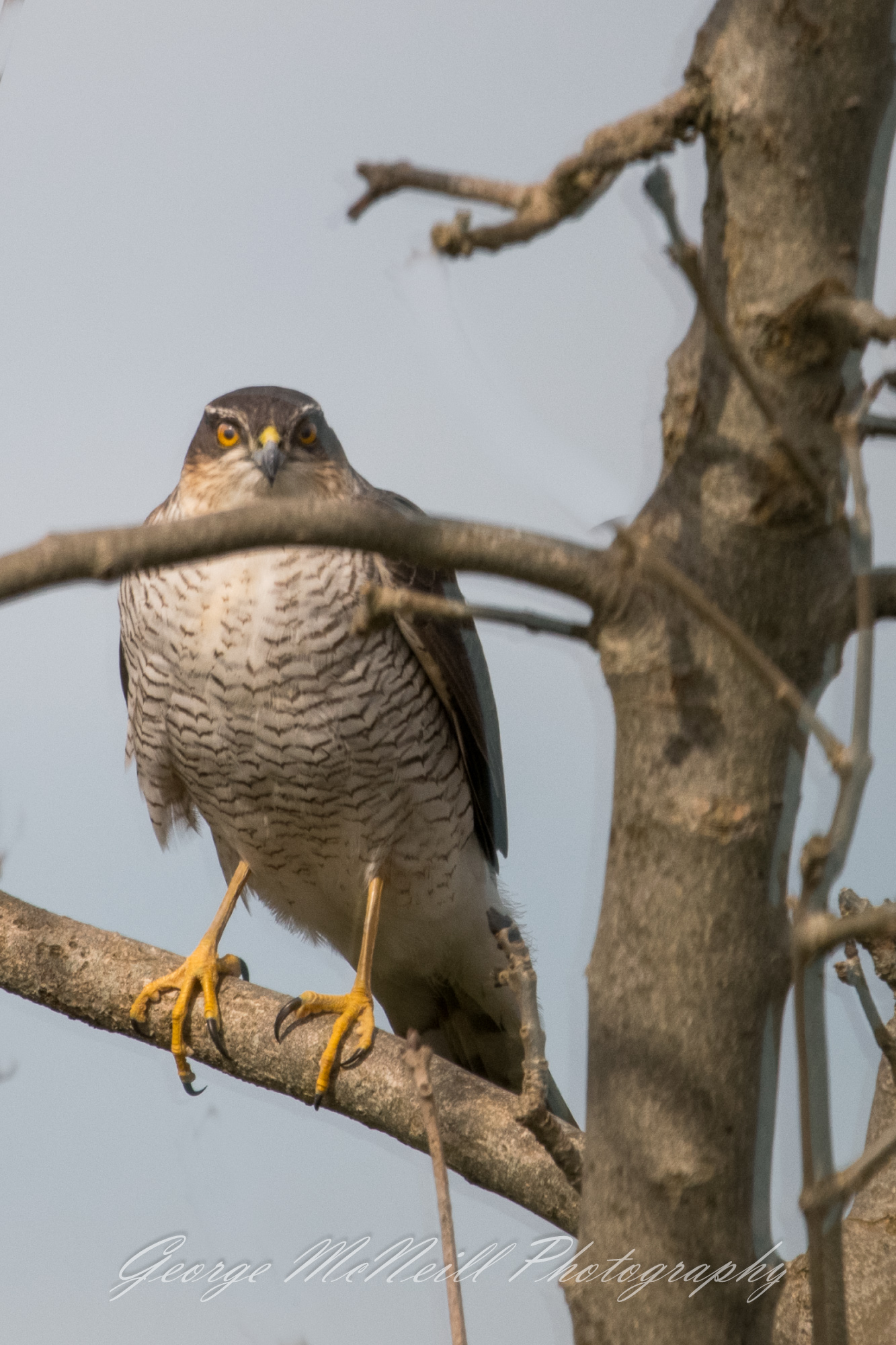
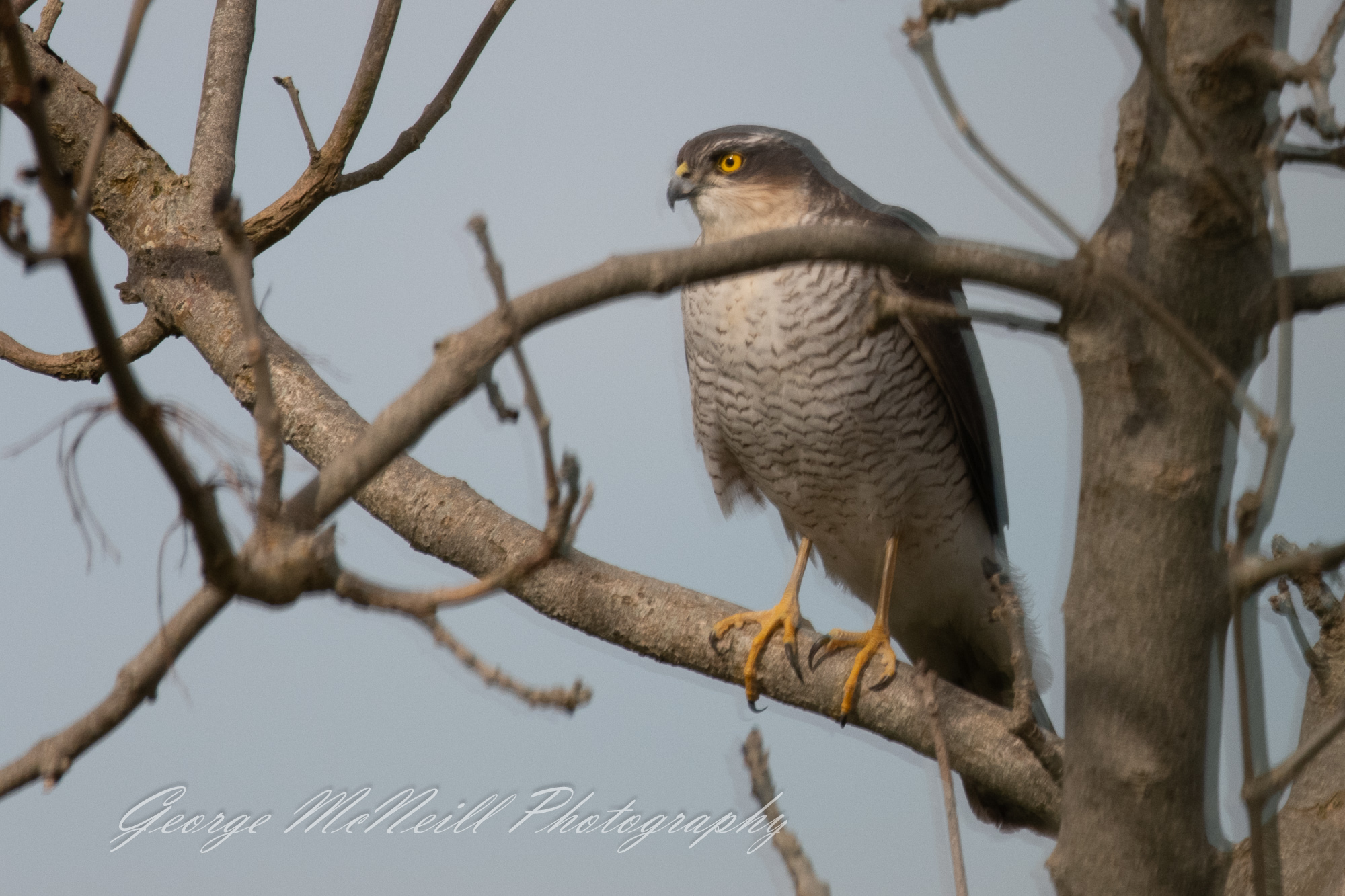
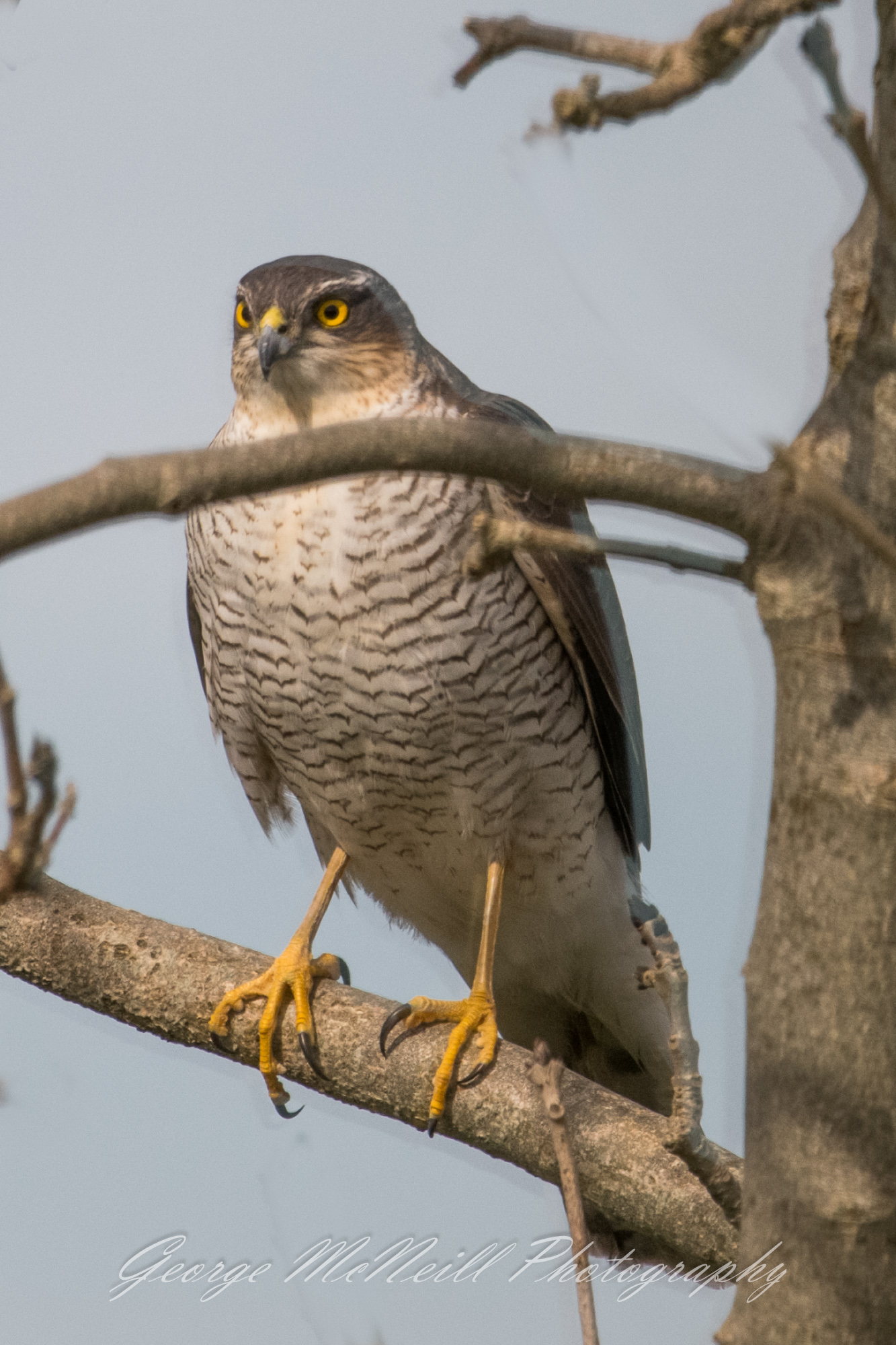
Meet the Sparrowhawk (Accipiter nisus) a bird of prey that is a specialist small bird eater. It uses hedges and buildings for cover to get closer to it’s prey. It is an exceptionally agile hunter commonly seen hunting in woodland, wooded farmland and urban green spaces. Also they turn up around bird feeders in gardens.
I was sitting in the van monitoring a possible bird of prey nest site, when movement caught my eye in a tree on the other side of the road. It was those eyes looking at me as I froze, not want to scare it off I remained still. It settled and started looking around, so it didn’t see me as a threat. I lifted the camera and leaned over so I could photograph it from the open passenger side window. I got around twenty photos before a passing vehicle scared it off.

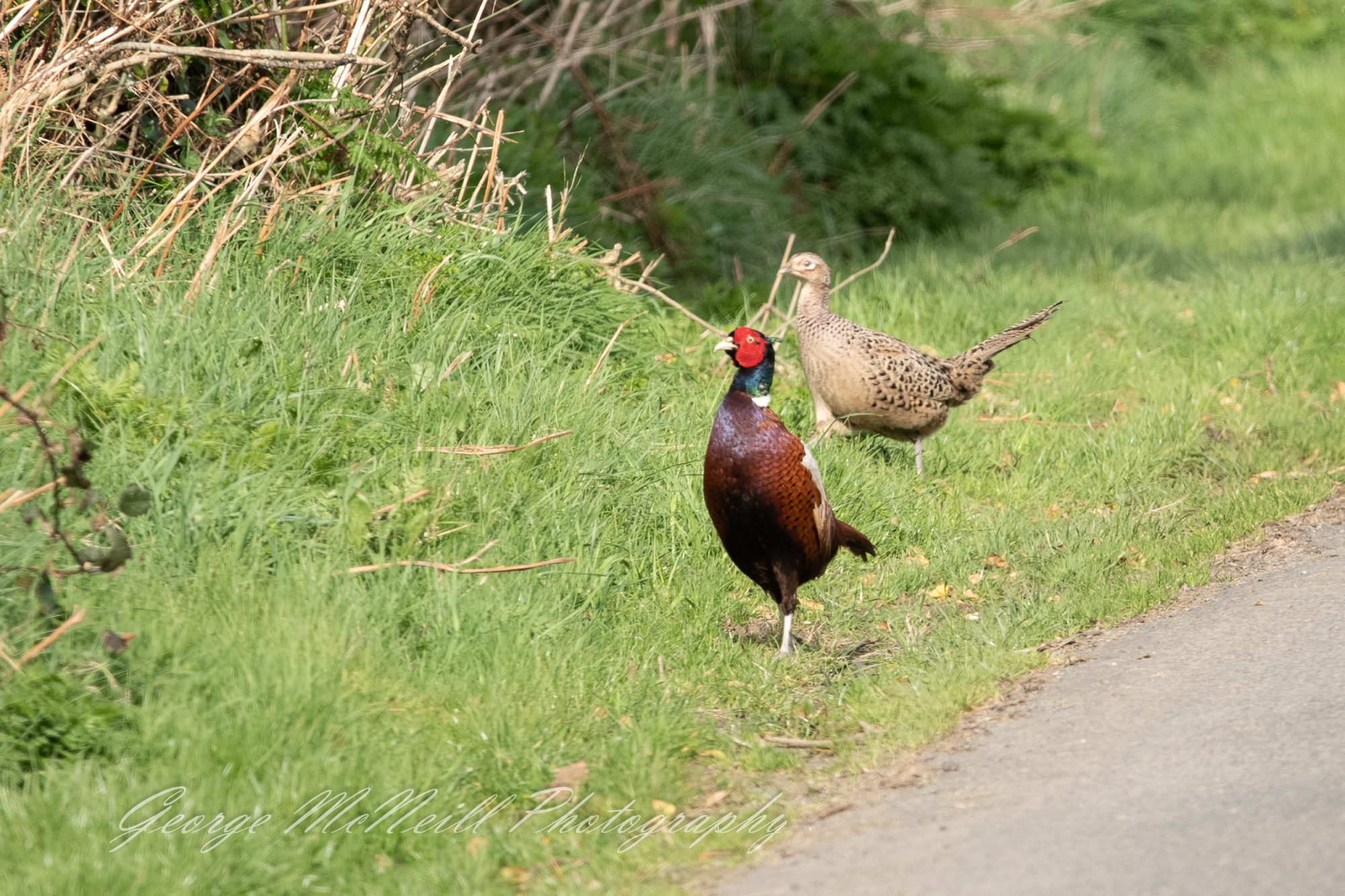
The next photograph is off a pair of Pheasants (Phasianus colchicus), a male and female. They appeared from a gateway down the road from me, so my camera is never far away. This handsome bird is thought to have been brought into the UK around 2000 years ago by the Romans. They are now found across the whole of the UK and Ireland. The male mates with more that one female who is left to raise the chicks alone. A clutch of pheasant eggs typically comprises 8–15 eggs. Usually, one egg a day is laid by the hen bird. Once the final egg of a clutch has been laid, the clutch is then incubated for 23– 25 days before the chicks all hatch within a 12-hour window. They remain with the female till around 8 weeks old. Most are raised in the UK on large country estates for game shooting.
Thank you for visiting and joining me out and about in Northern Ireland.


























 George McNeill Photography
Leave a comment