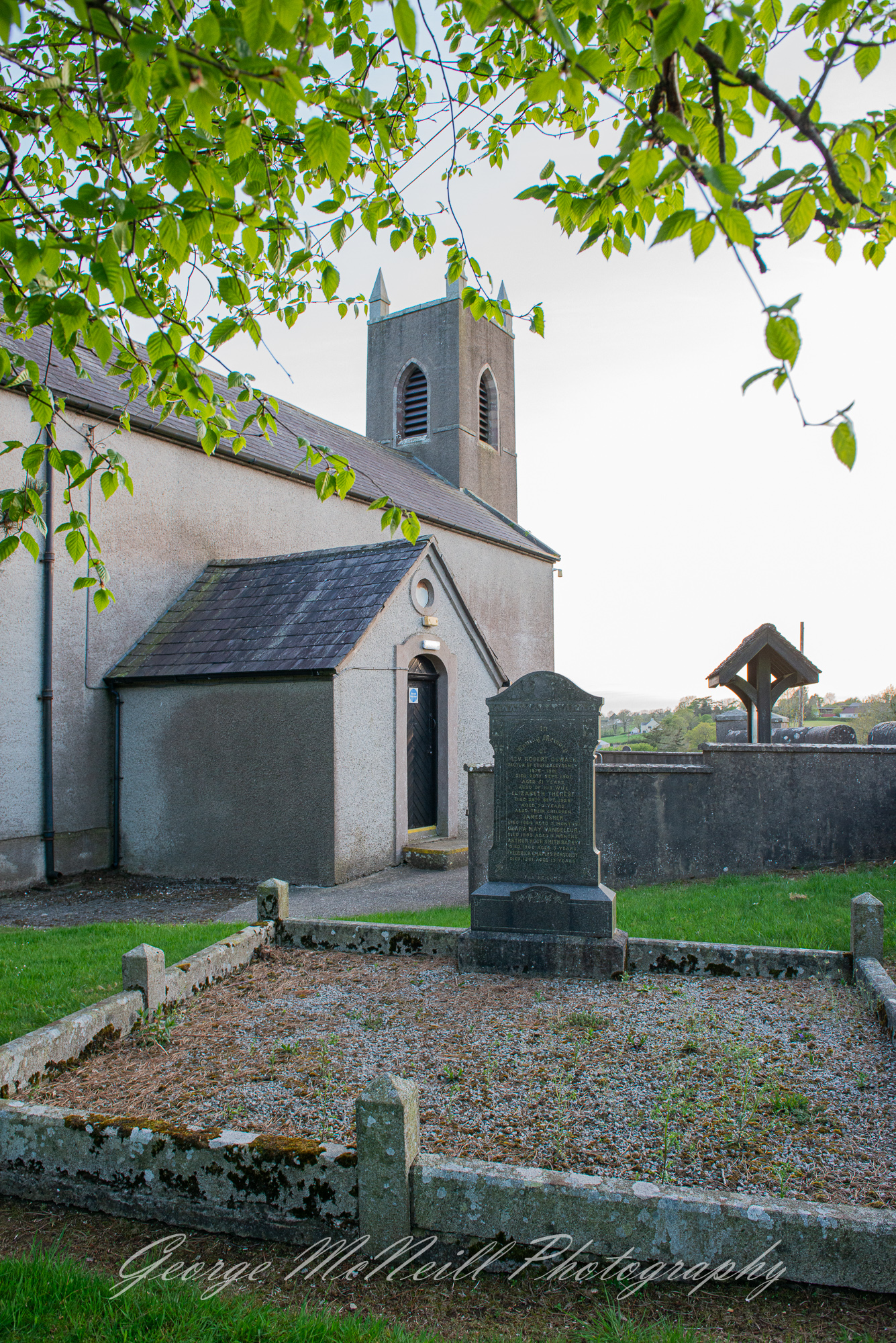
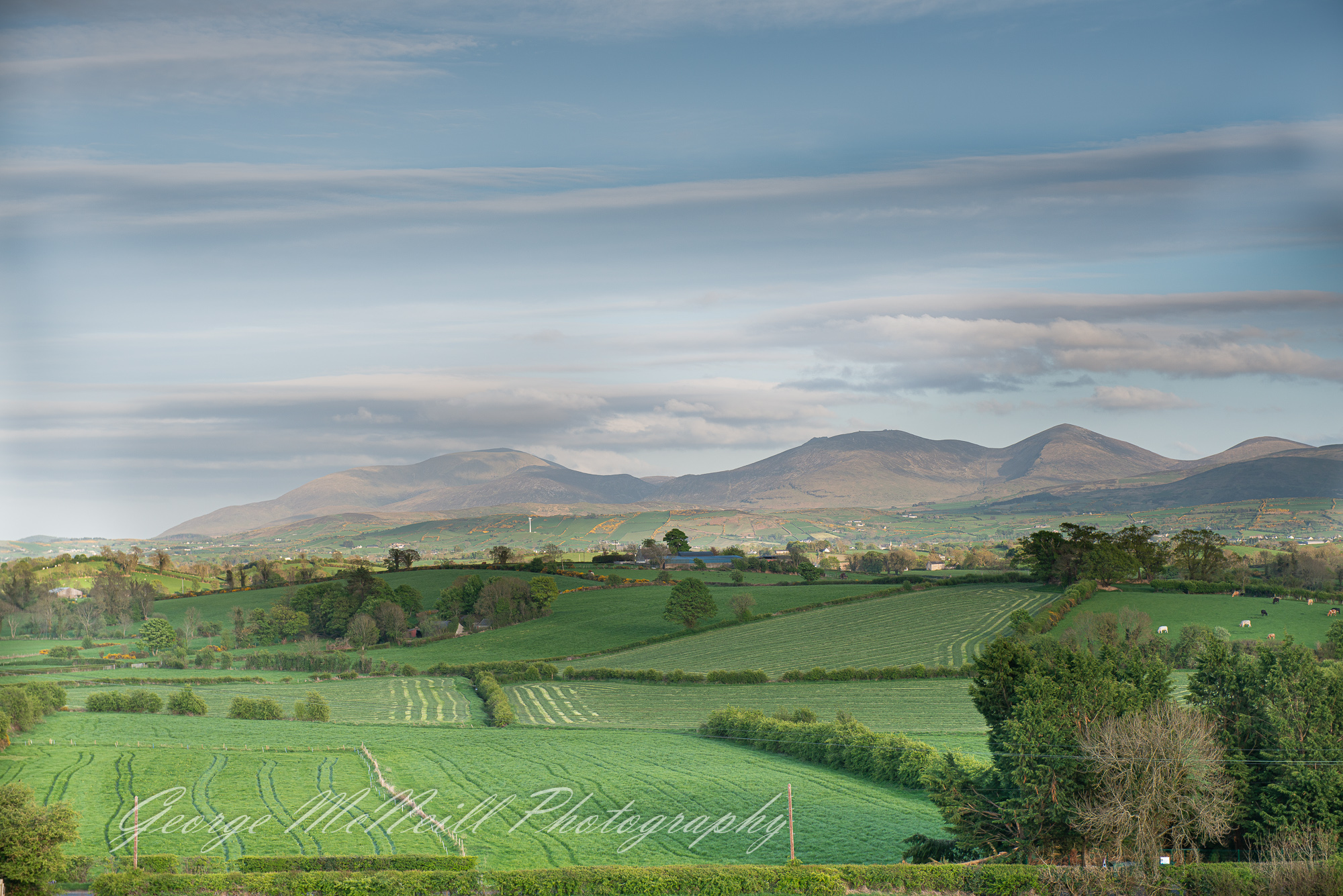
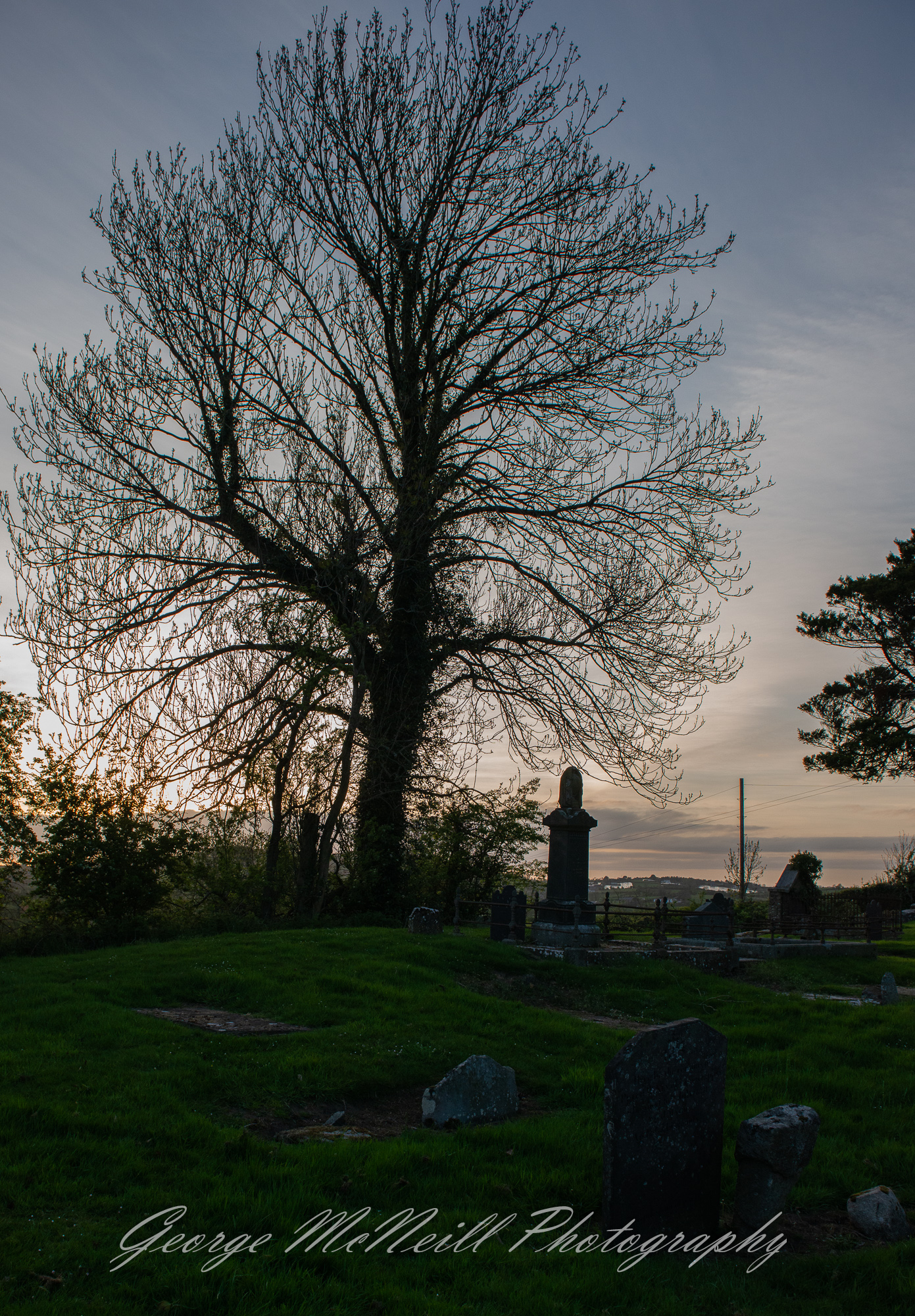
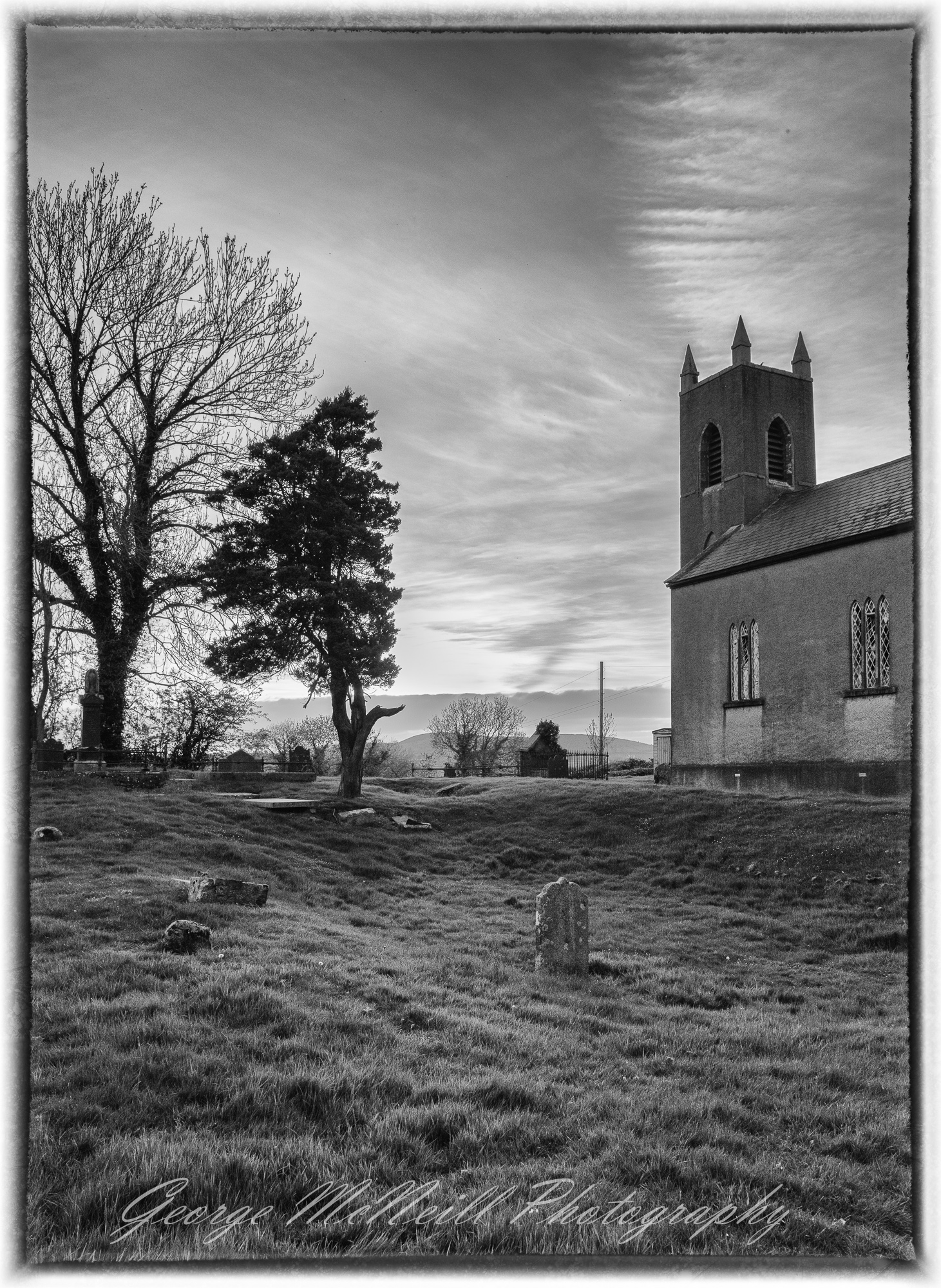
Drumballyroney church sits on top of a hill with views across county Down into the Mourne mountains.
One view from the church carpark.
The church is also known as The Bronte church. Patrick was born in the parish of Drumballyroney and this was the family church. He was born in 1777 and died 1861. He was the father of the writers Charlotte, Emily and Anne Bronte.
He was a teacher until 1802 when he won a scholarship to study theology at St John’s collage, Cambridge. It was here he changed his name from Brunty to Bronte, the Greek word for thunder.
He taught at the school beside the church for a short while before going to Cambridge after which he ordained as a Deacon of the Church of England in 1806 and entered the priesthood in 1807.
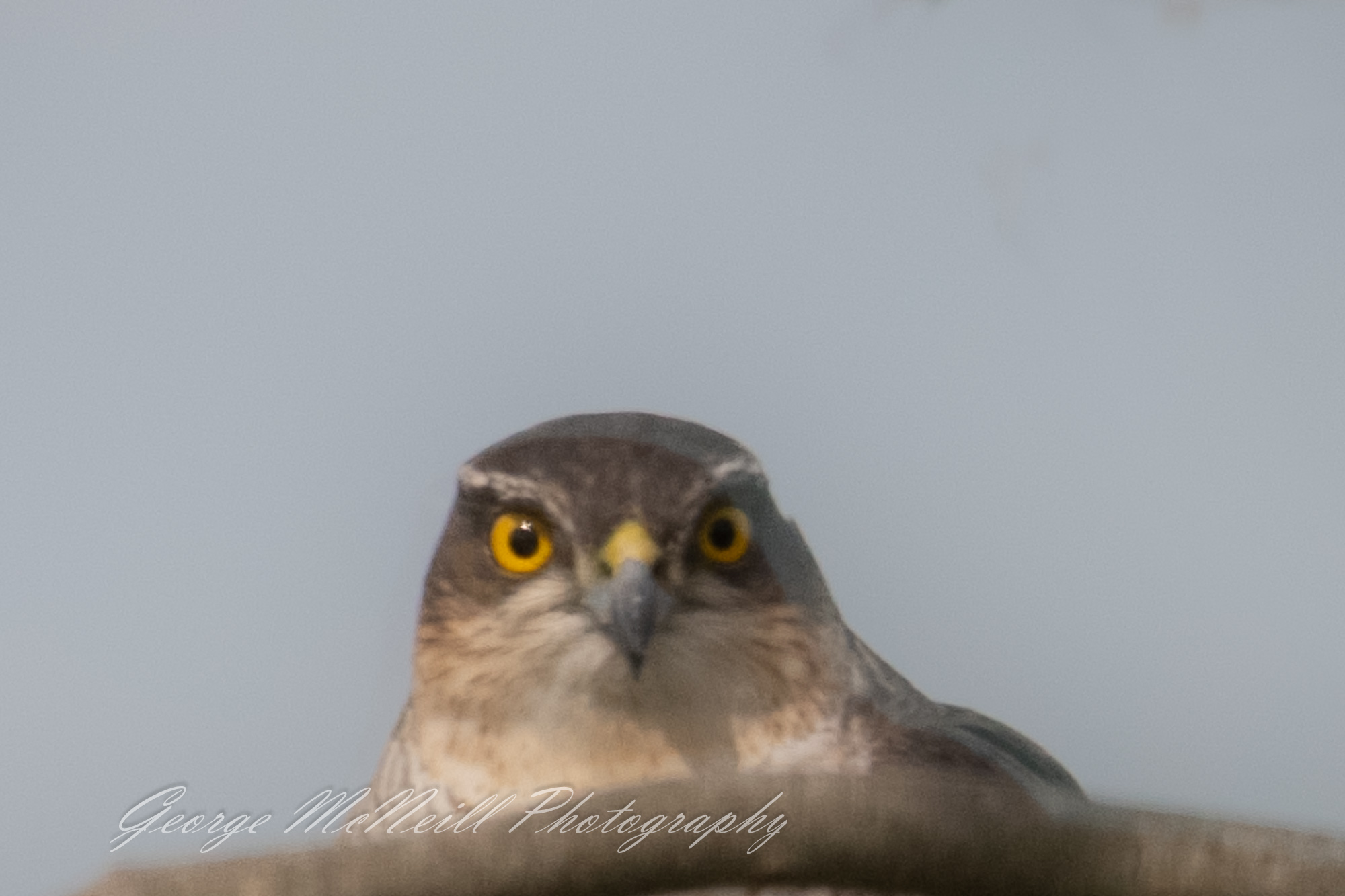
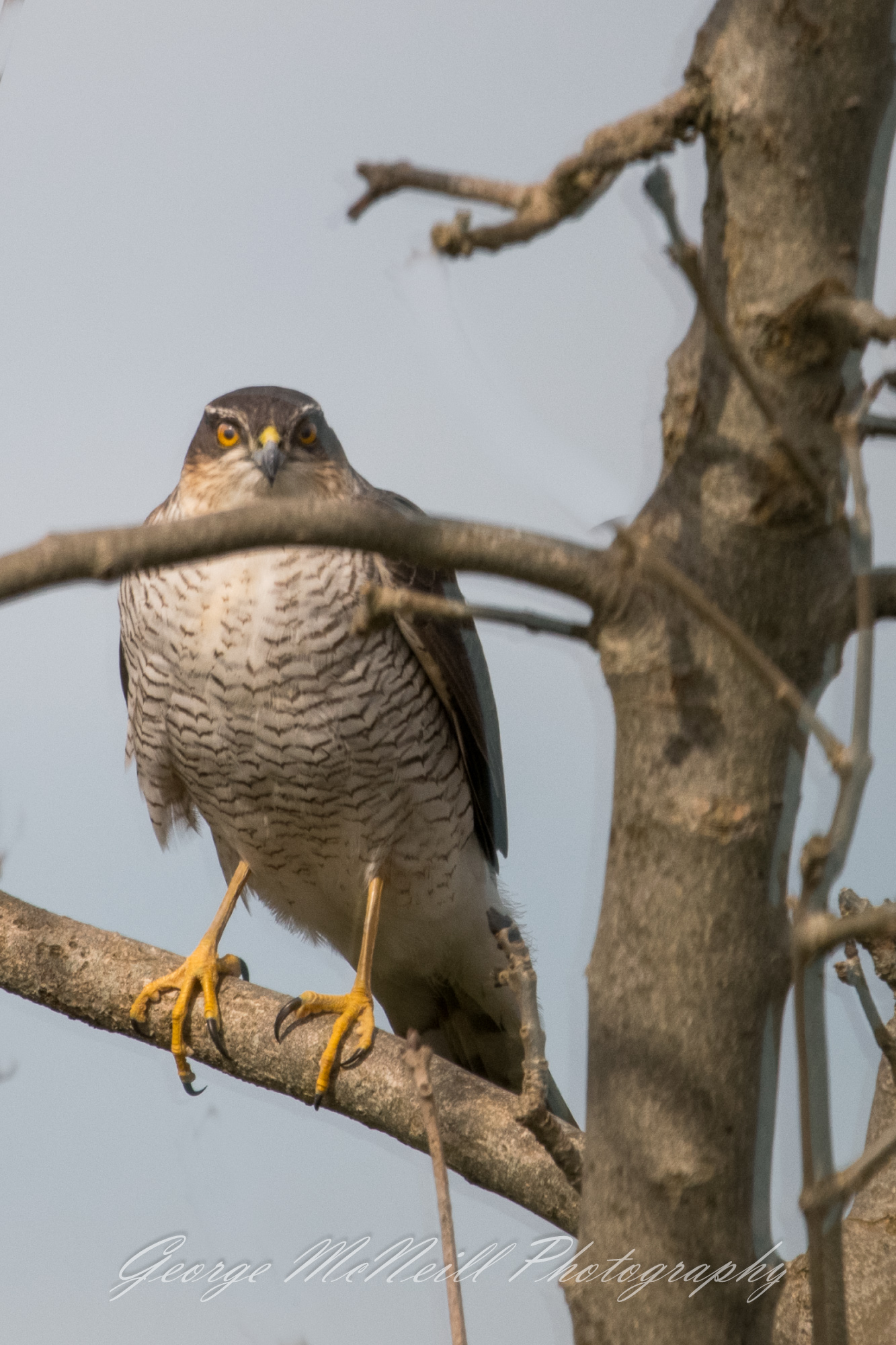
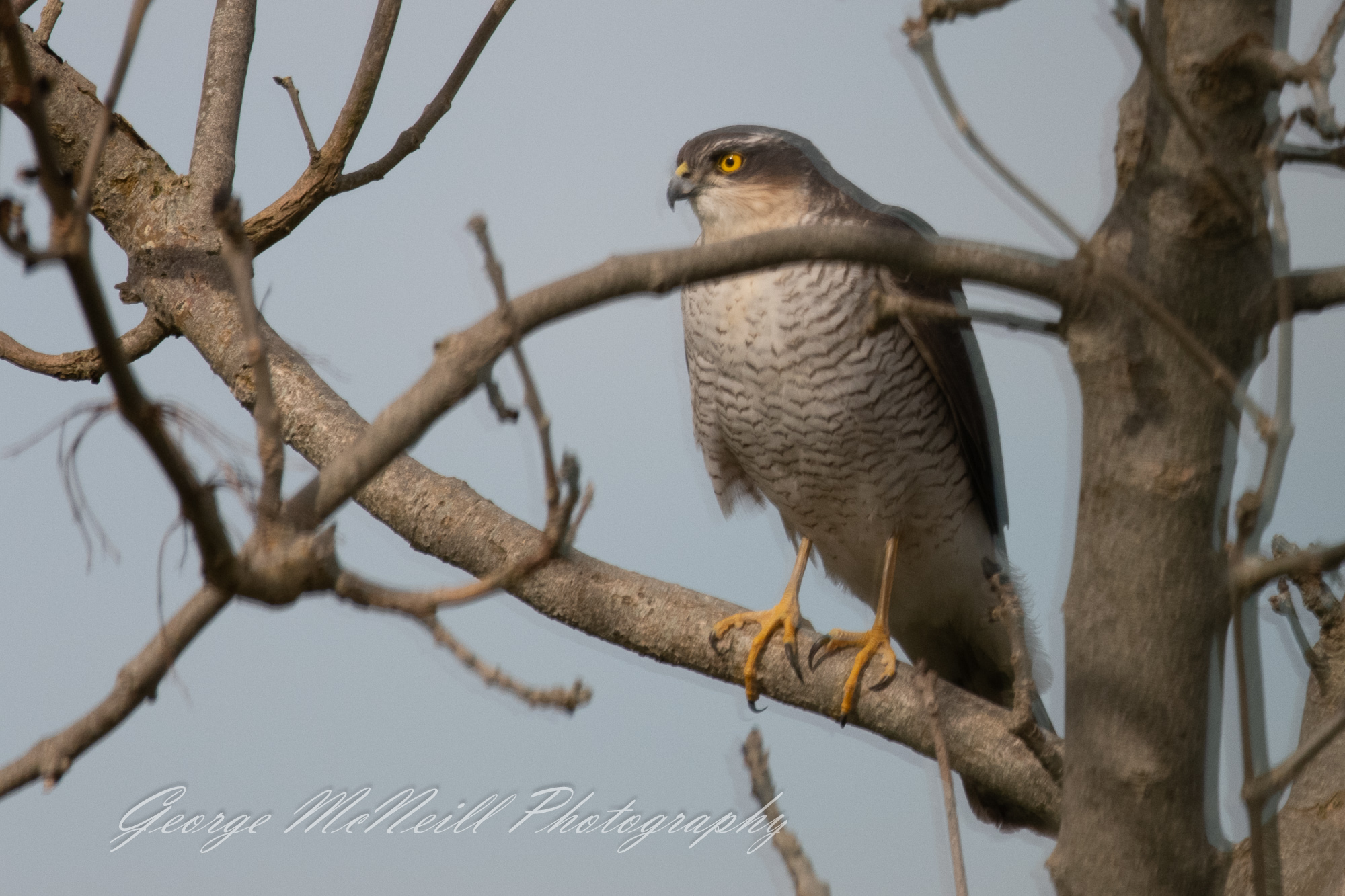
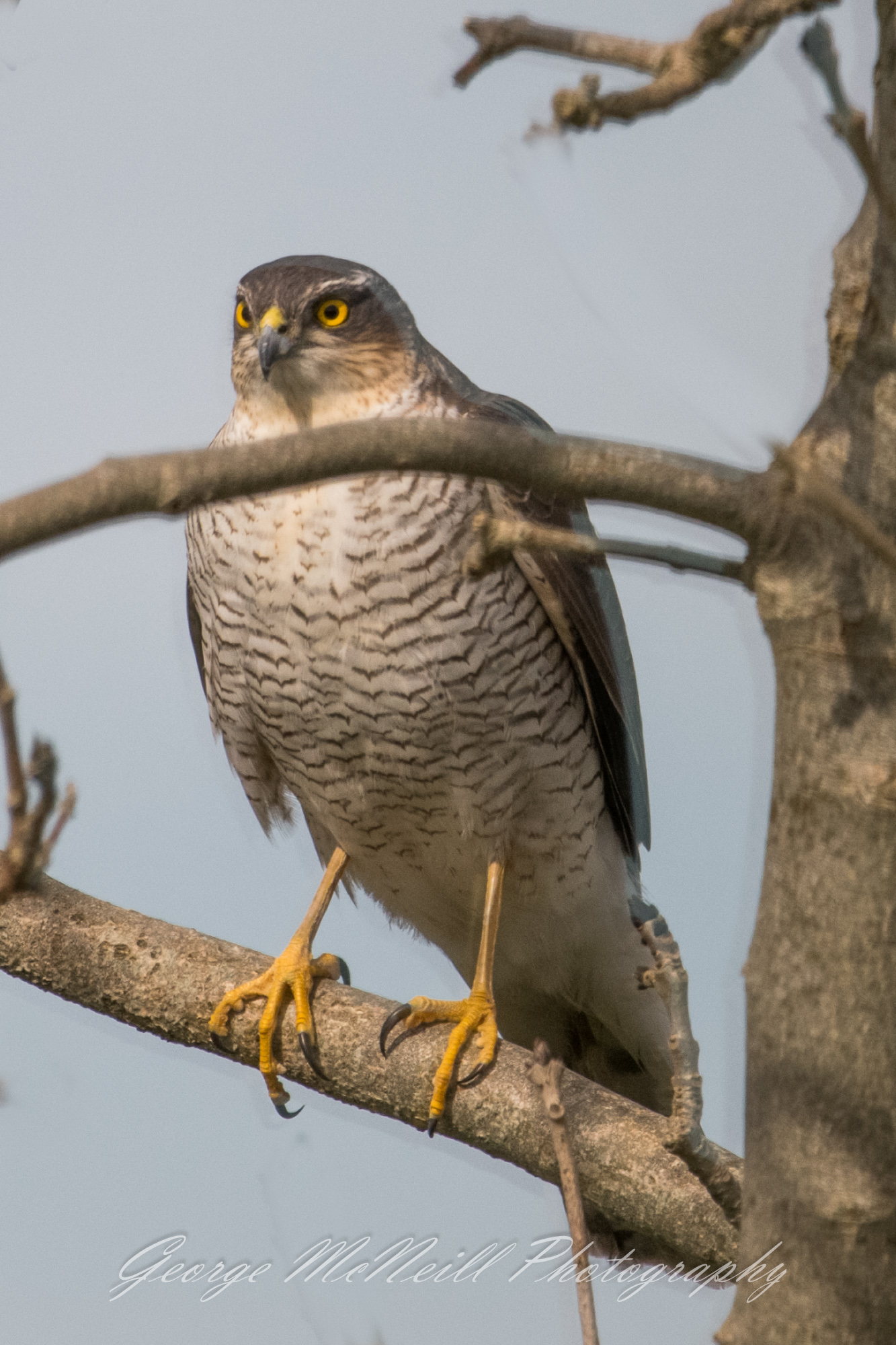
Meet the Sparrowhawk (Accipiter nisus) a bird of prey that is a specialist small bird eater. It uses hedges and buildings for cover to get closer to it’s prey. It is an exceptionally agile hunter commonly seen hunting in woodland, wooded farmland and urban green spaces. Also they turn up around bird feeders in gardens.
I was sitting in the van monitoring a possible bird of prey nest site, when movement caught my eye in a tree on the other side of the road. It was those eyes looking at me as I froze, not want to scare it off I remained still. It settled and started looking around, so it didn’t see me as a threat. I lifted the camera and leaned over so I could photograph it from the open passenger side window. I got around twenty photos before a passing vehicle scared it off.
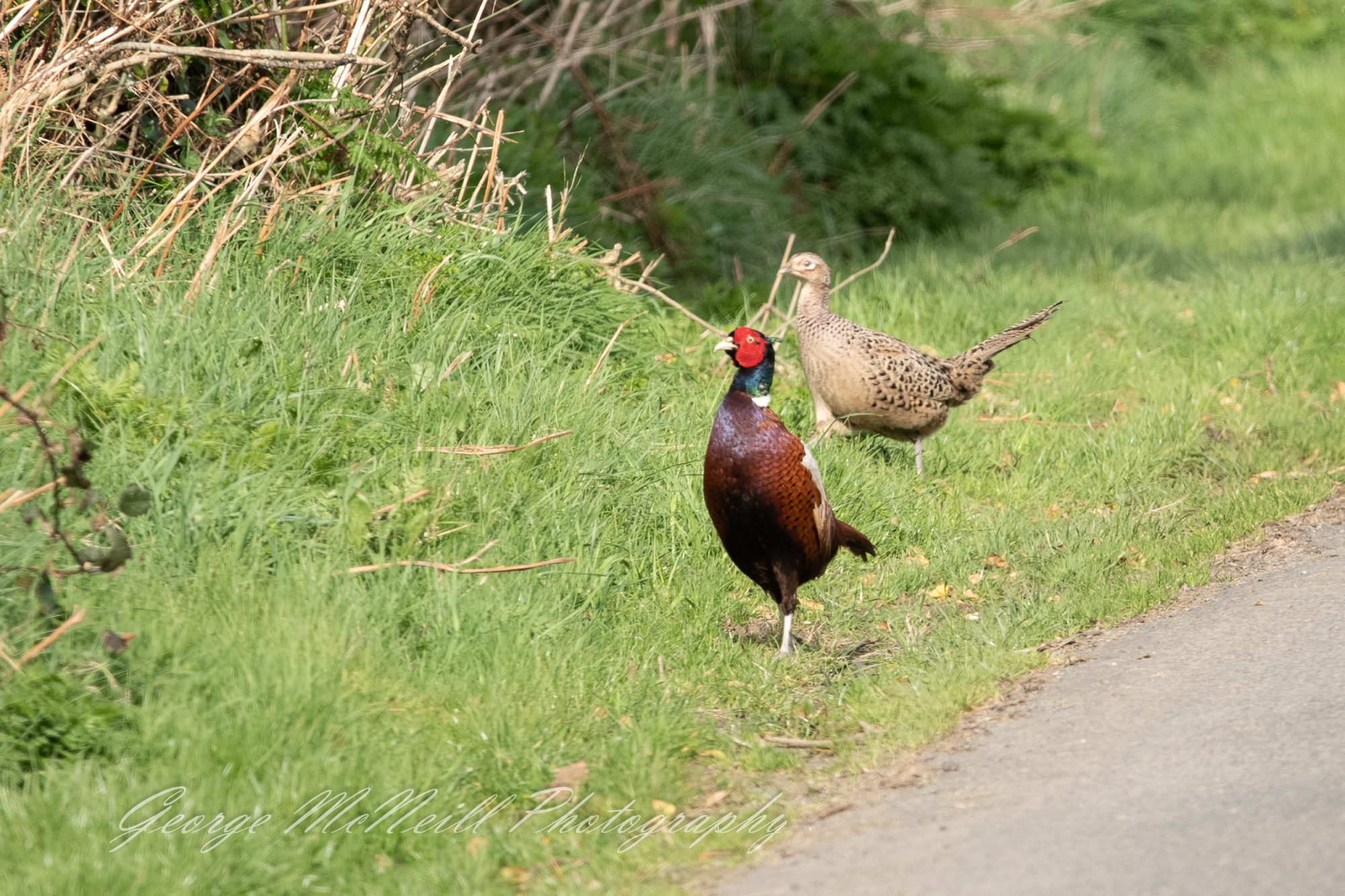
The next photograph is off a pair of Pheasants (Phasianus colchicus), a male and female. They appeared from a gateway down the road from me, so my camera is never far away. This handsome bird is thought to have been brought into the UK around 2000 years ago by the Romans. They are now found across the whole of the UK and Ireland. The male mates with more that one female who is left to raise the chicks alone. A clutch of pheasant eggs typically comprises 8–15 eggs. Usually, one egg a day is laid by the hen bird. Once the final egg of a clutch has been laid, the clutch is then incubated for 23– 25 days before the chicks all hatch within a 12-hour window. They remain with the female till around 8 weeks old. Most are raised in the UK on large country estates for game shooting.
Thank you for visiting and joining me out and about in Northern Ireland.
My last post was about the walk out to Rue lighthouse. This is the photographs of the wildlife I took while out on the trail. I hopefully will give them the right I.D, so I hope you enjoy the photos.
So the first photos show the Eider duck.
Eider Duck.
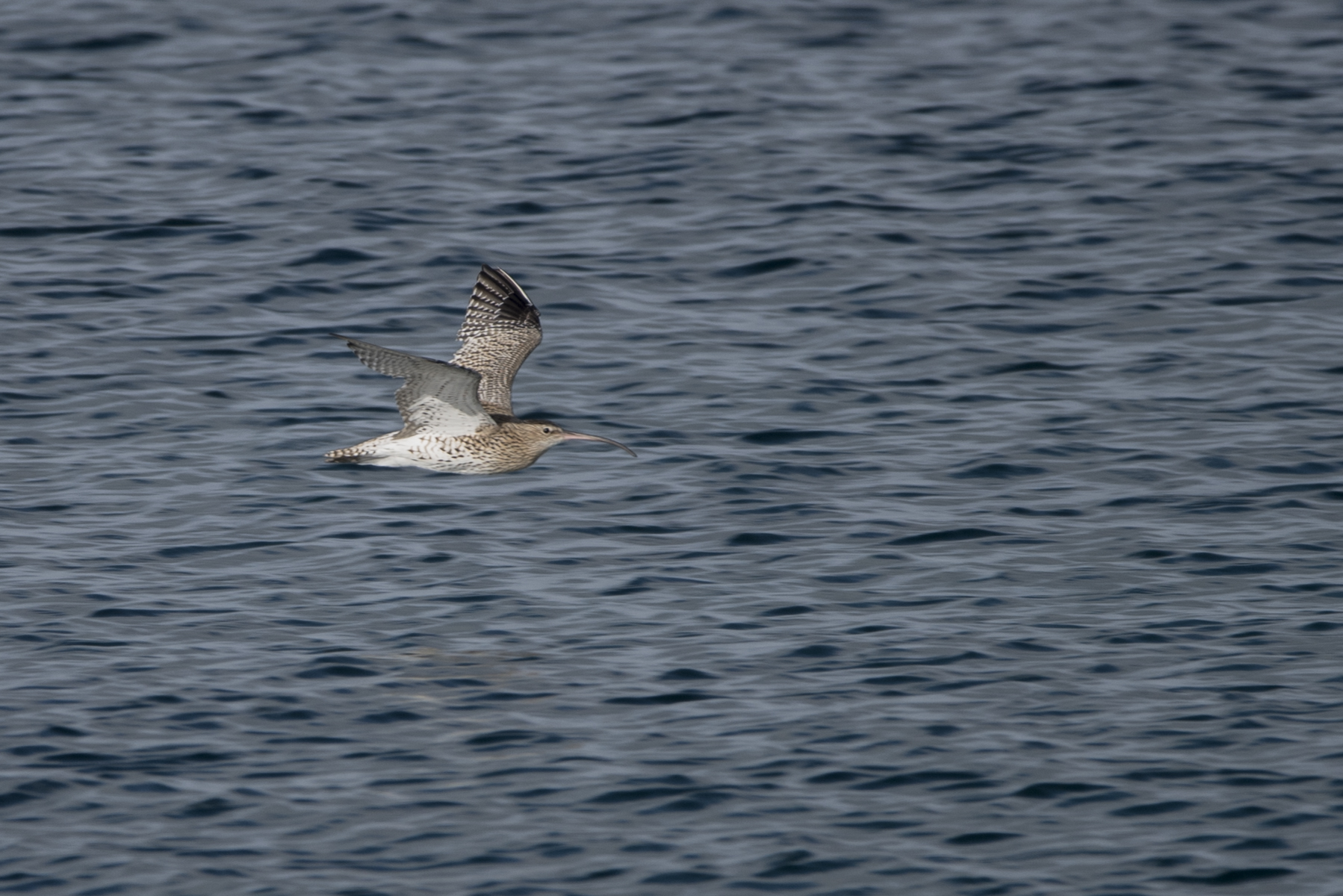
Next up is three photos of a Curlew ( NUMENIUS ARQUATA)
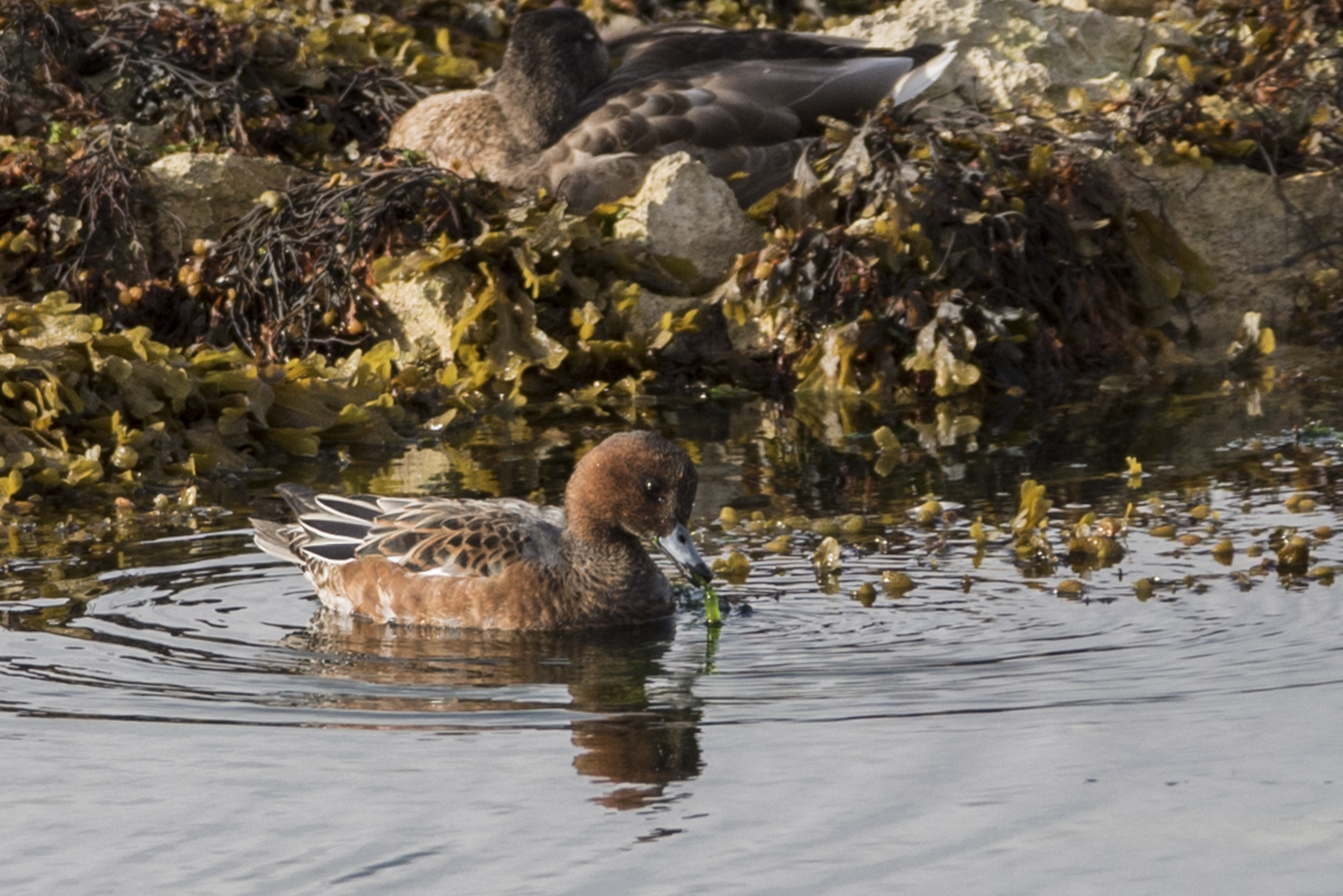
A few more minutes along the coast a few more ducks showed up, I think these might be Male Mallard (eclipse) and a Wigeon (rufous female) at the back. The next photo is of a Wigeon (rufous female)?Wigeon
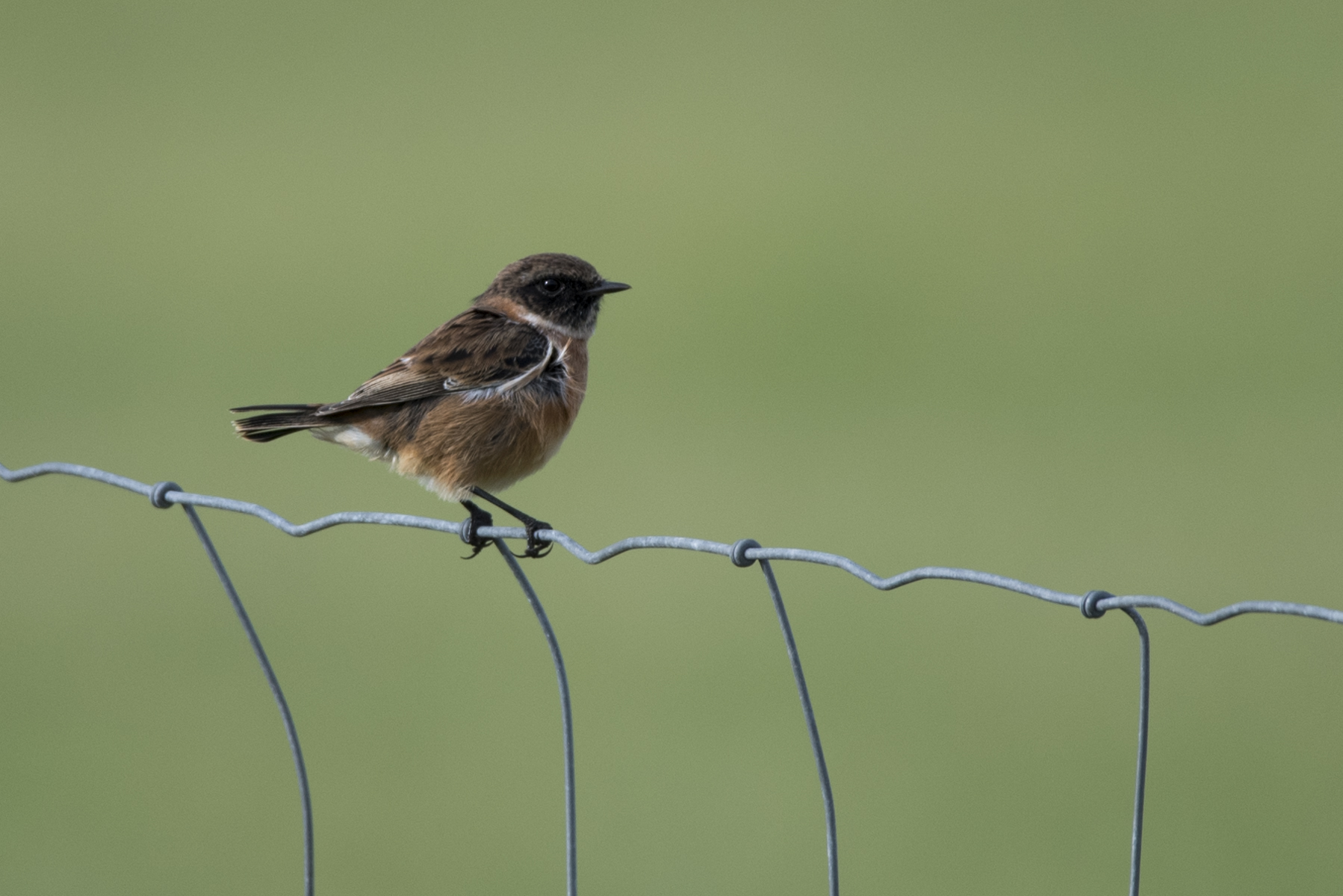
The first bird to be photographed has I move away from the coast is a Stonechat (male) sitting on a wire fencing.
Male Stonechat
The Coot is up next, this is a very common bird here in Ireland found on all types of water ways.
Coot.
The next bird I post on my last blog post has a Golden eye, after looking closer I think it’s a female Tufted Duck
Tufted Duck
I’m now off road and walking up towards the clipp top trail when I hear the call of a Buzzard (BUTEO BUTEO)
Buzzard
Buzzard
Just before the cliff top trail a flock of Curlew’s flew pass.
Curlews in flight
The next batch of photographs were taken from the ruin cottages down by the coast near Rue lighthouse
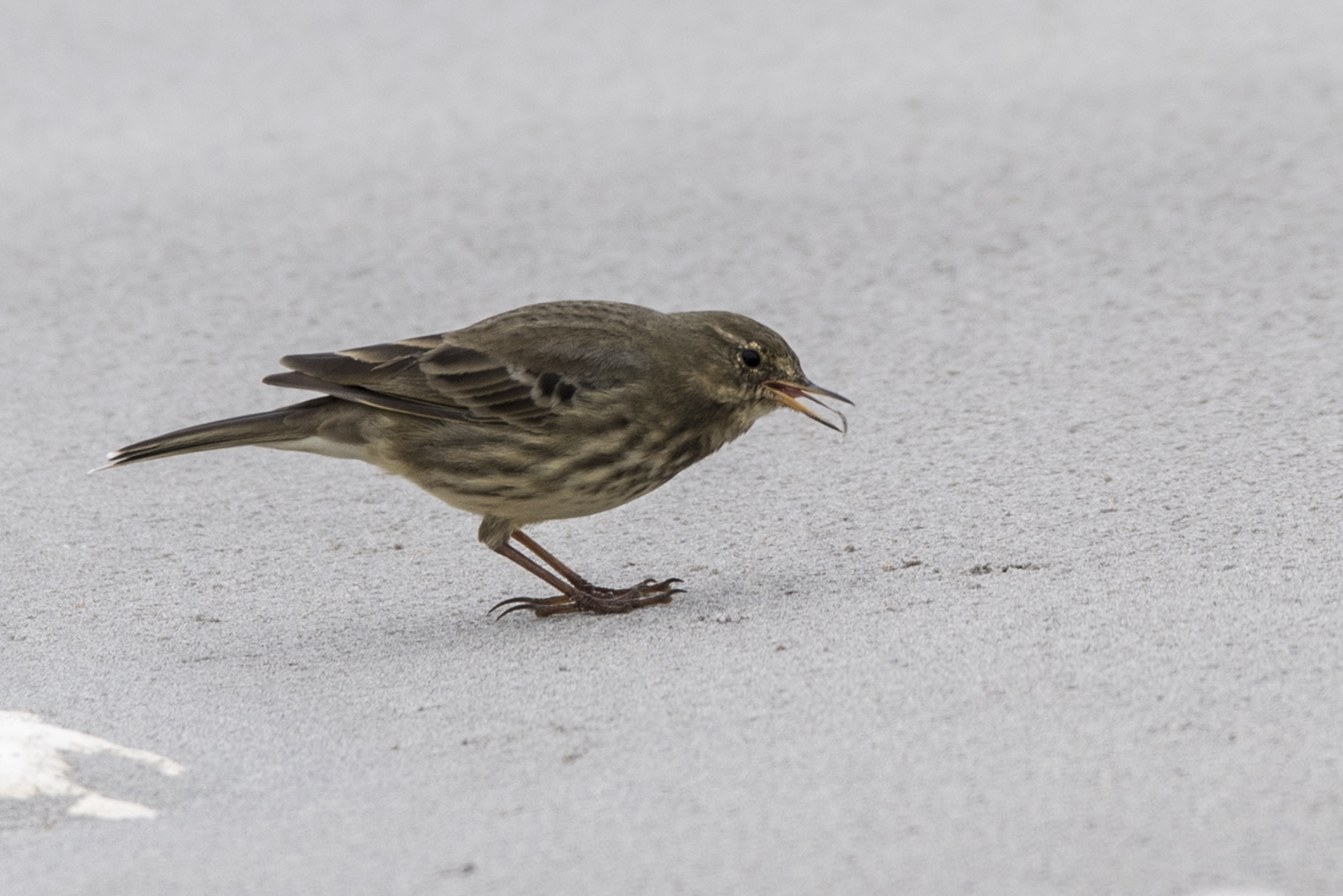
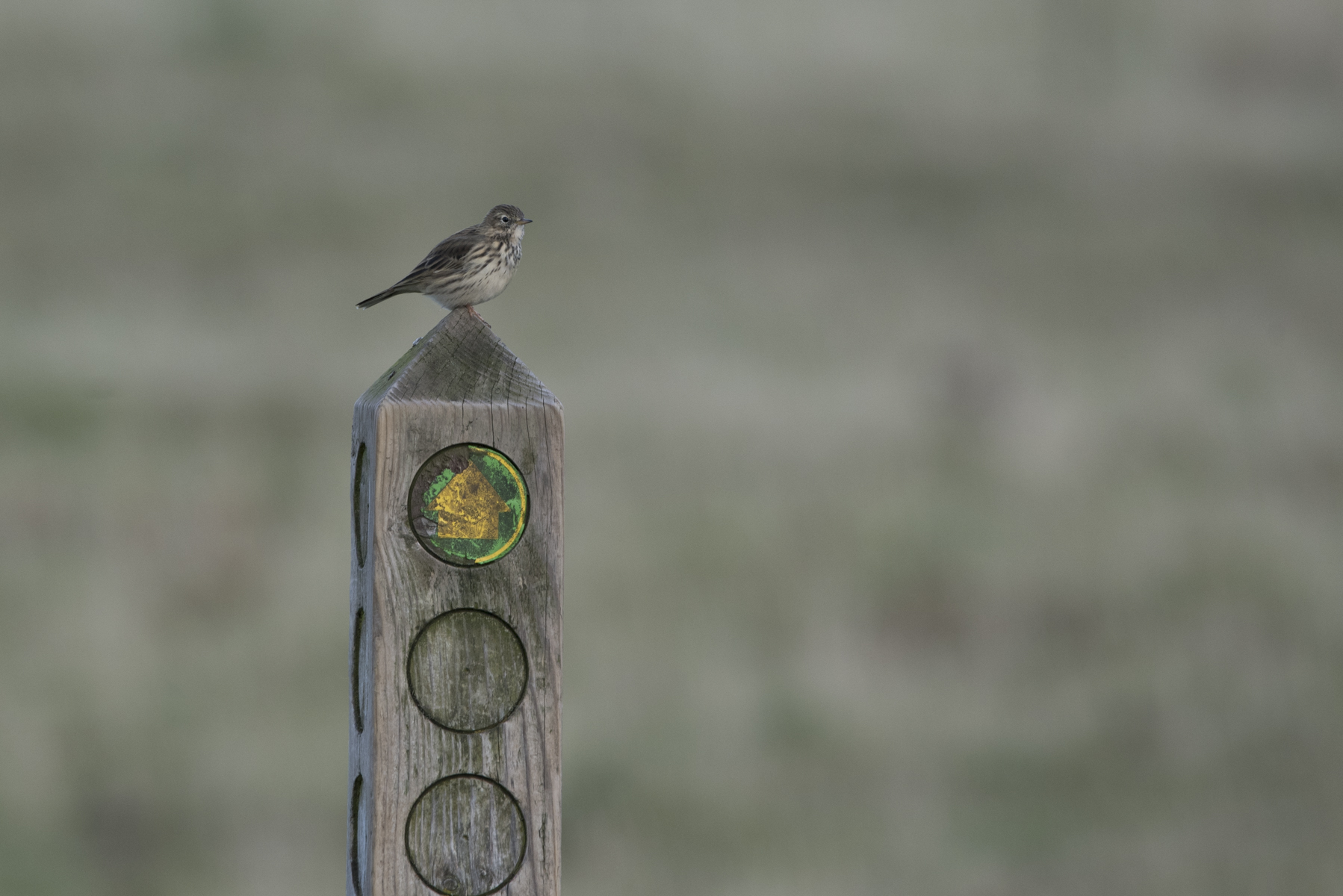
Rock Pipit.
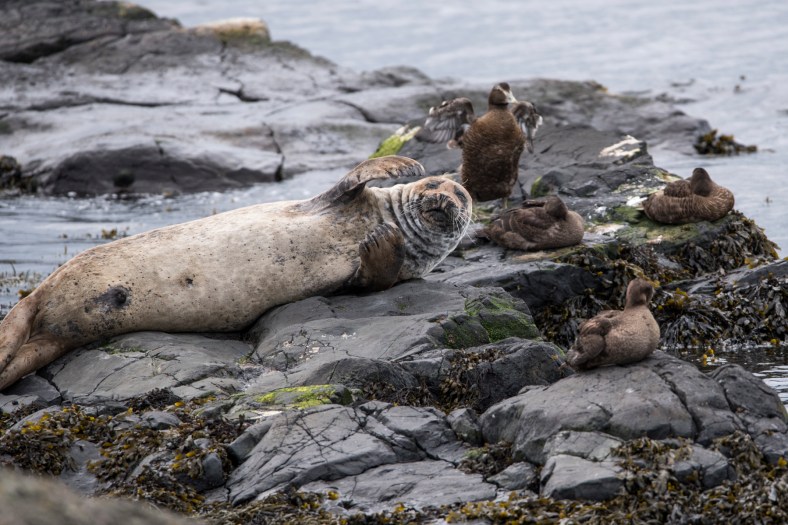
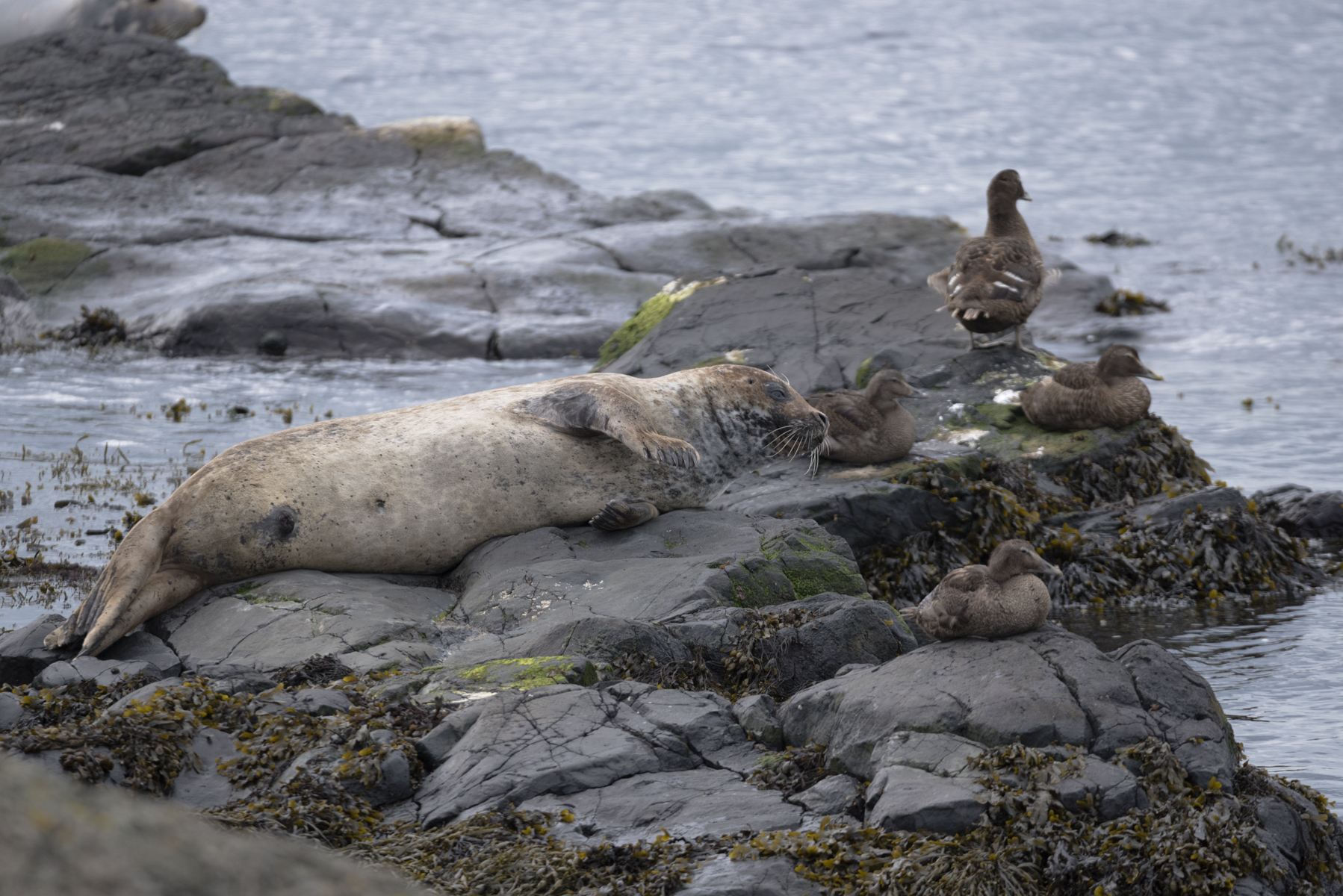
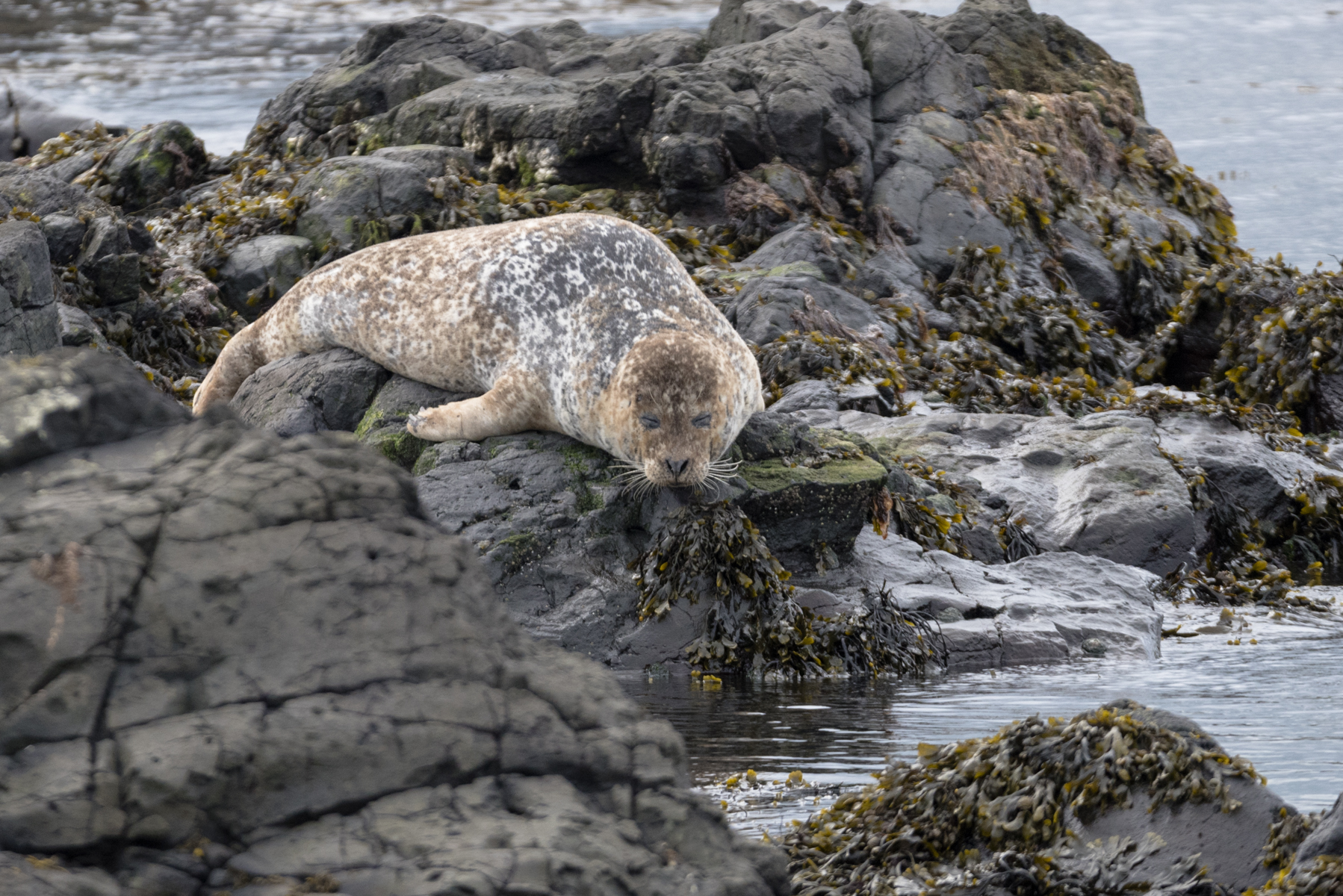
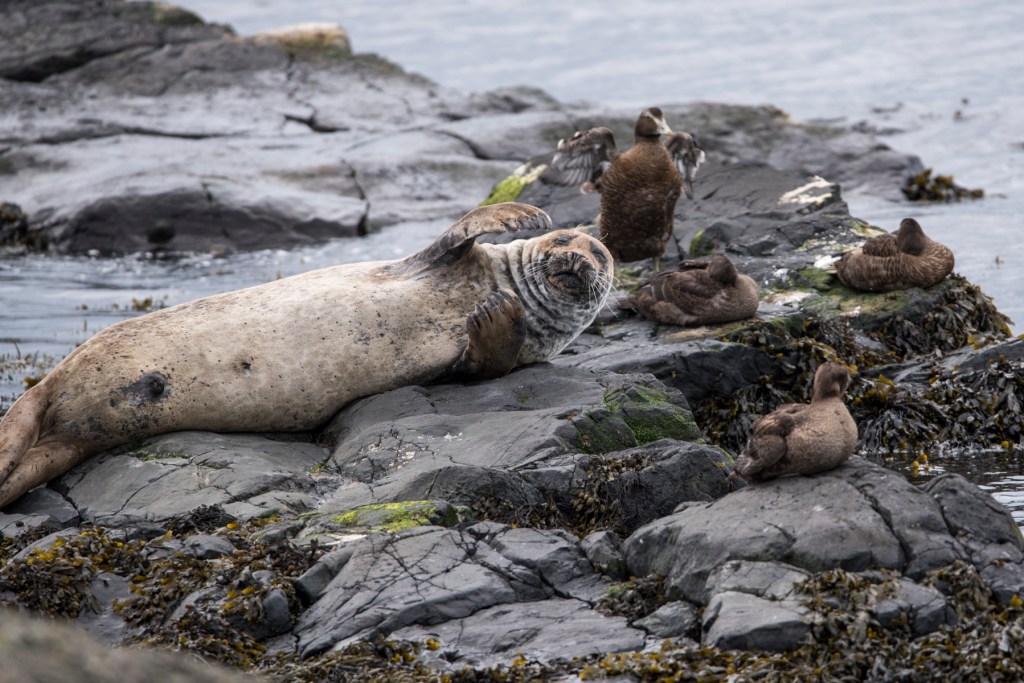
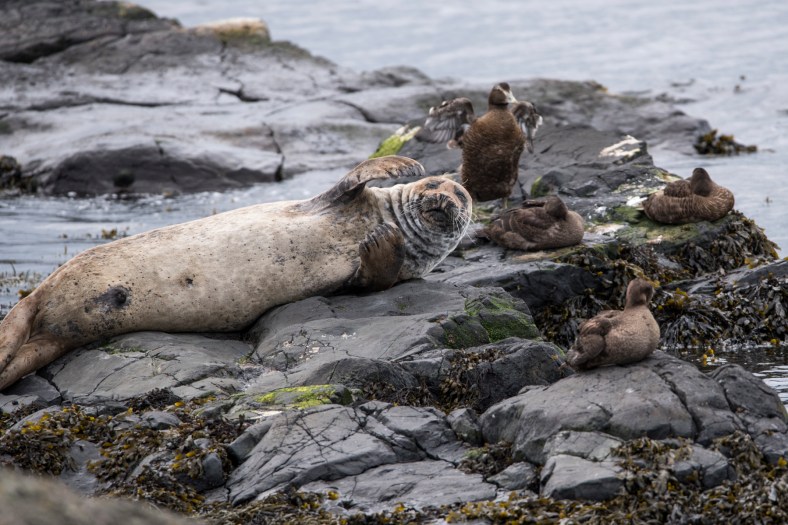
Seals and Eider Ducks
The walk back to Church Bay was by road, and it along the first mile this photo’s were taken.
Again I heard the call of Buzzards, this time there was two riding a thermal over the hills I had just walked. They were at the limit of my lens but I got this shot above.This I’m not sure off but might be the Devil’s – bit Scabious.Black Bird male. these birds will start to change their diet at this time of year. Feeding on more fruits in this case black-berries .Common Carder bee
I have just got back to walking along the coast, a small sandy beach nests in the rocky coast line. I blimb down a take a seat on a sandy bank at it’s edge. It’s from here I get some of the small waders feeding here.
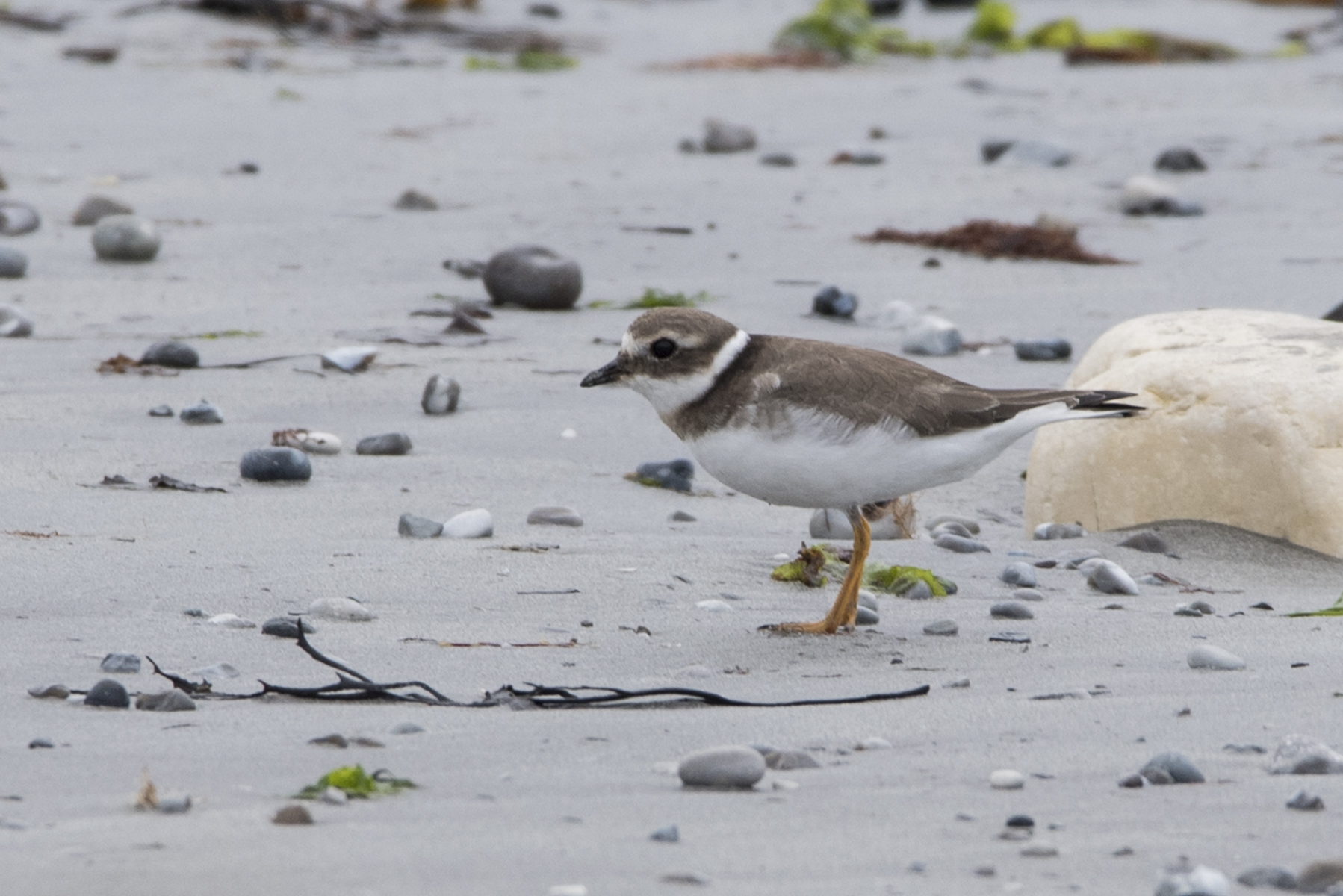
Dunlins feeding along the waters edge.The last two images are Little Ringed Plovers .I believe the two images above are of a Rock Pipit.
These are the last birds I photographed before entering the village. Again I’ll leave you with this photo of the Kelp house .
It’s been a couple of weeks since my walk on Rathlin, the weather was grey and heavy rain has I left home. It rained for most of the 80 mile trip to Ballycastle to catch the 8.30am ferry across to the island. But half a hour before the ferry was due to leave the sky cleared and a beautiful morning took it’s place. The 35 minute crossing was a little choppy with a strong breeze roughing the water. The sun was now reflecting bright from the white houses that line Church Bay has we came into the harbour.
Coming into the harbour area of Church Bay.Looking back at at part of the Church Quarter on my out to Rue lighthouse.
It was time to remove my coat and enjoy the warmth of the morning sun, get a hat on to protect my naked head from the sun and wind.
Island life can be hard on all people and objects.
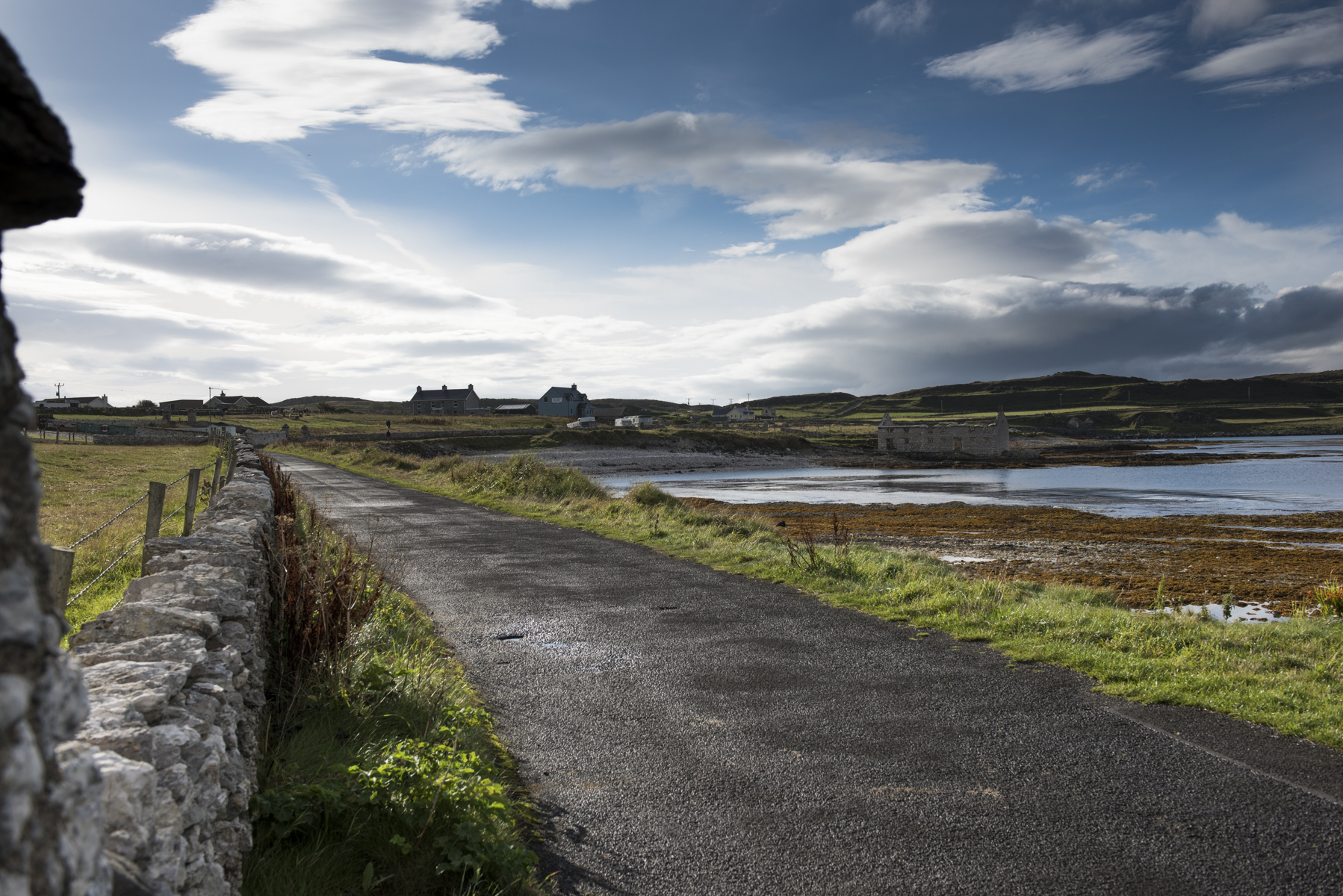
A short walk and I’m leaving the main Church Quarter on the flat single track road that ends and gives way to the hills ahead.
It seems I’m the only walker heading this way.
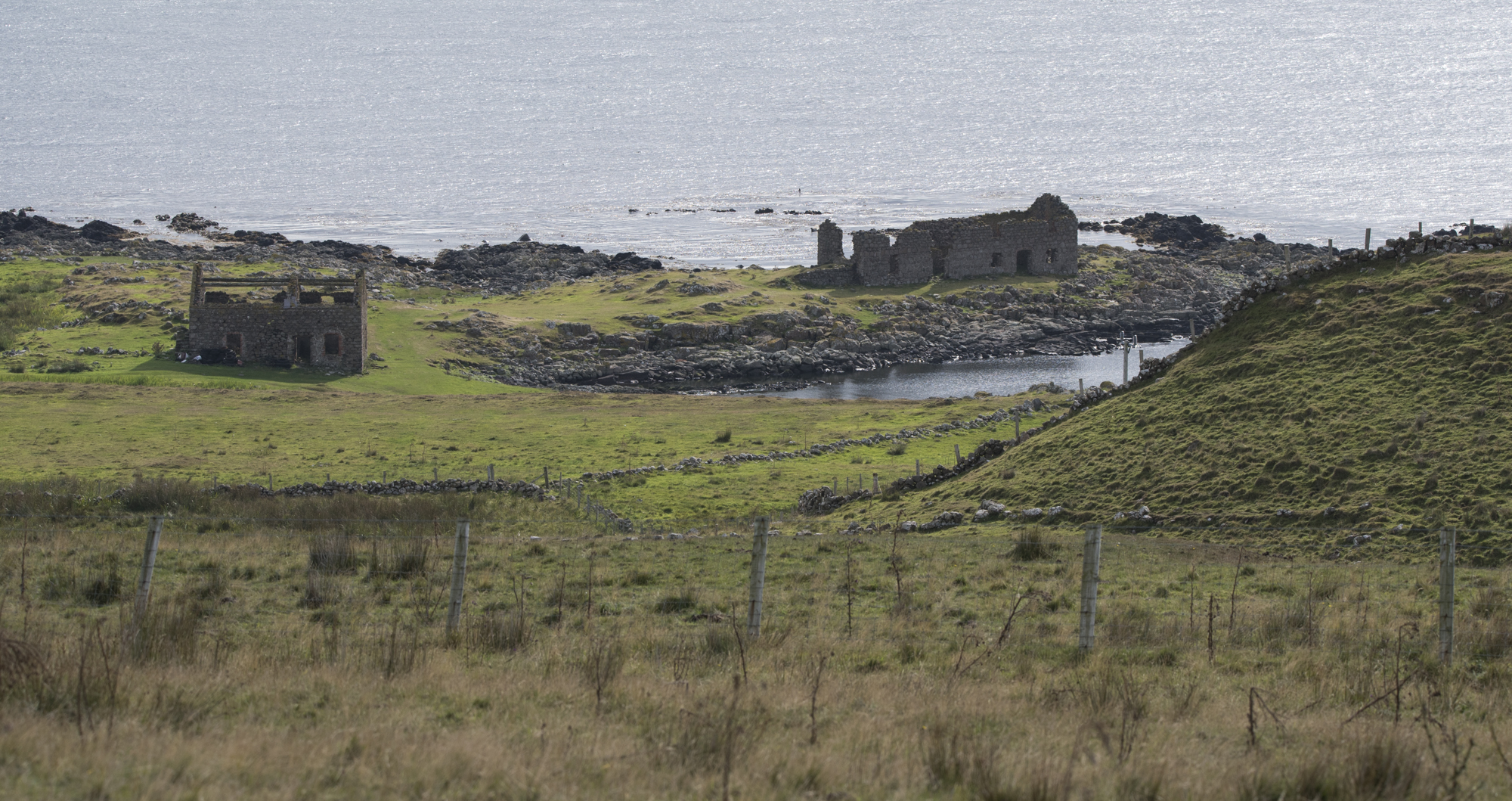
The remains of the build on the right in the above photo is the Kelp house. It dominates the view for the next quarter mile. Before I get there I stop to get a few more photos. The beauty that surrounds you here make for a slow hike and a lot of photo opportunities. The colours turning to warm autumn tones, the sounds of the water kissing the shore fills a soul with contented peace.
A look back at the rugged landscape to holds Church bay.Enjoying breakfast on the wild natural grasslands.The Klep house.A little history on the Kelp house.
Heading into the old building you get a feel of it’s size, the work that went into building the stone walls. The closeness of the sea and the views back towards the village.
Using a longer focal length lens to close the distance across the bay.This Rock Pipit has stood and watched me invade it’s space. Thank you little one..
I was going to show you the wildlife I photographed on this walk but it would make for a long blog post. so I’ll add a few and put the rest into another post.
So on with the walk, shortly after leaving the Kelp house the hills start. from the ferry to where I go off road to follow the Roonivoolin Trail is around 1.75 mile. This trail takes you across fram land and its livestock, so if you have a fear off cattle or sheep it’s probably not for you. The path starts along the side of a small lough where I spotted a coots and golden-eyes on the water.
A Coot, if you have ever heard of the saying ” as baldy has a Coot” well you would have if you lived in the UK or Ireland. It’s thought the saying relates to this bird.And here is the beautiful little Golden- eye duck, you can see how it got it’s name. These little ducks feed by diving for there food so you never know where they will surface.
The path is muddy and slippery underfoot has I follow the trail markers on the gentle climb towards the sea cliffs watched over by hardy hill sheep.
I love those eyes and the texture in the horns. In fact heres a close up below, not sure that you would agree with me but that eye is great.You’ll never pass a sheep again without looking at it eyes..Theres always someone to keep you posted the right way on the trail. Terrible pun ,sorry. Another Pipit, not sure if its a meddow or rock Pipit. They all look alike to me.
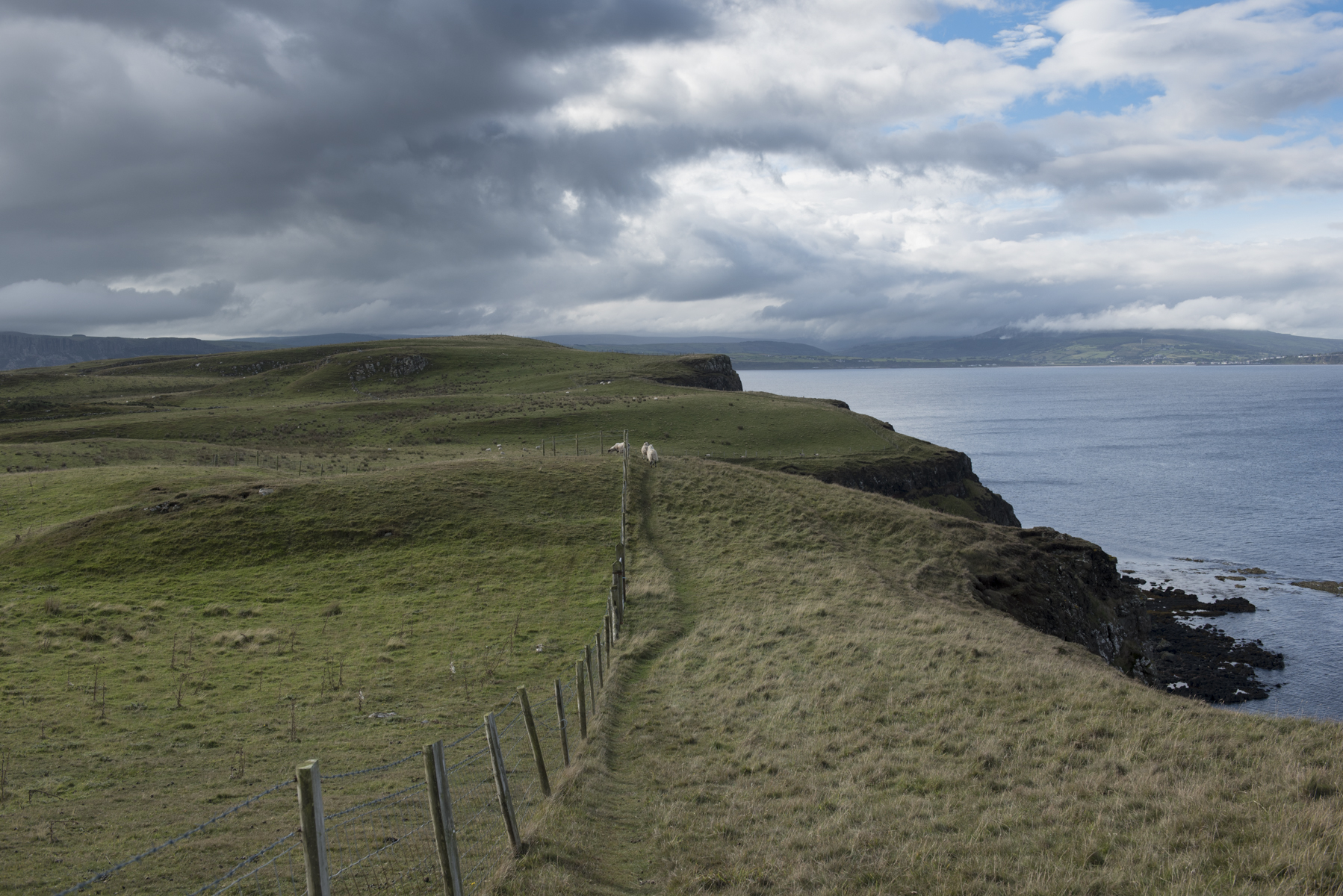
Another five mintues and you climb over a rickety stile and onto the cliff top walk. the path is a worn trail between a wire fence and a long drop. Watch your step, wet grass is slippery and I don’t fly like the gulls or crows that hug the cliffs.
The clouds are closing in and it looks like rain but with the company of a few woolly sheep leading the way I set off.
I’ll tag behind you..You can see the dog-leg shape of the island from here. The yellow sign tells you to keep away from the edge, where do they put it… yep you go over to read it… Great view down the cliffs.
The walk is safe if you stick to the path beside the fence, and take time out to look at the views. I was sorry I didn’t bring a flask of coffee to enjoy my breaks as I sat on a rock with nothing but the sounds of nature, no man make sounds reached me here. Bar the sounds this one made, but that was only my body trying to get air into it…
The next set of photos are some of the splendid views across the island in all directions.
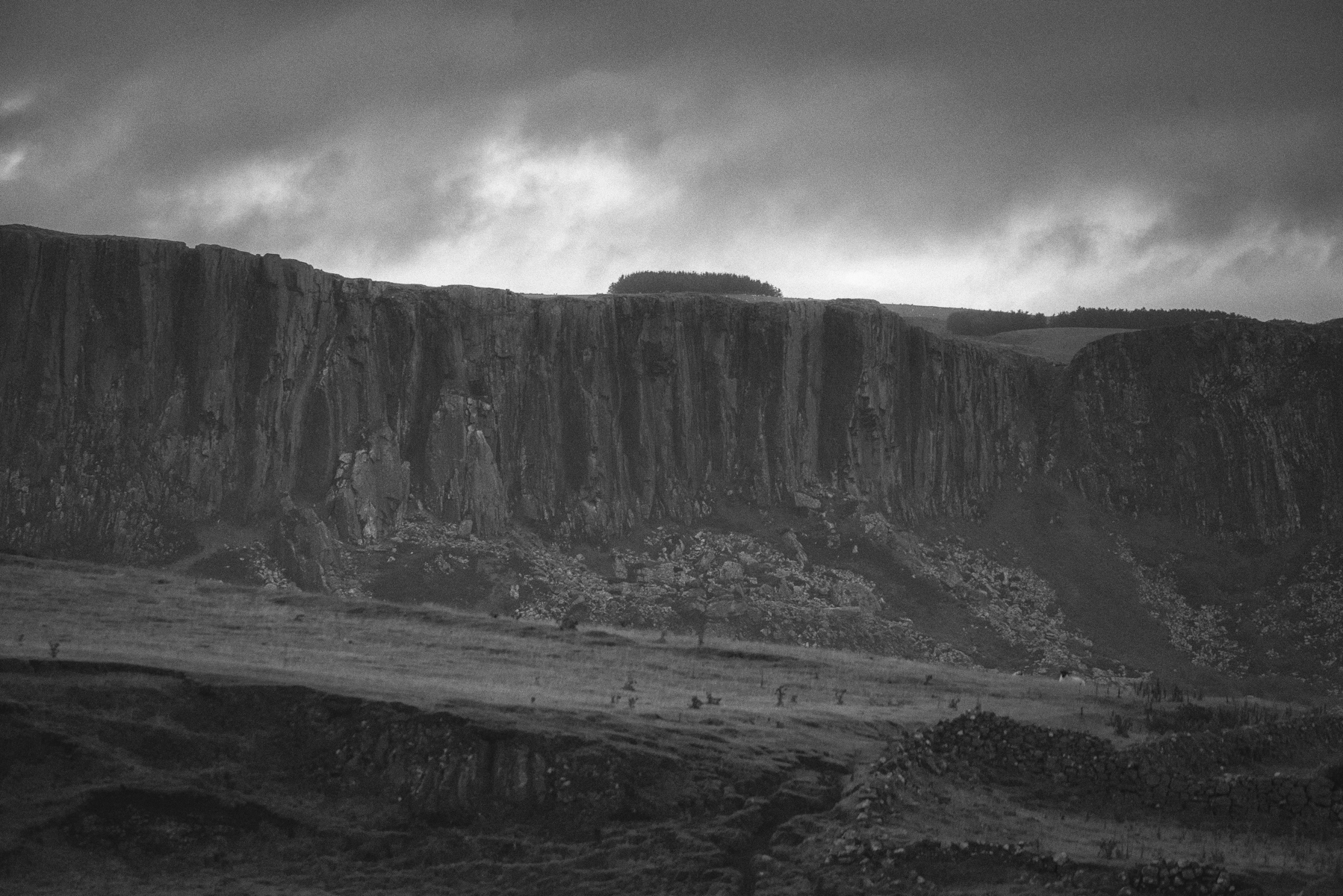
Just follow the cliffs . the background with heavy cloud cover is the mainland of Northern Ireland.Looking across the island to the East Lighthouse.The rough lands of the island with Northern Ireland around five miles across the water.The grand cliff of Fairhead on the County Antrim coast of N.Ireland.
Has you can see from the heavy cloud cover it was looking like heavy rain coming in. Luckly it stayed on the mainland where there were heavy downpours, we remained dry on the island.
Fairhead in N.Ireland, a rock climders heaven. 30+ years ago I climbed a few routes over there.A moody B&W of the picture above.Two hooded crows sit awaiting me like Odin’s two Ravens ‘Huginn and Muninn’.
Where the crows sat is the point where you turn away from the cliffs and start a downhill walk back towards the road. Below to the right is my destination, the smugglers cottages and Ushet port.
Ushet Port.Rue lighthouse.
Dropping downhill I had one more incounter with the wolly guardians of Rue. Just checking this human was leaving…
Watching you..
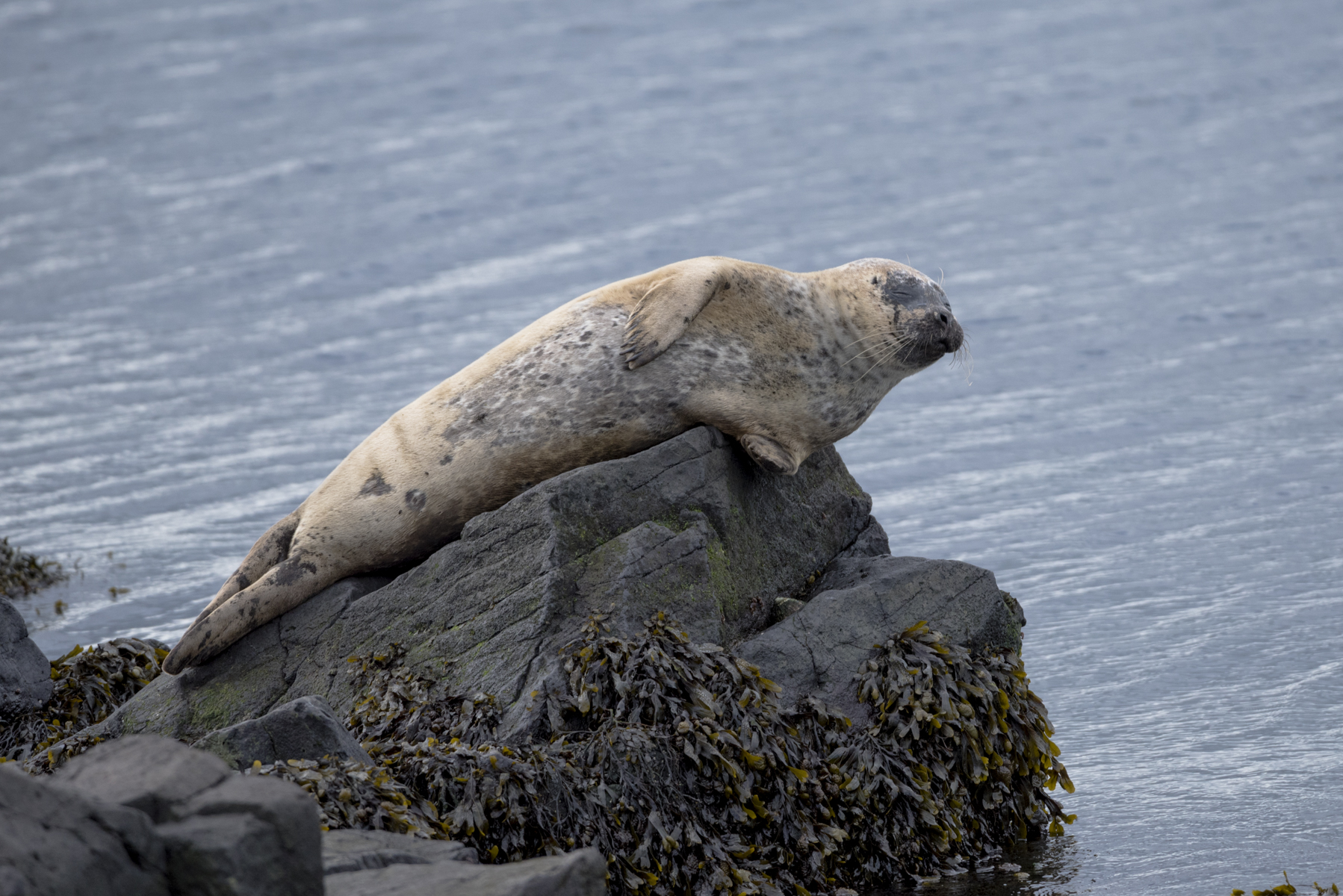
With another rickity stile to climb over and a final down hill walk I exit unto the road. Swinging right it was down hill to the cottage ruins. This is where i go into stealth mode. Around Ushet port seals come into here, so it’s keep the ruins beween them and me. There is a break in the rear wall of the cottage closest to them,once inside it’s off with the camera bag and set up with a 150 -600 lens. Using the building for cover i get some shots of the seals. Here a shot below, see how I’m greeted.
A friendly wave from them both.Here is a chopped section of the above shot.
Right it’s time to make my way back to Church Bay, this time its a road walk. There are very few cars on Rathlin so its safe on the roads here.
The call of the Buzzard.A Bee in a flower.
The last few photos were taken on the walk back to the ferry. The rest of the wild life photos will be in another blog post. If you have lasted this long well done on coming with me on this walk, your are always welcome.
Back to Church bay and a visit to a chippie van, across to the beach and enjoyed the best chips/fries ever. On into the village and got a coffee to go, up to a little park area beside the church and sat enjoying my coffee. I still had a hour to kill before the ferry, I spotted the 3pm ferry getting ready so checked if I could change booking and was onboard in minutes. I sat on the upper outboard deck tucked in out of the wind, packed the camera away( I avoid the saltwater spray) and sat relaxing looking up at the cliffs I’d walked earlier in the day.
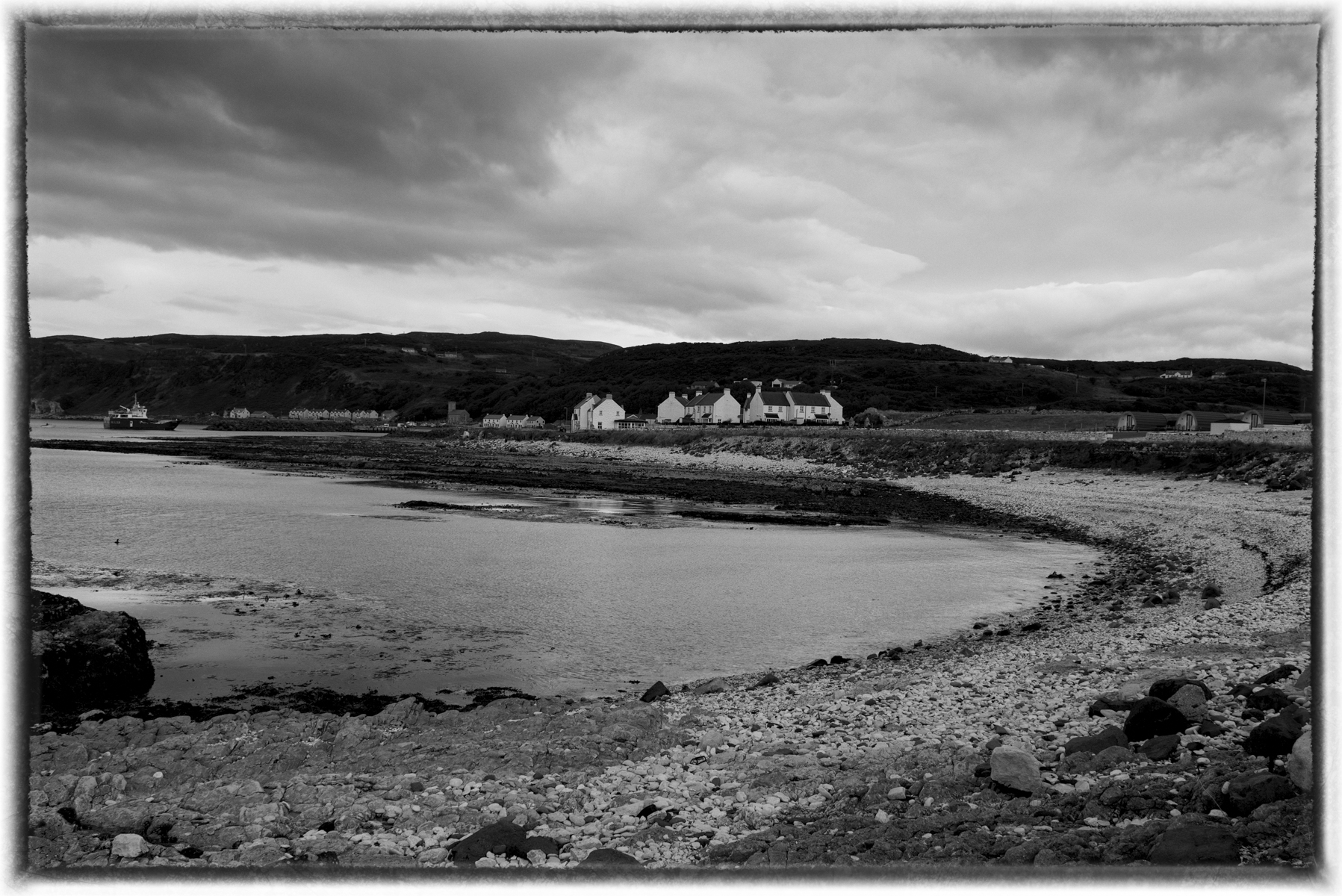
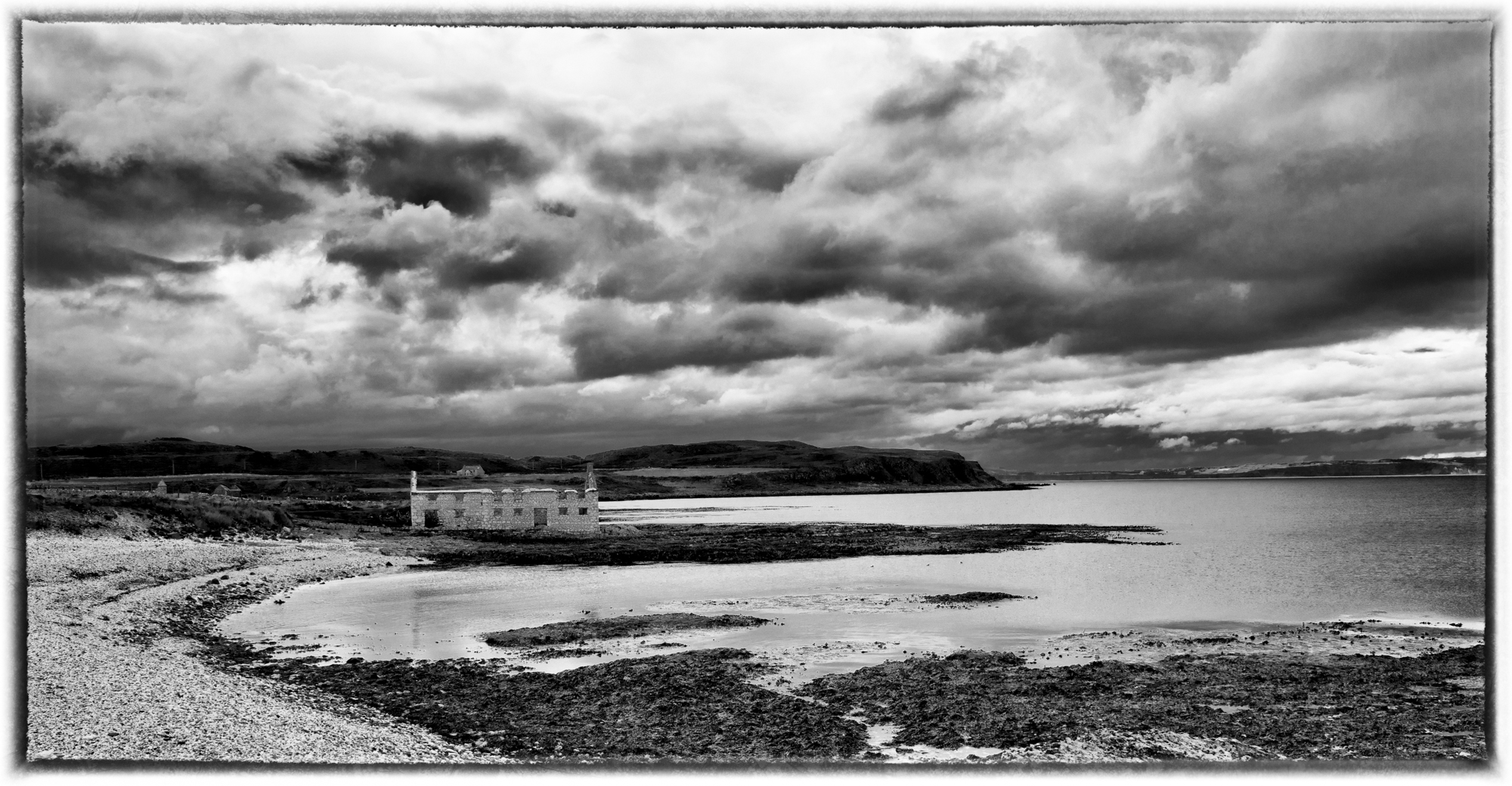
I’m going to leave you with two B & W photos I took on my walk back to Church Bay. Again thank you for joining me today.
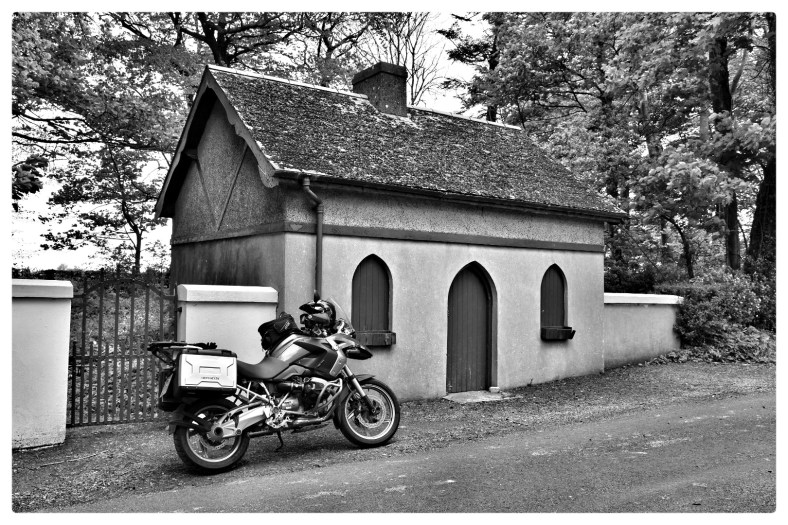
I have missed a couple of week’s posts due to a bout of illness. But back on track, so we are going to Ballydevitt Cottage in County Londonderry . I have tried to find some history about this small cottage,without success.
I talked to a local couple but they are only a few years in the area, so at some point I will go back and see if I can get some information about it’s history.
Ballydevitt Cottage
This is another Irish photo rally point, it’s in Aghadowey, County Londonderry.
I’m going to add the coordinates which you can copy to Google maps and go to street view to see the location.
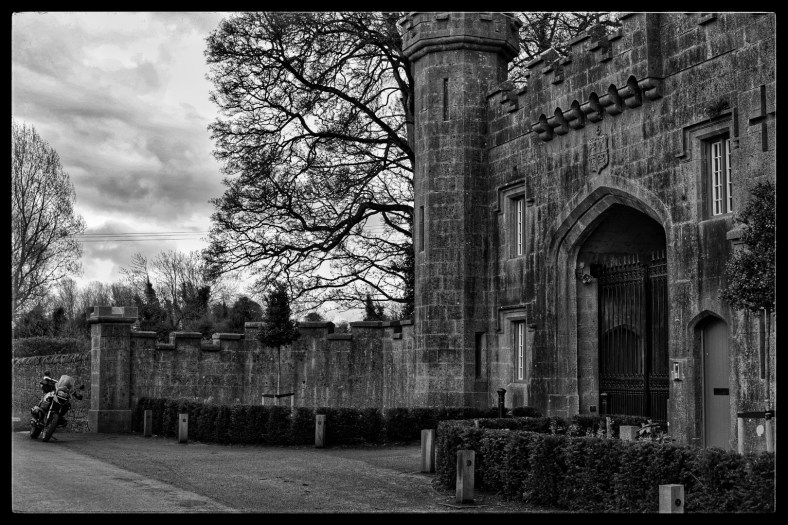
Hello and welcome, here we are at the start off another month. So this week’s photo comes from County Meath, Ireland and the grand gateway to Rathaldron Castle a few kilometres from Navan town.






























 George McNeill Photography
Leave a comment