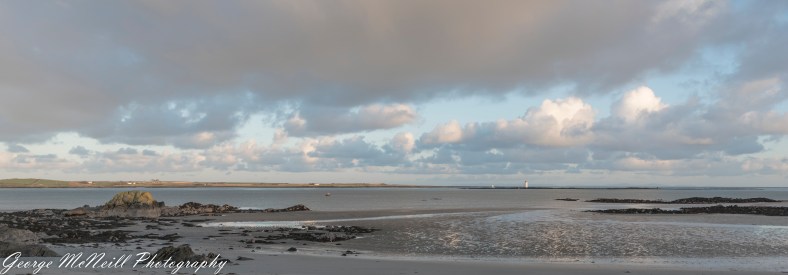
Killough harbour.

This week has been a busy one plus the weather should be turning towards spring. With snow still falling in places and heavy rain and winds hitting others, its still winter. So with an hour to spare and a chance of fresh air I went to Killough on the county Down coast here in the northeast of Ireland. With grey sky’s and dull light on the land, landscape shots were out.

Castle Ward 2018 george-2244.jpg

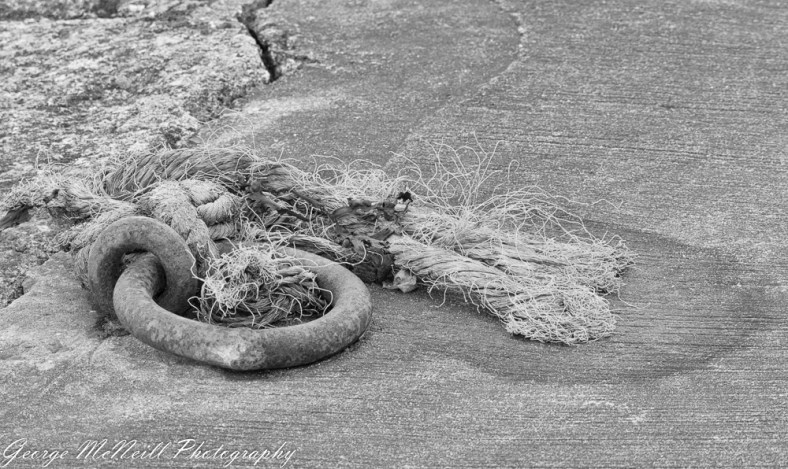
With the tide on the rise this forgotten boat and the colour on the harbour wall caught my attention.

Castle Ward 2018 george-.jpg

With it’s moorings long gone and just the remains left I decided this would be in monochrome.

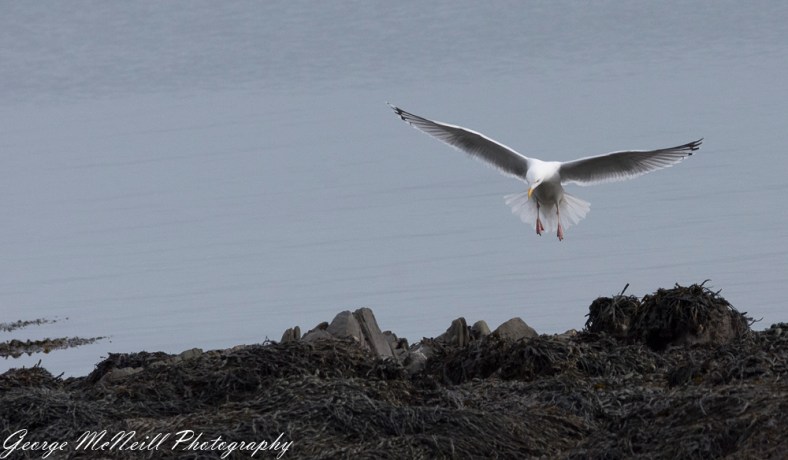
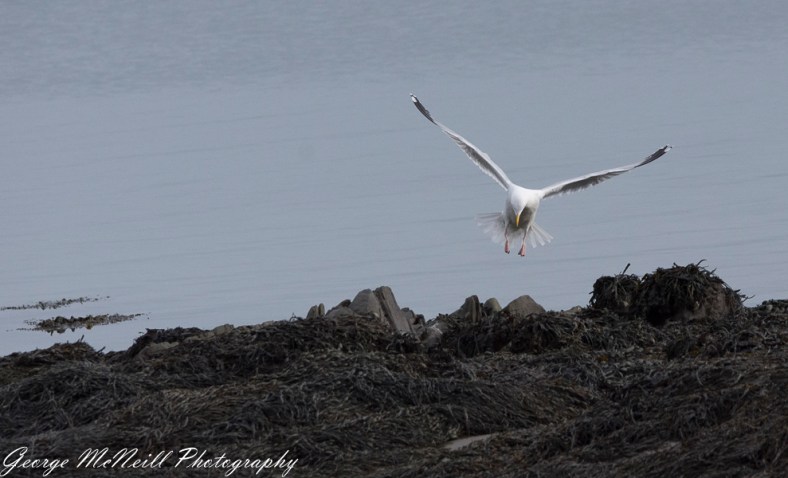
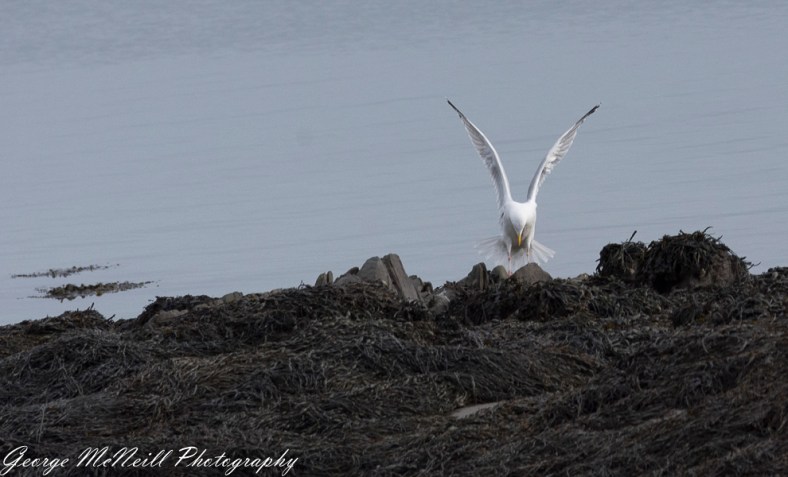
My next three where taken with a 600mm lens with a fence post used has a tripod.

Castle Ward 2018 george-2224.jpg

Castle Ward 2018 george-2225.jpg

Castle Ward 2018 george-2226.jpg

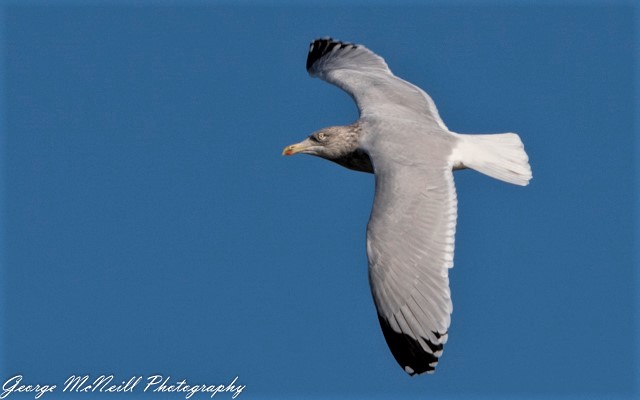
Shot from around 100 metres and chopped  with very little post processing. I could spend all day shooting gulls in flight. I you every watch a master working in their craft, then gulls are the masters for flight using the medium of air to paint their path.

Castle Ward 2018 george-2247.jpg

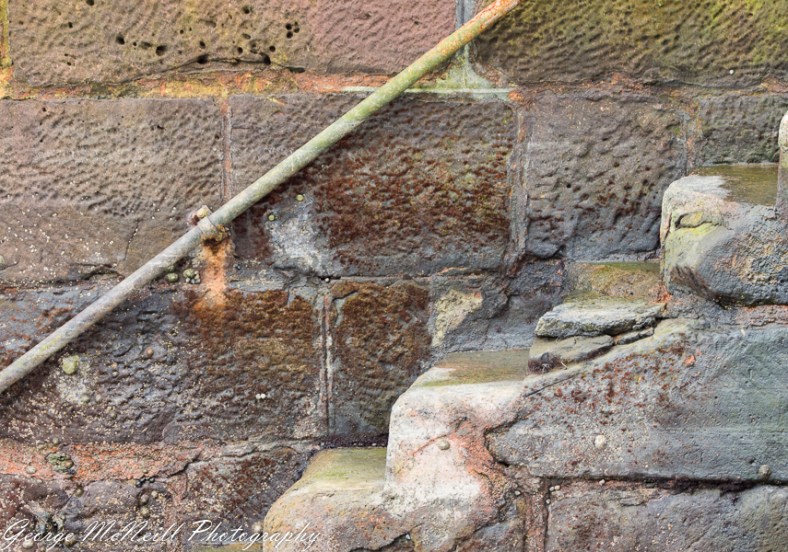
The colour’s nature has painted over time and the textures left by the stone masons tools has they shaped the blocks for the harbour wall. The worn steps reshaped with cement, the rusted and coloured metal handrail. It was all this texture and colour that pulled my eye to this shot.

Thank you for visiting, feel free to comment.

Take care,

George

Wagtail’s and sepia tones

With the sun shining and a light breeze I shouldered the camera bag, grabbed a tripod. Car locked and my first chat was with a man and his dog. Some local information is always welcome. I sit here listening to the wind and heavy rain beat it’s tune on the window. I took the following photos last weekend, what a difference this weekend.

First up are a few photograph’s of the Pied wagtail, these were taken while out for a walk along the coast.

Pied-2152.jpg

Pied-2149.jpg

I always hope to get some shots of seals that bask along the shore, but so far no luck. With the tide in I knew they would be out from shore. This one was around 100 metres from shore.

seal-2162.jpg

I got a few head shots but loved the light catching his whisker’s in this one. We have two  type of seal’s around our coast. The grey seal and the common seal with this being the Common seal.

My last one is off the small lighthouses that mark the entrance to Strangford lough on the east coast of Northern Ireland. I gave it an old time look when editing it in Silver Efex Pro. Let me know what you think.


lighthouse-.jpg

Thank you for visiting.

Take care,

George.


From snow to coast.

This time last week I was digging the snow from the drive, taking photo’s in the snow. A week later and bar the mountains the snow is gone, well for now. Here in Ireland the weather can change in an hour. With a cool breeze and sunshine that gave no heat I headed for the coast. With heavy rain showers and a bitter wind I sat with a coffee and watched the bird life feeding in the mud flats left has the tide receded. With the return of the no heat sunshine I grabbed the camera’s and went for a walk. Below are a few of my shots from the day.

coast 2017-1896-2.jpg

Relax now this is the only bird shot this week, a couple of Redshank’s feeding around the mud flats.

coast 2017-1967-2.jpg

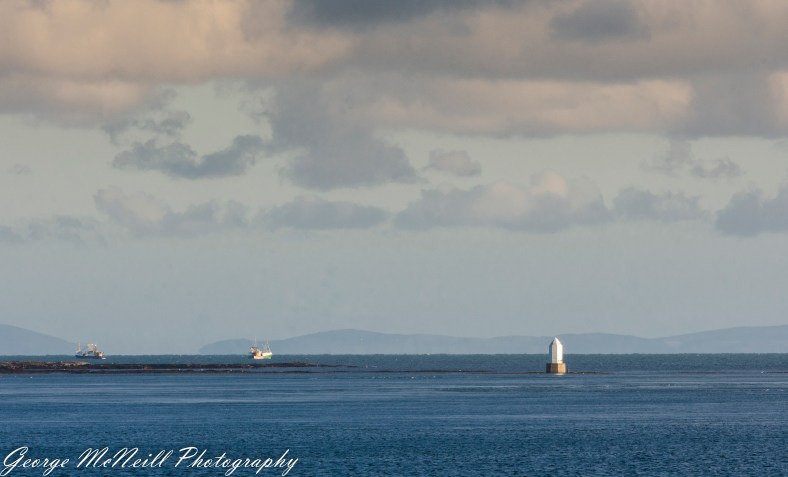
Fishing boats and one of the markers at the mouth of Strangford Lough. In the back ground is the Isle of Man, Looking closer because of the use of a telephoto lens.

coast 2017-2123-2.jpg

Kilclief beach looking the Irish sea towards the Isle of Man on the horizon.

coast 2017-2132-2.jpg

coast 2017-2141-2.jpg

coast 2017-2147-2.jpg

Then I spotted this, photo below.

coast 2017-2150-2.jpg

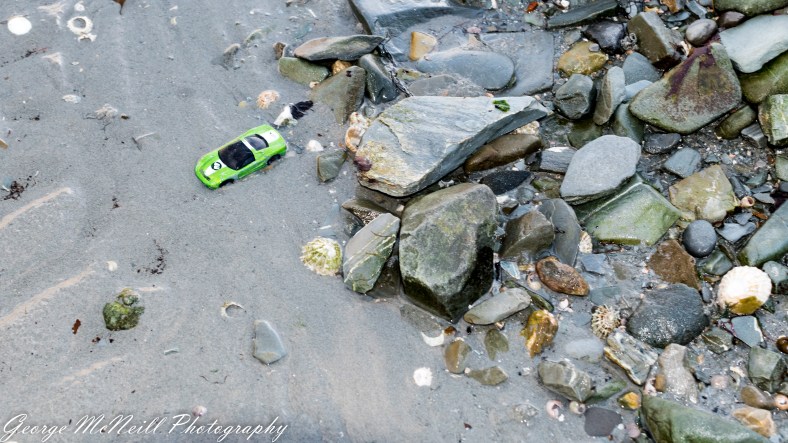
Parked in the wrong spot…. the colour of the toy car caught my eye on the walk back.

coast 2017-2152-2.jpg

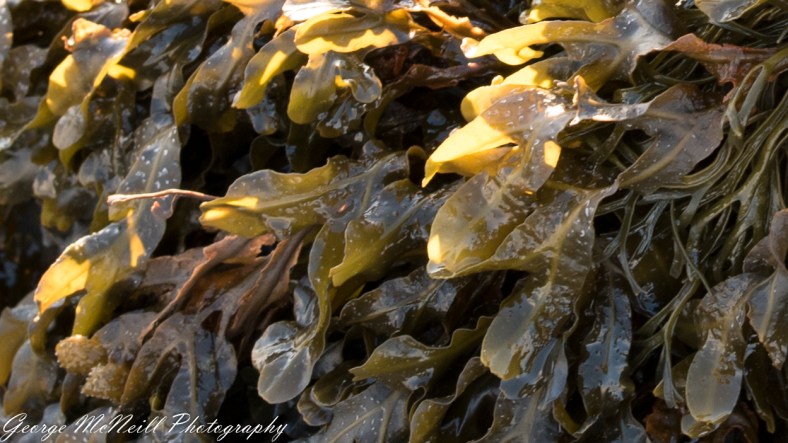
It was the sun hitting the seaweed and lichen on the rocks that drew me to this photo.

coast 2017-2157-3.jpg

My final one of the day.

Thank you for visiting my blog, feel free to comment. What you like ,dislike etc.

Enjoy your weekend.

George.


Little Egrets and the Mourne mountains.

So the first skiff of snow covered the ground when I woke up this morning. Sitting looking out at it with a hot cup of coffee in my hand it was where will I go to today. With the sun breaking through I headed for Dundrum inner bay. A quick look at the tide tables lot me know the tide would be out. With the mud flats clear you never know what will be about. This morning was going to be about landscape shots and some close ups. I love walking the shore and looking for any  interesting subjects, the feel of the sea breeze on my face. I reality it was a biting  wind that chilled you and the sun that looked great lying low in the sky but gave no warmth.

Wild life 3-2056.jpg

Dundrum bay with the Mourne mountains in the background.

The stone embankment on the left is the remains of an old railway line which is now a short walking trail running along the shore of the bay.  A place I have walked many times over the years.

Wild life 3-2060.jpg

One of the stone and brick bridges that the railway run over.

Wild life 3-2065.jpg

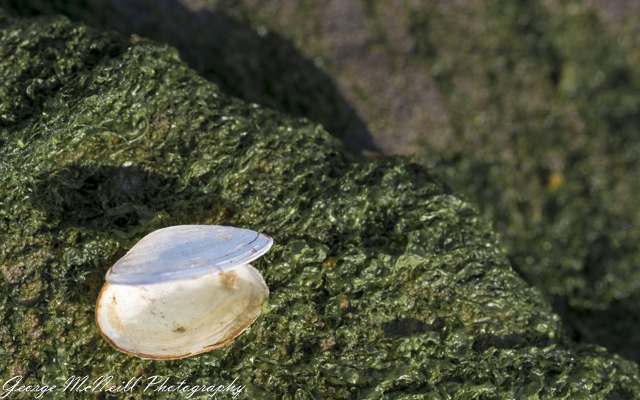
Spotted this shell on a rock and loved the contrast in the white against the green on the rock. the shell was about the size of my thumb nail. I shot this with a Sigma 105 mm macro lens.

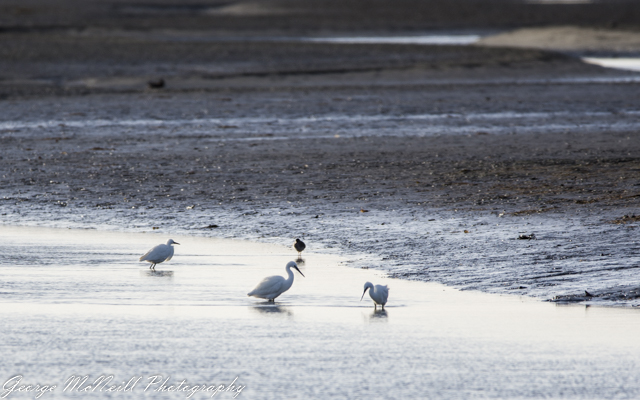
I sat down on the stone embankment to just watch the bay with the sound of the birds on the flats and a buzzard calling somewhere behind me. I spotted not one but three White Egrets feeding in the river that run across the flats when the tide is out.

Wild life 3-1472.jpg

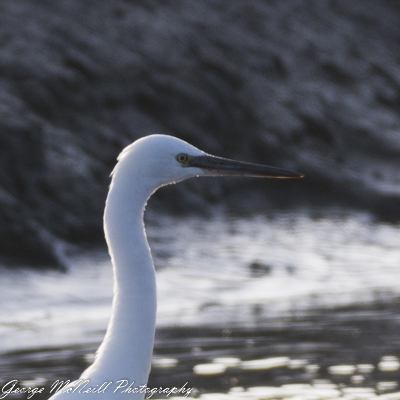
This were still a fair distant away and has I watched one flew off. While looking else where I discovered another one had gone. Scanning the area I soon spotted it, there around 50 feet away feeding. Right in front of me, these birds will usually flee not come closer to humans. So very slowly I put a mono pod on my camera and was rewarded with some of my best Little Egret shots to date.


Wild life 3-1478.jpg

Wild life 3-1535-2.jpg

Wild life 3-1580.jpg

Wild life 3-1626-2.jpg

Wild life 3-1633.jpg

Leaving the flats and climbing up onto the trail I got this shot.


Wild life 3-1617.jpg

A Trush feeding on the trail which is grass cover most of the way.

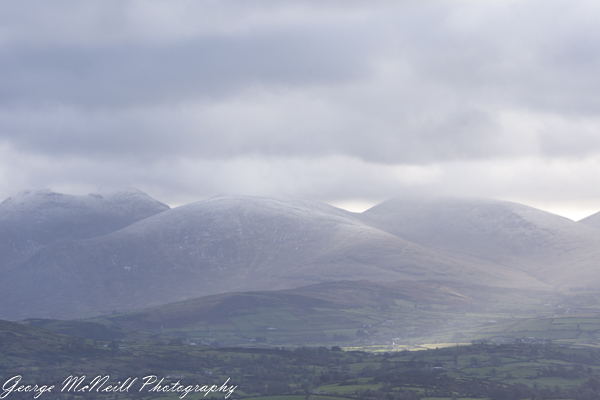
From here I drove into the Dromara Hills which lay north of the Mourne mountains. I was hoping to get a few more bird shots but it was not to be. Where it was cold on the shore it was freezing here in the hills. the winds stronger and a storm front making its way in. I took a few images from a view point called the Windy Gap which believe me was living up to its name today. These are all looking into the Mourne mountains. Most taken at 150 mm using the car door has a tripod.

Wild life 3-1708.jpg

Wild life 3-1711.jpg

Wild life 3-1700.jpg

Wild life 3-2074.jpg

this last one taken on a 24 mm lens.

So thank you again for joining me here in the north of Ireland. Take care.

George.

Killard Point

Was driving along the road following the Co.Down coast. Something dark was swimming close to shore, There are seals in this area but normally you don’t see them where the tide is in. So pulling into a small car park and seeing people watching something I got out and asked the first person what was in view. His reply was a ship just off shore repairing something. Walking down to the beach to see the seal which turned out to be a woman swimming wearing a wet/dry suit. Given this is the start of winter and it about 7 degrees  Celsius (44 Fahrenheit) and a cold wind blowing it was not warm. Got talking to her and being a local she told me about Killard Point. It was a Royal air force base around the second world war and was used for radar  until it closed.

After following her directions and were to park I followed the shore around to the reserve gateway which you enter from the beach. I meet few people on the reserve and a few I did meet give me a lot of info  about what to see and the best time of year to visit depending on the season. Below is a few bird photos i took while walking the coast. I intend to return once a month and will also include some landscape shots from the area.

Wild life2-1773.jpg

I know this is not a sea bird shot but of the repair ship people were watching.

Wild life2-1784.jpg

First up we have a Curlew ( Numenius arquata ) the one at the top the b&w bird is an Oystercatcher (Haematopus ostralegus )

Wild life2-1793.jpg

Like these ones, which are resting has they stand one one leg and like the right hand bird they rest there heads on there back. A bird very easy to identify by its markings and bright red eye.
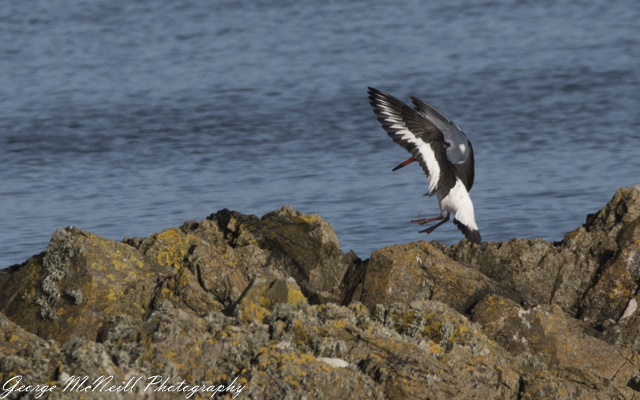
Wild life2-1782.jpg

And one landing on a rocky isle to wait for the tide to drop and expose there feeding ground.

Wild life2-1818.jpg

Liked the way this Redshank ( Tringa totanus ) stood out against the clear backdrop.

Wild life2-1819.jpg

A shot across the bay to Kilclief castle, not the greatest of photos, the landscape is nice around here and hope to do some landscape shots in the area.

Wild life2-1820.jpg

The two larger birds are Cormorants ( Phalacrocorax carbo ) they are about the size of a large goose and are diving bird that feeds on fish.

Wild life2-1874.jpg

Wild life2-1931.jpg

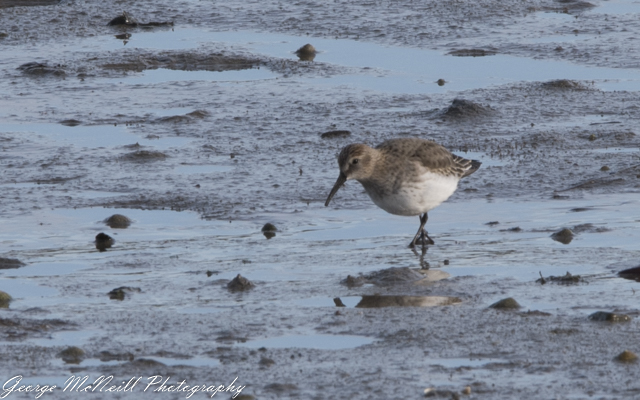
Identifying these are not so easy, but given there habits and markings I think they are Curlew Sandpiper (Calidris ferruginea ) which are a winter visitor to our shores from North Siberia.
Wild life2-1897.jpg

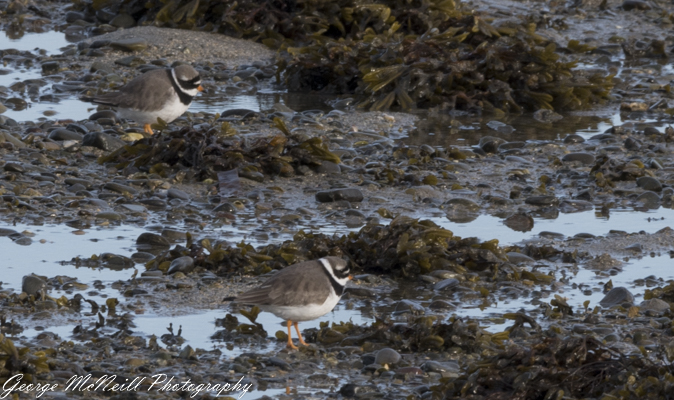
These were hard to get a good shot of, they stayed well away from where I was.

Ringed Plover ( Charadrius hiaticula ) or there international name Common Ringed Plover.

Wild life2-1979.jpg

Wild life2-1975.jpg

Rock Pipit ( Anthus petrosus )

Got this shot while walking back from the reserve, I got a few shots of them on the pebbly beach but not as close or sharp has this.

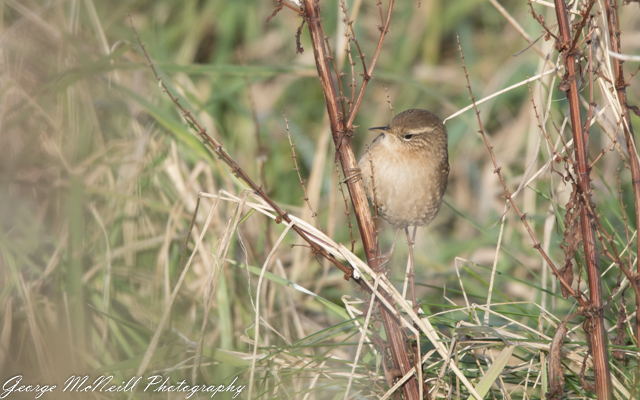
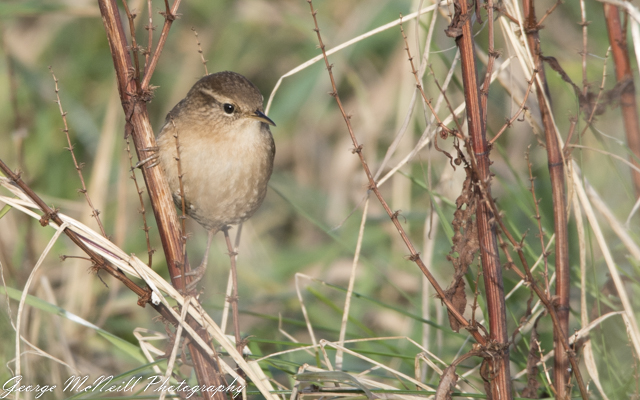
These next few photo’s are of one of  Britain and Ireland’s smallest birds, the Wren

(Troglodytes troglodytes )

Again these are hard to photograph, fast moving and busy  seldom staying still. Most time you only catch a glimpse  has they fly from one point to the next. It was this movement gave it away and a little crawling on the ground that got me these shots, plus thanks to a long focal lenght lens.
 

Wild life2-1958.jpg


Wild life2-1959.jpg

On my drive home I called at another reserve near Dundrum on the County Down coast and on leaving it I saw  a Grey Heron ( Ardea cinerea ) in a field near a river that run’s along the road side. Using the car like a hide I got a few shots. Would have been nice if he had been hunting the river bank but maybe next time.


Wild life2-2015.jpg

Wild life2-2034.jpg

Thank you all for coming on my day out with nature here in Ireland.

Till the next time, take care.

George.

Ducks, Waders and Seagulls.

Map

Street view

The map link above should take you to the area where most of the photographs in this post were shot. I was using a Nikon D750 with a Sigma 150 – 600 zoom. Some post processing and chopping  before posting.

Wildlife-1571

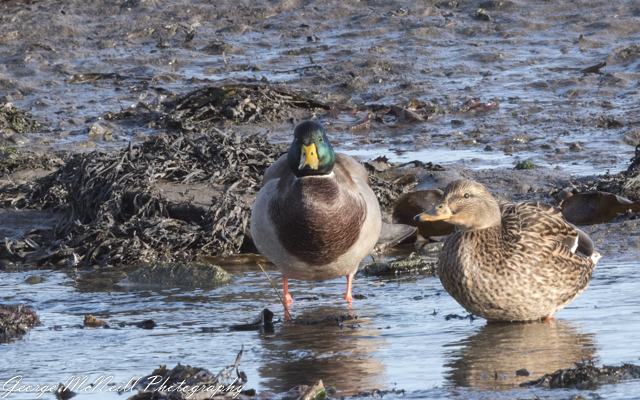
First up we have a couple of Mallards ( Anas platyrhynchos ) enjoying the low winter sun.

Wildlife-1573

Teal (Anas crecca ) Male and female. Love the marking of the male Teal, from the striped head to colourful rear.

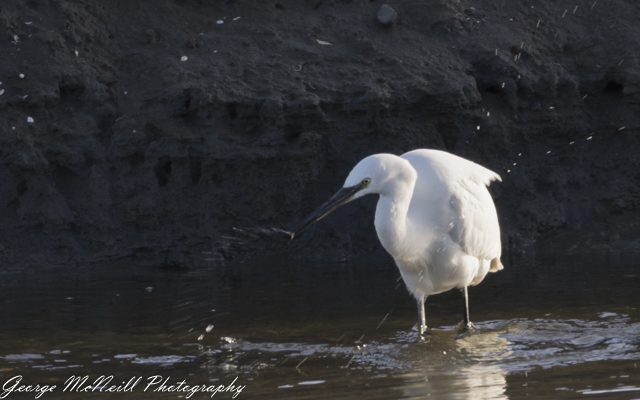
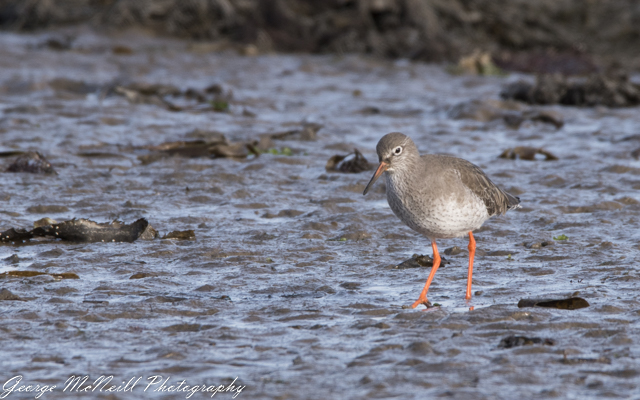
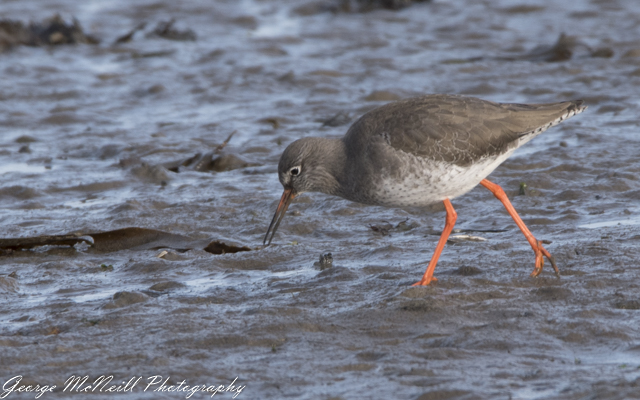
The next set of photos were shot about a mile along the coast.  This wader is common around the coast in Northern Ireland

Redshank ( Tringa totanus )

Wildlife-1622Wildlife-1631-2

Wildlife-1632

Gull time.

Wildlife-1533

Bath time

Wildlife-1641

Herring Gull (Larus argentatus )  playing tug-o-war with the sea weed.

Wildlife-1522

Common Gull ( Larus canus )

Wildlife-1558a

Taking a guess at this one, I think its a Herring Gull in flight.


Wildlife-1689

This smaller gull is a Black Headed Gull (Chroicocephalus ridibundus ) in it’s winter plumage.

Wildlife-1674

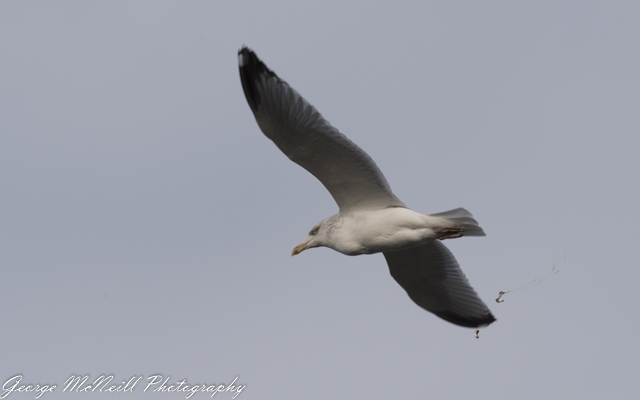
Again I think this is a Herring Gull delivering  it’s bodily waste on those below.

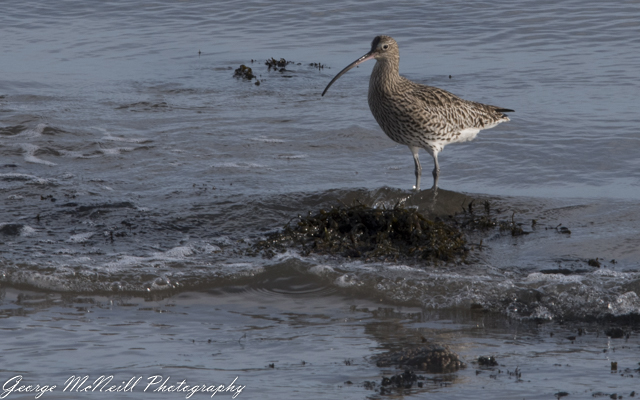
These next couple of photograph’s are off  our largest wader here in the Uk & Ireland.

Curlew ( Numenius arquata)

Wildlife-1695Wildlife-1702-2

That was my Saturday, photographing the birds along this stretch of coast. There are more to photograph has well as the seals but that’s another day.  Next time I’ll pack a flask of coffee and a warmer coat so I can walk more of the coastline.

Thank you for joining me.

George.


ZOOooooom

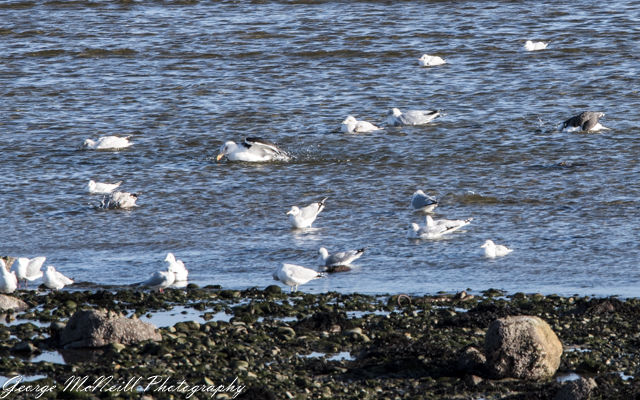
I got a used Sigma 150 – 600 zoom lens, it’s about six months old and is in excellent condition. Included  with it was a 1.4 tele – converter which I have yet to try. Camera used was a Nikon D7200. First Photo here was taken from my car, the weather was strong winds and heavy rain. So the light was dull and grey and the subject a Curlew (Numenius arquata) was around 45- 50 metre’s/meter’s away and was a handheld shot. The shot has been chopped and is slightly soft. But unless you were enlarging it, I feel it’s acceptable.


Crulew21.10.17.JPG

Next up was shot in my mother’s garden. Again hand held and the weather was warm and bright with no wind. The Nikon D7200 was used and the Robin ( Erithacus rubecula) was around 25 Metre’s away. I chopped this photo tighter that the last and has you can see the detail is good.
Robin21.10.17.JPG

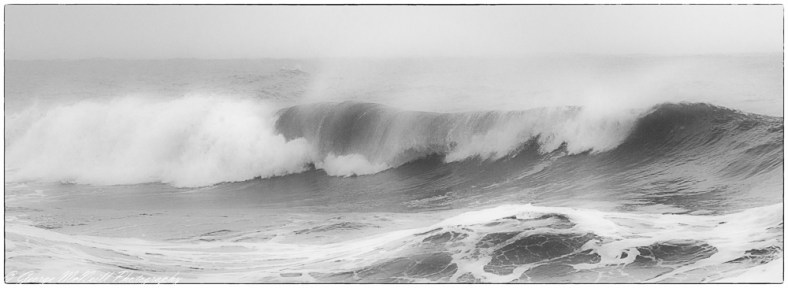
If you look close you can see cobwebs running from the leaf level with his beak up to the thorn’s above. The last photo was taken at the coast has a storm was rising. I was shooting waves breaking over onto the road from the beach. Breakers were coming with in a few feet from where I was standing. I noticed water spray blowing off the breaker tops. I got the Sigma and D7200 from the car and using it set around 200mm mark, I shot the following wave. Not chopped in to enlarge but chopped into the  format you see. The result is not bad. Again hand help in strong winds which were coming from behind me.


wave 21.10.17 b.w.JPG

It was while taking this shot a wave closer in broke a little later and I got wet legs from the knees down. At lease the few people on the bank behind me got a laugh.

So I’m looking forward to using this lens with and without the 1.4 converter. Also with the full frame camera. Will report back in a future post.

Thank you for visiting.

George

Natures lovers.

There’s a different look on the lough, with the winter water fowl and duck’s away the summer residents have made a show. Back are the Great Crested Grebe, Mallard’s and the Mute Swan’s. Mute Swans pair up for life and seldom divorce. Courtship takes place in late winter with synchronised head dipping and necks and breasts pressed together. With their S shaped necks a heart shape forms during this ritual.

I shot this photograph last year and converted it to black and white. It shows the heart shape they form doing the above ritual.

lovers high key.JPG

Thank you for visiting


Garden vistors

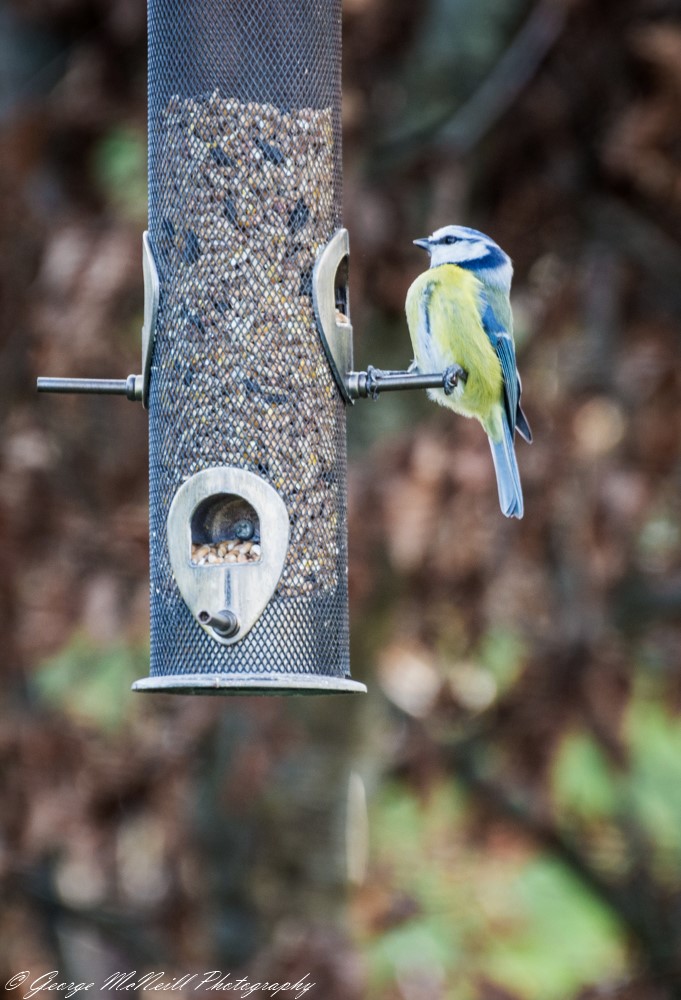
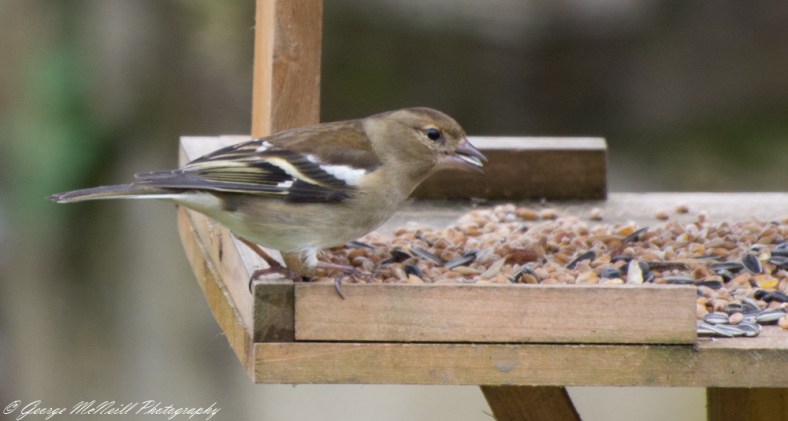
We get a good range of birds visiting the feeders in the garden, this afternoon I grabbed a few shots from a window in the house. Also been making and putting nesting boxes around the area, with plans to make and install a camera in one for next year. So a couple of photographs off our visitors.

great tit1.JPG

Great Tit swinging in the breeze.

blue tit1.JPG

Blue Tit

Chaffinch male 2.jpg

Chaffinch (male)

Chaffinch Female1.JPG

Chaffinch (female)

rook1.JPG

Rook a member of the crow family.

Thank you for visiting.